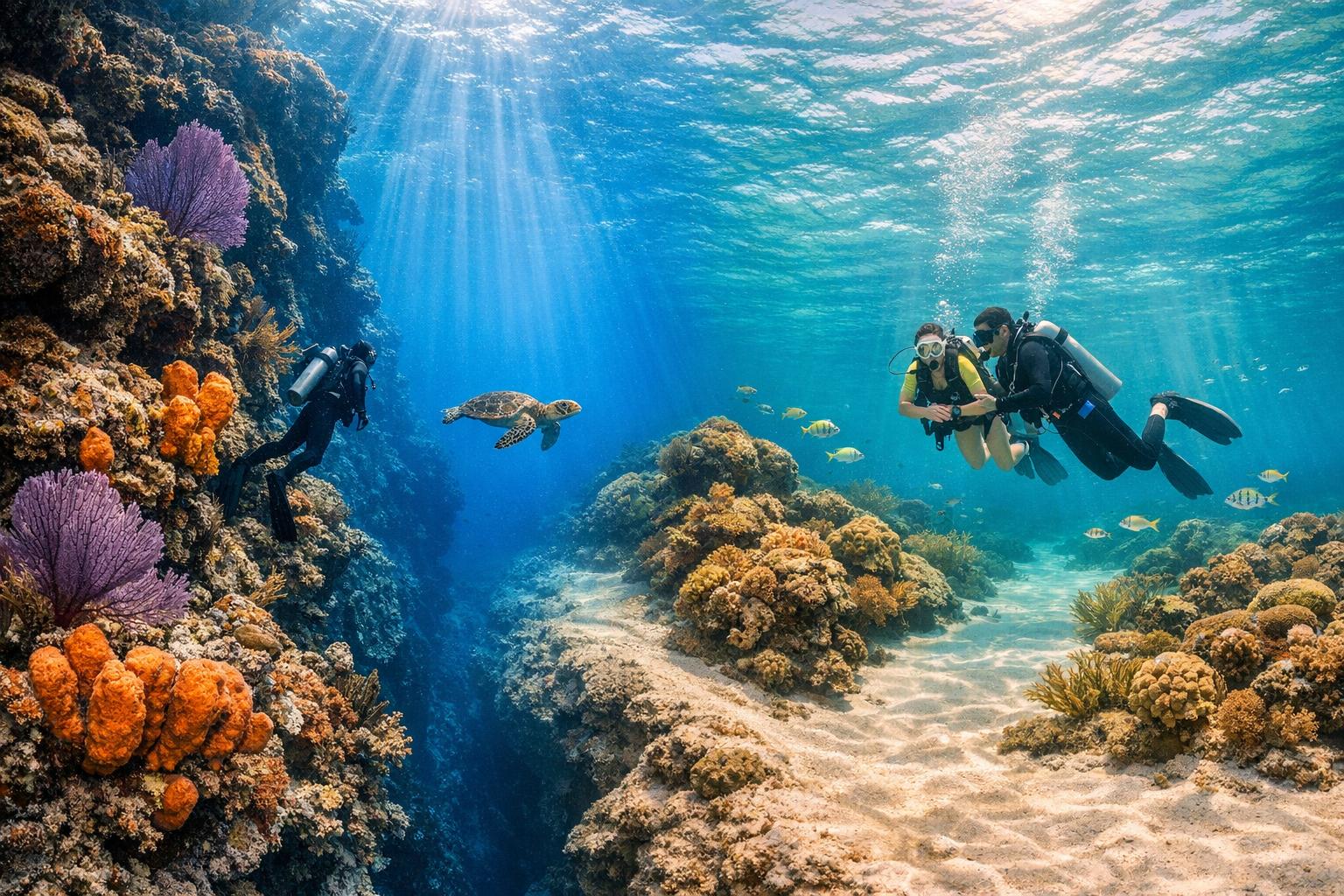
Cozumel offers the best reef diving in 2026. Its reefs are healthier, visibility is clearer (30–40 meters), and it’s home to dramatic underwater walls and rare marine life like the Splendid Toadfish. Playa del Carmen, while less dramatic, is perfect for beginners with shallower reefs, calmer waters, and seasonal bull shark encounters.
Key Highlights:
- Cozumel: Advanced diving, drift dives, towering walls, 500+ fish species, and thriving ecosystems.
- Playa del Carmen: Beginner-friendly, affordable, easier access, bull sharks (Nov–Mar), and vibrant coral gardens.
Quick Comparison
| Factor | Cozumel | Playa del Carmen |
|---|---|---|
| Reef Structure | Vertical walls, pinnacles, swim-throughs | Flatter, shallower coral gardens |
| Visibility | 30–40 meters | 15–25 meters |
| Marine Life | Turtles, eagle rays, Splendid Toadfish | Bull sharks, tarpon, sea turtles |
| Best For | Intermediate/advanced divers | Beginners/casual divers |
| Cost | ~US$165 for two-tank dives | ~US$95 for two-tank dives |
Your choice depends on your skill level and the type of underwater adventure you’re seeking. Cozumel is ideal for experienced divers craving dramatic sites, while Playa del Carmen suits those looking for accessible and calmer dives.
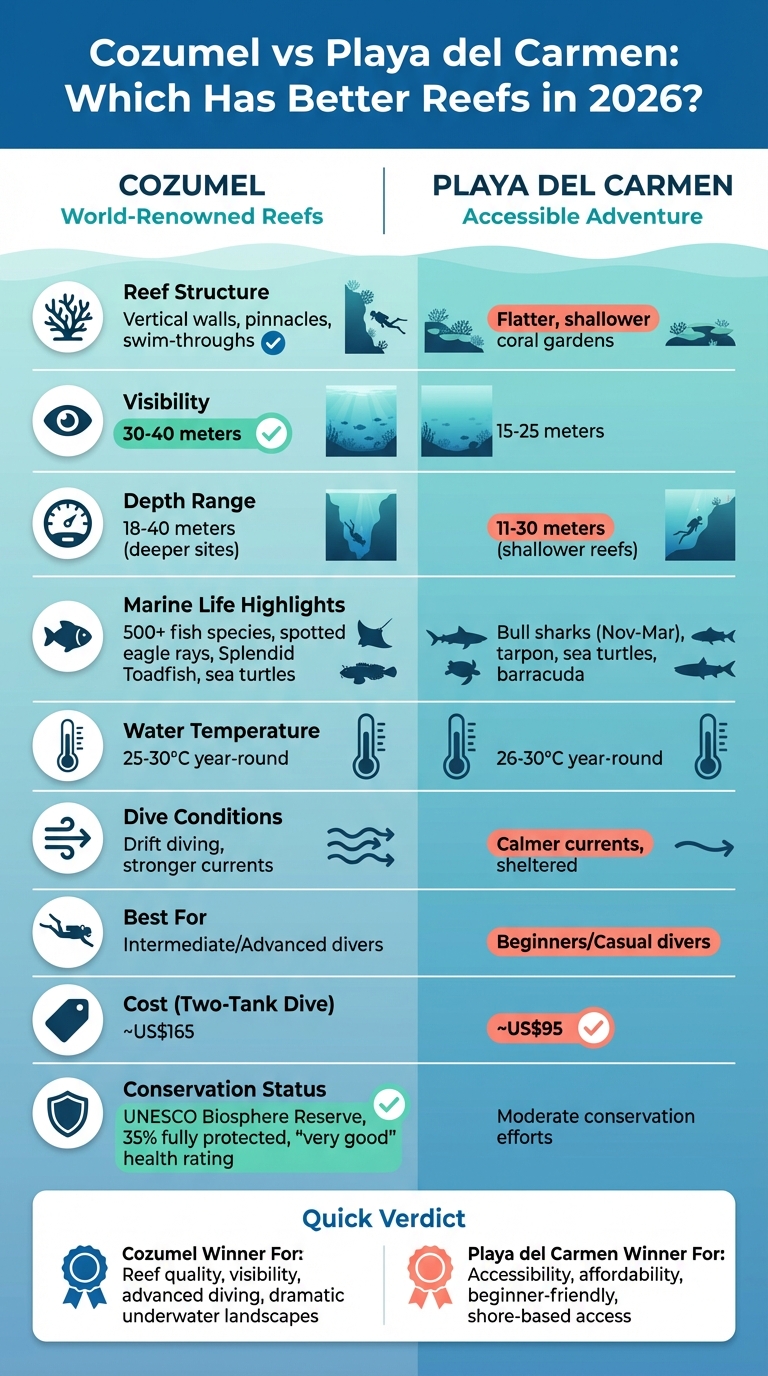
Cozumel vs Playa del Carmen Diving Comparison 2026
World's Best Scuba Diving Destinations - Cozumel and Playa del Carmen, Mexico
sbb-itb-8d6faf7
Cozumel Reef Diving
Cozumel's location off the mainland keeps its reefs protected from sediment and urban development, creating exceptional underwater visibility [3]. Massive vertical walls plunge into the deep blue, coral formations rise like underwater cathedrals, and natural tunnels carve through limestone, offering a diver's paradise [2].
Reef Structures and Topography
Cozumel's reefs are defined by their dramatic scale and vertical drop-offs. Palancar Reef, for example, boasts towering coral pinnacles and intricate swim-throughs, while Santa Rosa Wall plummets far beyond recreational diving limits [1]. For thrill-seekers, the Devil's Throat at Punta Sur offers a labyrinth of cavernous tunnels, ranging from 27 to 40 meters deep [1]. These aren't your average reefs - they’re steep, awe-inspiring walls that vanish into the abyss.
"Cozumel's reefs are cinematic, with massive coral towers, vertical drop-offs, and drift dives that make you feel like you're flying."
– Mik Jennings, Dive Instructor and Co-founder, Pixel Expeditions [2]
The steady ocean currents sweeping through the reef system bring a constant supply of nutrients, fueling the growth of barrel sponges and sea fans while creating ideal conditions for drift diving [3]. The 600-meter-deep channel separating Cozumel from Playa del Carmen ensures the reefs stay pristine and well-flushed [5], with their beauty amplified by Cozumel’s famously clear waters.
Water Visibility
Cozumel’s waters offer visibility of 30 to 40 meters year-round [3]. The island’s offshore position protects it from coastal runoff, a common issue that can cloud waters elsewhere.
Marine Life and Top Dive Sites
Cozumel is a haven for marine biodiversity, hosting over 500 fish species across more than 40 protected dive sites. Among its unique residents is the Splendid Toadfish, an endemic species often found hiding in crevices at Chankanaab Reef, Palancar Reef, and Paradise Reef [1][8][9]. From December to February, divers can witness schools of 6 to 12 spotted eagle rays gliding through Santa Rosa Wall and San Francisco [1].
Sea turtles, including Hawksbill and Green species, are regular visitors at dive spots like Palancar Gardens, Santa Rosa Wall, and Columbia Shallows [7]. Columbia Shallows, with depths between 6 and 12 meters, features vibrant coral gardens that provide stunning underwater vistas [1]. For night dives, Paradise Reef comes alive with intriguing creatures like octopuses and Spanish lobsters [1].
For advanced divers, Paso del Cedral offers encounters with nurse sharks and green moray eels, while the C-53 shipwreck (at depths of 9 to 24 meters) is home to barracuda and groupers [1]. Water temperatures remain comfortable throughout the year, ranging from 25°C to 30°C [1]. Beyond its marine life, Cozumel’s dive operators prioritize safety and ecological preservation.
Diving Conditions and Conservation
Cozumel is a diving-first destination, with strict marine park regulations ensuring the health of its reefs [3]. Dive operators enforce buoyancy checks and support conservation efforts like Reef Renewal Cozumel, which focuses on maintaining the reef’s biodiversity [2]. These initiatives, combined with the island’s crystal-clear waters and thriving ecosystems, make Cozumel a standout spot for divers.
Drift dives are common here, suiting intermediate and advanced divers. A surface marker buoy (SMB) is essential for safety when surfacing in areas with strong currents [9]. Costs for a standard two-tank dive range between US$120 and US$160, while full gear rental typically costs US$20 to US$25 per day. Additionally, the marine park fee is about US$5 per day [3][7].
"If you want to experience dive sites like Santa Rosa Wall, San Francisco Wall or go deep inside the caves, you'll come up short with Open Water Diver."
– Martin King, Owner, Dive With Martin [6]
Playa del Carmen Reef Diving
Playa del Carmen is home to coastal reefs that are shallower, flatter, and more sheltered, with coral formations found at depths of 11 to 30 meters. These conditions create an inviting underwater playground for divers of all experience levels.
Shallow Reefs for Beginners
The mainland’s location provides calm waters and gentle currents, making it an ideal spot for novice divers. Popular sites like Jardines, Shangri La, and Cerebros are found at depths of just 11 to 12 meters, allowing beginners to focus on buoyancy control while enjoying the vibrant marine life. Water temperatures stay comfortable year-round, ranging from 26°C to 30°C, and visibility typically spans 20 to 25 meters - slightly less than Cozumel's crystal-clear 30 to 40 meters.
"Playa's reefs may lack the drama of Cozumel's walls, but they win for accessibility. The dives are shallower, calmer, and teeming with life."
– Mik Jennings, Pixel Expeditions [2]
For those on a budget, Playa del Carmen offers attractive pricing. A two-dive package costs between US$100 and US$120, slightly less than Cozumel’s US$120 to US$160. Plus, there’s no need for ferry transfers - dive boats leave right from the beach, making logistics a breeze for visitors staying in town.
Marine Species and Dive Sites
Playa del Carmen’s reefs are alive with marine life. At Jardines de Tortuga (Turtle Gardens) Reef, sea turtles can be spotted feeding and nesting from March to September, with activity peaking between June and August. Besides turtles, divers can encounter moray eels, lobsters, and colorful tropical fish. Sites like Sabalos are known for attracting tarpon and barracuda around 14 meters deep.
From November to March, thrill-seekers can visit Shark Point, where seasonal bull sharks gather at depths of about 25 meters. Advanced divers might enjoy exploring the Mama Viña wreck at 28 meters, where schools of jacks and barracuda circle the sunken structure. For those looking to venture deeper, sites like Pared Verde and Los Arcos offer wall formations and the chance to spot groupers at around 30 meters.
Visibility and Access
Visibility in Playa del Carmen generally ranges from 20 to 25 meters but can vary depending on weather and seasonal changes. The mainland reefs are more exposed to sediment and freshwater runoff from the Yucatán Peninsula than Cozumel’s offshore sites. Additionally, sargassum seaweed can accumulate on the beaches between May and August, occasionally affecting boat departures and shore conditions.
Despite these factors, Playa del Carmen’s shore-based access makes diving highly convenient. Hotels are often within walking distance of dive shops, eliminating the need for ferry rides. Combined with affordable prices, beginner-friendly depths, and a variety of marine life, these reefs offer an accessible and enjoyable introduction to Caribbean diving. For less experienced divers, Playa del Carmen provides an appealing alternative to Cozumel’s deeper, more dramatic sites.
Cozumel vs Playa del Carmen: Side-by-Side Comparison
While both Cozumel and Playa del Carmen are part of the Mesoamerican Barrier Reef, the diving experiences they offer are quite different. Cozumel's position as an island helps shield its reefs from mainland sediment and runoff, ensuring clearer waters. On the other hand, Playa del Carmen's reefs, located along the coast, are more exposed to freshwater runoff from the Yucatán Peninsula, which can sometimes impact visibility and reef health [3].
"Cozumel ranks highest where reef quality, visibility, marine life, and advanced diving are concerned." – Sunset Cozumel [3]
The underwater landscapes also vary significantly. Cozumel is known for its dramatic underwater features like vertical walls, pinnacles, and swim-throughs. Playa del Carmen, in contrast, offers flatter coral gardens, which create a different kind of diving experience. These differences influence not only the types of marine life you’ll encounter but also the level of skill required for diving in each location. Here’s a quick look at how they compare:
Comparison Table
| Factor | Cozumel | Playa del Carmen |
|---|---|---|
| Reef Structure | Dramatic walls, pinnacles, and swim-throughs [1][3] | Flatter coral gardens [3] |
| Visibility | 30–40 meters (consistent) [3][2] | 15–25 meters (variable) [3][2] |
| Marine Biodiversity | Spotted eagle rays, Splendid Toadfish [1][2] | Bull sharks (seasonal) [2][3] |
| Dive Conditions | Drift diving; deeper sites (18–40 meters) [1][3] | Calmer currents; shallower reefs (11–30 meters) [3][2] |
| Conservation | Strong marine park protection (UNESCO Biosphere Reserve) [1][3] | Moderate conservation efforts [3][10] |
| Best For | Intermediate to advanced divers [3][2] | Beginners and casual divers [3][2] |
Your choice will depend on your diving experience and how adventurous you want your underwater journey to be.
Seth Dive Mexico Reef Diving Options
Here’s a breakdown of the reef diving packages offered by Seth Dive Mexico, tailored to the unique features of each destination. These private tours include personalized guides, hotel pickup (from Cancun to Tulum), and complete diving equipment.
Cozumel Diving Packages
The Cozumel package is priced at US$165 per person and offers a comprehensive experience. It includes:
- Two tanks for diving
- Private guides (max 4 divers per guide)
- Direct boat service from Playa del Carmen
- Full diving equipment
- Marine park fees
- Refreshments
This package also covers the mandatory fees required for diving in the Isla Cozumel Biosphere Reserve [10]. Cozumel’s underwater landscapes are breathtaking, making this package ideal for exploring its dramatic reefs.
"Cozumel reef diving was spectacular. Saw turtles, eagle rays, everything. 10/10." – Yuki T. [11]
Playa del Carmen Reef Diving Options
Playa del Carmen offers two main packages, catering to both experienced divers and beginners:
- Two-Tank Reef Dive: Costs US$95 per person and includes private guides, full equipment, and marine park fees.
- Discover Scuba Program: Priced at US$135 per person, this option is a PADI-certified introduction to scuba diving on shallow reefs, perfect for those without prior certification [11].
Both options maintain a maximum of four divers per guide, ensuring a personalized and safe experience. Playa del Carmen’s vibrant reefs make it an excellent choice for those seeking an accessible yet stunning dive.
Seth Dive Mexico has earned a stellar 4.9/5 rating on TripAdvisor and has been awarded the Travelers' Choice award for eight consecutive years. With over 8,000 satisfied customers [11], their multilingual guides provide briefings in English, Spanish, French, German, Italian, and Portuguese.
These packages are designed to complement the unique diving experiences at each destination, helping you plan your perfect reef dive in 2026.
Which Destination Has Better Reefs in 2026?
When it comes to reef health and diversity in 2026, Cozumel stands out as the clear winner. It has earned widespread recognition for its exceptional reef quality, achieving the only "very good" health rating among 234 sites surveyed along the Mesoamerican Barrier Reef. Impressively, Cozumel's grouper and snapper biomass is more than five times the regional average, with around 35% of its reefs fully protected [4]. These factors contribute to unmatched diving conditions.
"Cozumel ranks highest where reef quality, visibility, marine life, and advanced diving are concerned... its offshore location, strong currents, and marine park protections create conditions that mainland destinations cannot replicate." – Sunset Cozumel [3]
Final Recommendations
Cozumel: If you're looking for an exciting reef adventure, Cozumel is the way to go. Its dramatic wall dives, thriving coral ecosystems, and thrilling drift diving are ideal for intermediate and advanced divers. Packages like the US$165 option from Seth Dive Mexico include direct boat service from Playa del Carmen, making Cozumel an accessible yet unforgettable diving destination.
Playa del Carmen: For beginners or those seeking calmer waters, Playa del Carmen offers excellent options. The US$95 two-tank reef dive provides great value, featuring colorful reefs and seasonal bull shark encounters. For first-timers, the US$135 Discover Scuba program offers a safe and enjoyable introduction to diving on shallow reefs, free from Cozumel's stronger currents.
Both destinations bring something unique to the table, but your choice depends on your skill level and the type of underwater experience you’re after.
FAQs
Which months are best for Cozumel visibility?
The clearest waters in Cozumel can be found from November to February, aligning with the dry season. During this period, the water's clarity is at its best, creating perfect conditions for divers to explore the vibrant reefs and enjoy stunning underwater views.
Do I need Advanced Open Water for Cozumel walls?
An Advanced Open Water certification isn't mandatory to dive the walls in Cozumel. That said, it's a good idea to have it if you're planning to take on more demanding dives, like deep walls or drift dives. This certification can help boost your confidence and ensure you're prepared for those conditions.
How does sargassum affect Playa del Carmen dives?
Sargassum can affect diving experiences in Playa del Carmen by lowering water quality and visibility, particularly during peak seaweed seasons. This buildup can make snorkeling and diving less enjoyable in areas where the seaweed is concentrated. Since conditions can change, it's a good idea to check local reports before planning your dive.
Frequently Asked Questions
Can a complete beginner dive in Cozumel, or is it only for experienced divers?
Cozumel has some beginner-friendly shallow sites like Columbia Shallows (6–12 meters), but its signature wall dives and strong drift currents are better suited to intermediate and advanced divers. First-timers are generally better matched with Playa del Carmen's calmer, shallower reefs, where a Discover Scuba program lets you explore without any prior certification.
Do I need to take a ferry from Playa del Carmen to dive Cozumel, and how does that work?
Yes, Cozumel is an island roughly 18 kilometers offshore, so reaching it requires a ferry crossing from Playa del Carmen — typically around 45 minutes each way. When you book a guided Cozumel trip with Seth Dive Mexico, direct boat service from Playa del Carmen is included, so the logistics are handled for you from hotel pickup onward.
Are the bull sharks in Playa del Carmen dangerous for divers?
Bull shark dives at Shark Point are conducted as structured, guided encounters at around 25 meters depth from November to March, and experienced local guides manage the experience with established protocols — they are not casual reef dives. This excursion is recommended for certified divers comfortable at that depth, not beginners.
What certification level do I realistically need before diving Cozumel's walls and drift sites?
A PADI Open Water certification covers most of Cozumel's reef dives, but sites like Santa Rosa Wall, Devil's Throat, and any deep drift dive are significantly more rewarding — and safer — with an Advanced Open Water certification, which adds deep dive and navigation training. If you're not yet certified, you can complete a PADI course in the Riviera Maya before your Cozumel trip.
Is it possible to do both Cozumel and Playa del Carmen reefs on the same vacation?
Absolutely — many divers based in Playa del Carmen combine a Cozumel day trip for the walls and drift dives with local reef dives on other days, keeping travel time and costs manageable. Sharing your hotel location, available dates, and certification level with a local guide is the fastest way to build an itinerary that fits both destinations into your trip.