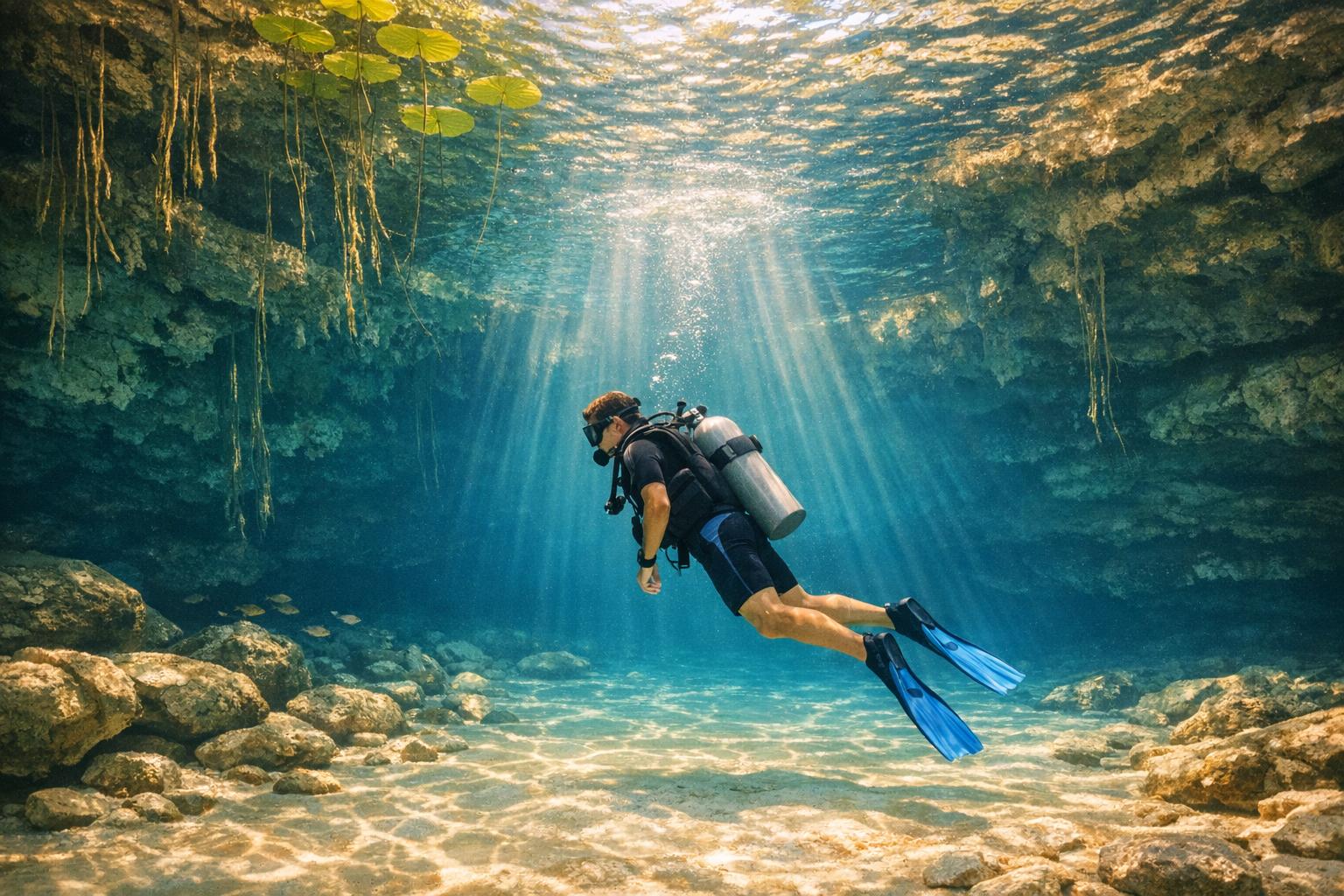
The Riviera Maya offers an ideal setting for beginner divers, thanks to its warm waters, calm conditions, and incredible visibility. With water temperatures ranging from 25°C to 29°C and visibility reaching up to 40 meters in the ocean and over 36 meters in cenotes, it’s a perfect place to start your underwater journey.
Here’s a quick guide to the region’s top beginner-friendly diving spots:
- Cenotes (Freshwater Sinkholes): Casa Cenote, Dos Ojos, and Car Wash Cenote provide calm, clear waters with depths of 5–15 meters. These unique sites allow you to practice skills while exploring stunning underwater formations.
- Ocean Reefs: Playa del Carmen and Puerto Morelos reefs feature shallow depths (6–15 meters), gentle currents, and vibrant marine life like turtles, rays, and colorful fish.
With professional PADI/SSI-certified instructors, beginner programs like Discover Scuba make diving accessible and enjoyable. Options start at $135 MXN per person, including equipment and guided dives.
Whether you prefer tranquil cenotes or lively reefs, the Riviera Maya has plenty of beginner-friendly options to ensure your first dive is safe, fun, and unforgettable.
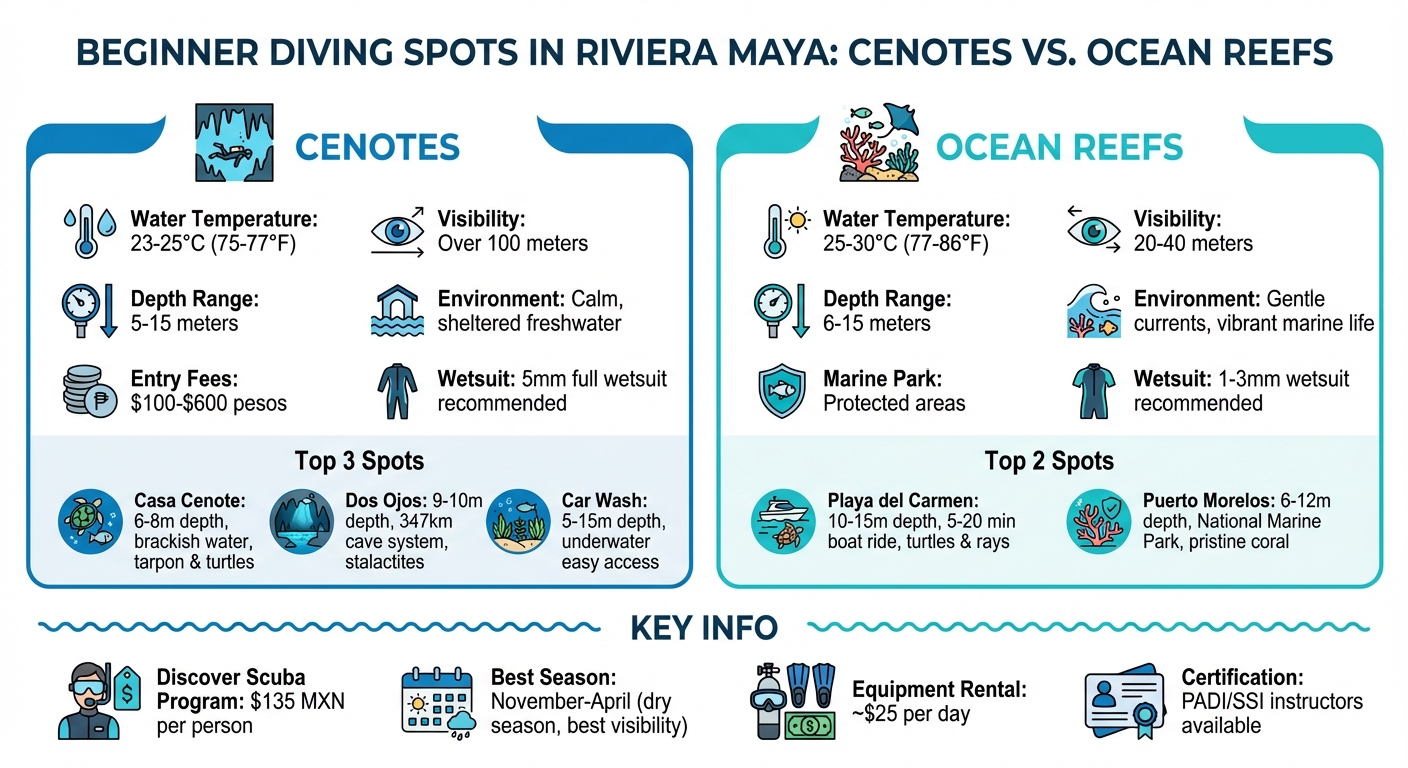
Riviera Maya Beginner Diving Spots Comparison: Cenotes vs Ocean Reefs
Riviera Maya: A Diver’s Eden 🤿🌊
sbb-itb-8d6faf7
Best Cenotes for Beginner Divers
Diving in cenotes offers a special experience with water temperatures consistently between 23–25°C (75–77°F) and visibility exceeding 100 meters [8][13]. These calm, sheltered environments are perfect for newcomers, as you won’t have to deal with ocean waves. Instead, you can focus on refining your buoyancy and breathing techniques.
Before diving, make sure to rinse off any sunblock or insect repellent to avoid harming the fragile ecosystem [9]. Entry fees typically range from $100 to $600 pesos per person, depending on whether equipment rental or guided tours are included [9]. Since freshwater tends to feel cooler than seawater, a 3mm or 5mm full wetsuit is recommended for a comfortable dive [13]. Below are three beginner-friendly cenotes that showcase ideal conditions for novice divers.
Casa Cenote: Open Waters and Gentle Currents
Casa Cenote, also known as Cenote Manatí, is where freshwater and the Caribbean Sea meet, creating a fascinating brackish water environment. With a maximum depth of 6–8 meters for beginners [10], this cenote’s open, river-like layout provides plenty of space to practice navigation. The mix of freshwater and seawater attracts diverse marine life, including tarpon, small crabs, freshwater turtles, and colorful cichlids. Its tranquil waters and unique ecosystem make it an excellent introduction to cenote diving.
Dos Ojos: Light Beams and Spacious Caverns
Dos Ojos, or "Two Eyes", is part of an expansive underwater cave system stretching over 347 kilometers [11]. The beginner-accessible areas are between 9–10 meters deep and feature wide-open caverns with plenty of room to explore [10].
"Dos Ojos is known for its multiple shallow dives, providing extended bottom time to explore the decorated caverns." – Bluewater Dive Travel [13]
The caverns are adorned with stunning stalactites and stalagmites formed over thousands of years. You might spot freshwater turtles, catfish, and even bats roosting in the upper chambers. Thanks to its crystal-clear visibility and spacious layout, Dos Ojos is a welcoming choice for new divers.
Car Wash Cenote: Pool-Like Areas and Easy Navigation
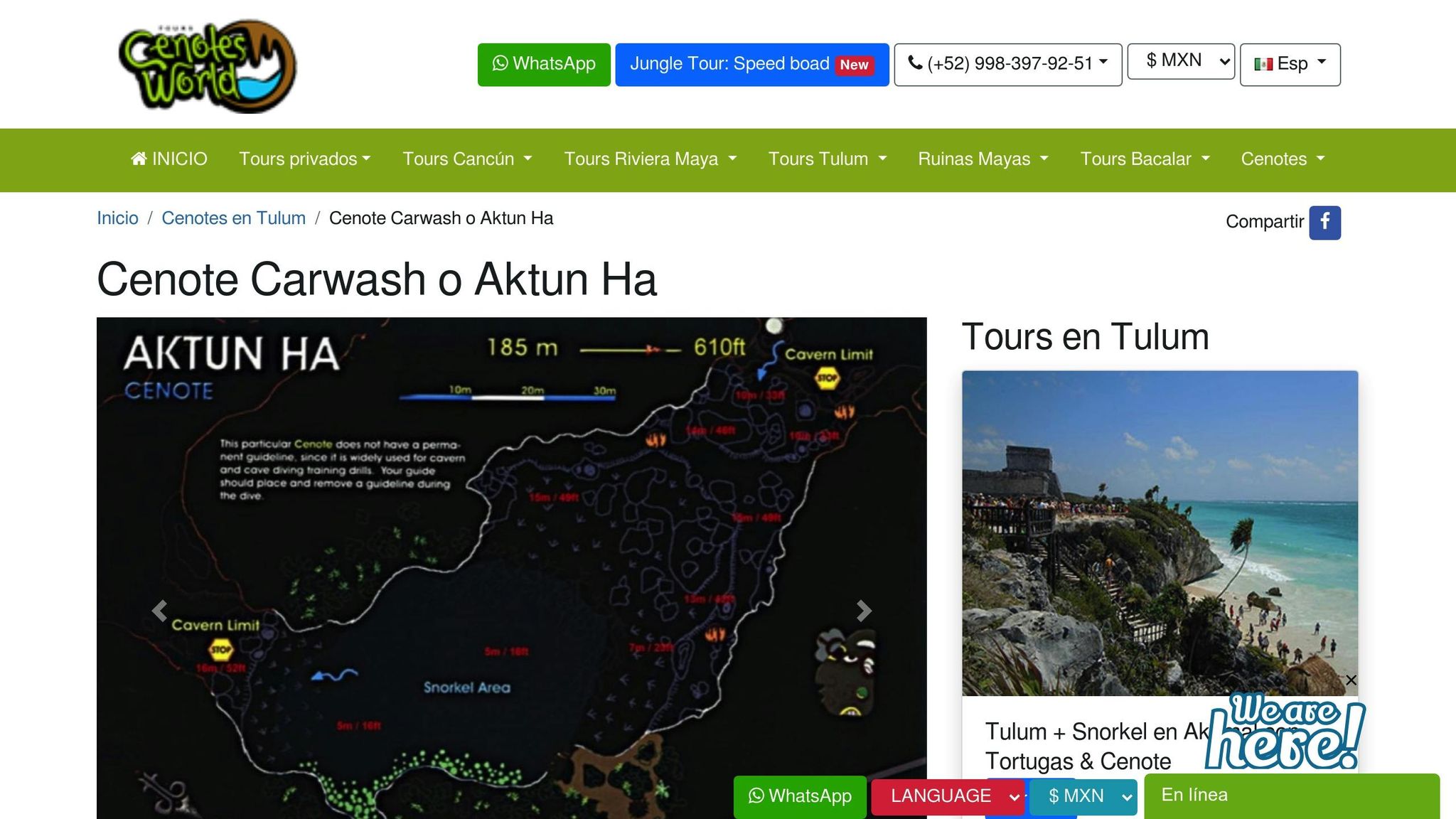
Locally called Aktun Ha, Car Wash Cenote resembles a natural swimming pool nestled in the jungle, making it a beginner-friendly option [3]. Its shallow sections start at around 5 meters, while deeper areas extend to 14–15 meters, giving divers a chance to build confidence at their own pace.
"Entering the water through tree roots and fallen branches evokes a surreal entrance into nature." – Bluewater Dive Travel [13]
This cenote is famous for its underwater "flowered garden", featuring vibrant algae, water lilies, and submerged trees that create a colorful and serene landscape [3][5][12]. Freshwater fish and turtles glide through the roots and branches, offering a peaceful setting to practice buoyancy control - an essential skill for protecting the delicate limestone formations. With its easy access, shallow depths, and picturesque surroundings, Car Wash Cenote is an ideal spot for first-time cenote divers.
Best Reefs for Beginner Divers
Once you've gained confidence in the calm waters of cenotes, it's time to explore the ocean's vibrant reefs. The Riviera Maya, part of the sprawling 1,500-km Mesoamerican Barrier Reef, offers ideal conditions for beginners. With water temperatures ranging from 25°C (77°F) in winter to 30°C (86°F) in summer, and visibility often stretching 20 to 40 meters, it's a diver's paradise [2]. These reefs provide the perfect next step to hone your skills while experiencing the underwater wonders of the Caribbean.
Playa del Carmen Reefs: Easy Access and Gentle Currents
The reefs near Playa del Carmen are a beginner's dream. Depths here range from 10 to 15 meters, and the short boat rides - usually 5 to 20 minutes from the marina - make them incredibly accessible [15]. The gentle northward currents offer a smooth, effortless drift, making you feel as though you're gliding underwater.
"A gentle current drifts divers along the reef - it feels just like flying underwater." – Scuba Planet Mexico [2]
These reefs are teeming with marine life. Expect to spot green and hawksbill turtles, eagle rays, nurse sharks, moray eels, and colorful schools of fish like parrotfish and angelfish [1]. Two standout beginner sites include Sabalos, at 15 meters deep, known for its mix of coral walls and sandy channels where green moray eels often peek out, and Chun-Zumbul, a shallow 10-meter site filled with vibrant coral formations and tropical fish [15].
Puerto Morelos Reefs: Pristine and Protected
For a quieter, more preserved experience, Puerto Morelos is the place to go. Situated within a National Marine Park, this section of the Mesoamerican Barrier Reef is one of the best-maintained stretches [14]. Its proximity to the shore and shallow depths of 6 to 12 meters make it perfect for beginners [14].
"Puerto Morelos is home to the best preserved section of the Mesoamerican Barrier Reef." – PADI [14]
The protected status of these reefs ensures a thriving underwater ecosystem. You'll find healthier coral structures and an abundance of marine life, including green and loggerhead turtles, nurse sharks, and eagle rays [14]. The best visibility occurs from June to September, while the months from November to March bring migrating eagle rays and other seasonal sea creatures [14].
Tips for First-Time Divers in Riviera Maya
Equipment and Preparation
If you're new to diving in the Riviera Maya, getting the right equipment is essential. Basic rental gear - like a BCD, regulator, fins, and mask - will set you back about $25 per day [16]. For ocean dives, a 1mm to 3mm wetsuit is ideal for the warm Caribbean waters. However, cenote diving is a different story. With freshwater temperatures holding steady at 24-25°C (75-77°F), you'll need a 5mm wetsuit to stay comfortable [7][16].
Cenote dives also require a dive light to explore darker cavern areas and highlight stunning rock formations [7]. Make sure you wear sturdy booties to protect your feet, especially when navigating rocky cenote entrances [16]. If you bring your own gear, you could save around $25 per day [16]. But keep in mind, some cenotes charge extra fees for photography equipment, so plan accordingly [16].
Once your gear is sorted, timing your dive becomes the next crucial step.
When to Dive in Riviera Maya
The Riviera Maya is a diver’s playground all year round. Water temperatures vary slightly, from 25-28°C (77-82°F) in winter to 27-29°C (81-85°F) during the summer [6]. The dry season, running from November to April, offers the clearest visibility - often exceeding 30 meters. However, winter winds can whip up choppy seas, which might be a challenge for newcomers [17]. If you're just starting out, consider visiting between May and October, when the waters tend to be calmer [17].
"In short, there is no single perfect time to dive in Playa del Carmen, but if I had to give a friend some advice, I would tell them to come between November and April, when visibility is at its best." – Cyril M, Scuba Diving Instructor, Triton Diving [17]
Cenotes, on the other hand, are a dependable option no matter the season. Their conditions remain consistent year-round, making them a great alternative if strong winds close marine parks [17][18]. If you're planning to dive during the busy holiday months of December and January, book your instructor and boat slots well in advance [17].
Once your schedule is set, it's time to focus on safety - both for yourself and the underwater world you're exploring.
Safety Guidelines for Beginners
Mastering buoyancy control is crucial, especially in cenotes where a misstep can damage fragile stalactites and stalagmites [7]. Equalize your ears frequently and practice slow, steady breathing to manage both buoyancy and air consumption.
For cenote dives, your guide must hold at least a Divemaster certification and be Full Cave certified [7]. Switching between reef and cenote dives? Remember that saltwater increases buoyancy, so adjust your weight belt accordingly [7]. And if you're considering a bull shark dive (available from November to March), avoid wearing bright or fluorescent colors and try to remain calm and still in the water [7].
If you're feeling a bit apprehensive, booking a private guided tour can be a great option. It allows for personalized attention and a relaxed pace, making your first diving experience much more enjoyable.
Discover Scuba Programs for Beginners
Seth Dive Mexico offers beginner-friendly Discover Scuba programs, perfect for exploring the tranquil waters of the Riviera Maya at your own pace.
Discover Scuba - Cenote
If you're new to diving, the Discover Scuba - Cenote program is a great way to start. No previous experience is required - just bring your curiosity! The adventure begins with shallow water training, where you'll get familiar with the equipment and learn basic techniques. Once you're comfortable, you'll head to a cenote for one or two dives, depending on how ready you feel.
Casa Cenote is the perfect location for this experience. This freshwater mangrove cenote connects to the ocean, creating a unique environment where you can encounter turtles, various fish species, and stunning cavern formations. Unlike enclosed cenotes, Casa Cenote offers an open, crystal-clear setting that feels like a natural pool, making it an ideal spot for beginners. The program costs $135 per person, which includes private instruction, all necessary scuba gear, and entry fees for the cenote.
"Not yet a certified diver? No problem! You can still get the Cenote Diving experience doing a discover scuba dive here at Casa Cenote." – Seth Dive Mexico
If freshwater diving excites you, the warm Caribbean waters provide another fantastic option for your first scuba experience.
Discover Scuba - Ocean
The Discover Scuba - Ocean program is another beginner-friendly option, offering a chance to explore the vibrant marine life of the Caribbean. Training starts in a pool, where you'll gain confidence and practice essential diving skills. Once you're ready, you'll head out for two guided dives on the shallow reefs near Playa del Carmen, at depths of 9–12 meters (30–40 feet). Here, you'll encounter colorful tropical fish, sea turtles, rays, and stunning coral formations.
The reefs' calm and protected conditions make them perfect for first-time divers. This program also costs $135 per person and includes all scuba equipment as well as marine park fees. Instruction is available in multiple languages, including English, Spanish, French, and German.
Conclusion
The Riviera Maya stands out as an ideal destination for beginner divers, thanks to its crystal-clear cenotes and vibrant Caribbean reefs. With water temperatures ranging from 25°C to 30°C throughout the year, underwater visibility reaching up to 40 meters in the ocean, and about 36 meters in cenotes, the region offers perfect conditions to help first-timers build their confidence underwater [1][4].
Whether you’re drawn to the calm, pool-like waters of Casa Cenote or the colorful, shallow reefs near Playa del Carmen, there are diving spots tailored to every comfort level. Certified PADI or SSI instructors ensure personalized attention and prioritize safety, making each dive both enjoyable and secure [1].
From serene cenotes to sheltered reefs, these diverse environments provide the perfect backdrop for your diving journey. Seth Dive Mexico’s Discover Scuba programs simplify the experience with private instruction, full equipment, and carefully chosen dive sites - all for $135 per person. This comprehensive package eliminates obstacles, allowing you to focus entirely on the beauty of the underwater world.
With its incredible natural settings, professional diving services, and varied underwater landscapes, the Riviera Maya offers the perfect starting point for your scuba adventure. Under expert guidance, your first dive will be an unforgettable experience in one of the planet’s most stunning underwater environments.
FAQs
Do I need a certification to dive in a cenote?
Yes, you’ll typically need a diving certification to explore a cenote. An open water or equivalent certification is sufficient for beginner divers to enjoy many cenotes in the Riviera Maya. These cenotes often feature calm waters and shallow depths, making them ideal for less experienced divers.
Cenotes or ocean reefs: which is easier for my first dive?
For those just starting out, cenotes are often a gentler option compared to ocean reefs. Shallow cenotes, like Casa Cenote in Tulum, provide calm, clear waters that make them perfect for practicing basic diving skills in a controlled setting. While ocean reefs near Cancun or Tulum are also an option, they tend to have deeper waters and mild currents, which can pose more of a challenge for beginners. For this reason, cenotes are typically the safer and more comfortable starting point.
What should I bring (and avoid) for a beginner dive in Riviera Maya?
If you're planning your first dive in the stunning Riviera Maya, make sure to pack the right essentials. Here's what you'll need:
- Dive certification card: This is a must-have to join any dive.
- Mask, snorkel, and fins: These basics ensure a comfortable underwater experience.
- Wetsuit: Opt for one suitable for waters around 27°C to stay warm and protected.
- Reef-safe sunscreen: Protect both your skin and the marine ecosystem.
- Towel: Handy for drying off after your dive.
- Optional gear: A waterproof camera can help capture unforgettable moments.
What to Leave Behind
To make the most of your dive, avoid bringing:
- Heavy or unnecessary gear: Travel light for convenience.
- Valuables: Keep expensive items safe at home or your accommodation.
- Regular sunscreen: Stick to reef-safe options to prevent harm to marine life.
And remember, no matter how tempting it may be, avoid touching coral or marine creatures. This helps protect the delicate underwater ecosystem while ensuring a safe and enjoyable experience for everyone.
Frequently Asked Questions
Can I try cenote diving without a scuba certification?
Yes — a Discover Scuba program lets you dive a cenote like Casa Cenote with no prior experience. Seth Dive Mexico's guided session starts at $135 per person and includes private instruction, all gear, and cenote entry fees, so you don't need any certification to get in the water.
Is there pickup available if I'm staying outside Playa del Carmen?
Free hotel pickup is available across the Riviera Maya from Cancun all the way down to Tulum, so your location doesn't need to be a planning obstacle. Just share your hotel or accommodation address when you reach out and the logistics get handled for you.
How do I know which cenote is right for my skill level?
Depth and layout vary meaningfully between sites — Casa Cenote tops out around 6–8 meters with an open river-like feel, while Dos Ojos has cavern sections reaching 9–10 meters that reward slightly more confident divers. Messaging Seth with your experience level gets you a specific recommendation rather than a one-size-fits-all answer.
What's the best time of year for a beginner to dive in the Riviera Maya?
May through October tends to offer calmer ocean conditions that are more forgiving for first-timers, while November through April brings the clearest visibility but occasional winter chop on the surface. Cenotes stay consistent year-round, making them a reliable option any month.
Do beginner dive programs include all the gear, or do I need to rent separately?
Both the Discover Scuba Cenote and Ocean programs include all necessary scuba equipment in the $135 per person price, so there's no separate rental fee to budget for. If you dive into a certification course instead, gear is also provided throughout the training dives.