Taking your first dive can feel overwhelming, but choosing the right program, location, and operator simplifies the process. Mexico's Riviera Maya offers beginner-friendly options like Discover Scuba Diving and PADI Open Water Certification, each catering to different goals and schedules. Here's what you need to know:
- Discover Scuba Diving: A short, 2-3 hour session for those curious about diving without committing to certification. Maximum depth: 12 meters (40 feet). Cost: $130–$190 USD.
- PADI Open Water Certification: A 3-4 day course allowing independent dives up to 18 meters (60 feet). Cost: $335–$488 USD.
- Cenote vs. Ocean Diving: Cenotes offer calm, clear freshwater environments, while ocean dives feature vibrant marine life and dynamic conditions.
- Key Requirements: Minimum age of 10, basic swimming comfort, and medical clearance for certain conditions.
For your first dive, prioritize safety by selecting a professional operator with well-maintained equipment and certified instructors. With proper preparation, your underwater journey will be both safe and unforgettable.
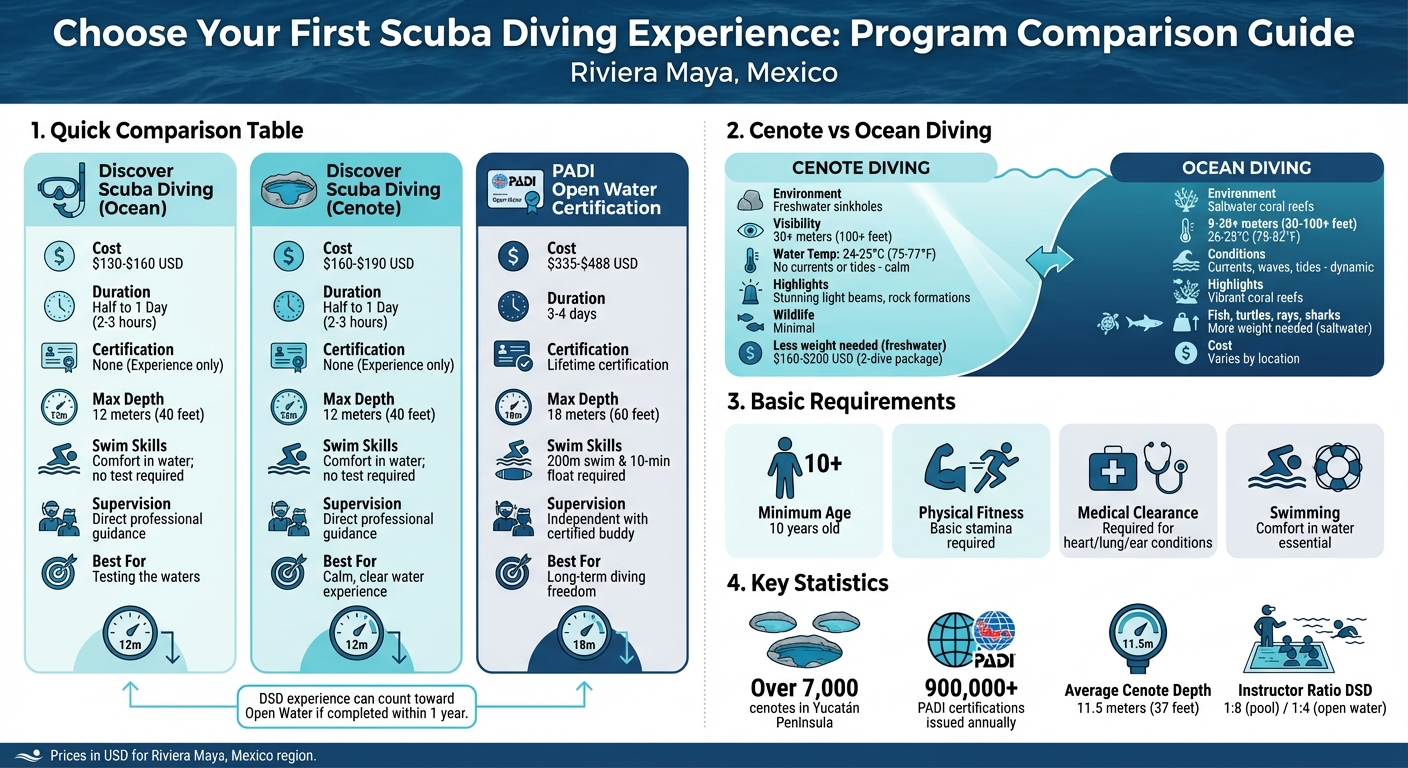
Scuba Diving Programs Comparison: Discover Scuba vs PADI Certifications in Mexico
5 Tips For Beginner Open Water Scuba Divers
sbb-itb-8d6faf7
Evaluating Your Readiness to Dive
Getting ready for a dive in the Riviera Maya starts with understanding your own preparedness. Before you book, make sure you meet the basic requirements. While scuba diving is accessible to many, there are a few key criteria you’ll need to check off - don’t worry, you don’t need to be an Olympic swimmer!
Age and Physical Fitness Requirements
For beginner programs, the minimum age is 10 years old[5]. Divers aged 10–11 are limited to a depth of 12 metres (40 feet) and must dive with a guardian or a PADI Professional. Once they turn 12, they can explore up to 18 metres (60 feet) with a certified buddy[5].
You’ll also need to complete a medical questionnaire as part of the process. If you have any issues related to your heart, lungs, or ears, a doctor’s clearance is required[6]. Basic physical fitness is important too - you’ll need enough stamina to manage the equipment and handle underwater conditions comfortably.
Swimming Skills and Water Comfort
Feeling at ease in the water is key for any diving experience. For Discover Scuba Diving, you don’t need advanced swimming skills, but you should be comfortable maintaining buoyancy on the surface[6]. As PADI puts it:
"You do not need to be an Olympic swimmer to take a DSD; however, you should feel comfortable in the water and be able to maintain yourself at the surface." – PADI[6]
If you’re aiming for Open Water certification, the requirements are a bit more structured. You’ll need to swim 200 metres continuously (or 300 metres with snorkeling gear) and float for 10 minutes[7]. These tasks are manageable for most people but do require a basic level of water confidence. If you’re not quite there yet, consider taking swimming lessons or starting with a Discover Scuba session in a pool to build your comfort level. These foundational skills will help you decide which diving program suits you best.
Beginner Programs vs. Certification Courses
Once you’ve assessed your fitness and water skills, you can choose between a beginner experience or a certification course, depending on your goals and schedule.
Discover Scuba Diving is a short, 2–3-hour session that introduces you to underwater breathing without requiring certification[9]. It’s perfect for those who want a taste of diving without a long-term commitment.
On the other hand, the Open Water Diver certification is a more in-depth program lasting 3–4 days. This course certifies you to dive independently with a buddy to depths of up to 18 metres (60 feet)[9]. With this globally recognized certification, you’ll also be able to rent gear and book dives at various locations. If you decide to continue diving after a Discover Scuba session, many programs allow you to credit that experience toward your Open Water certification if you complete it within a year[10].
| Feature | Discover Scuba Diving | Open Water Certification |
|---|---|---|
| Certification | None (experience only) | Lifetime certification |
| Duration | 2–3 hours (single day) | 3–4 days (average) |
| Max Depth | 12 m / 40 ft | 18 m / 60 ft |
| Swim Skills | Comfort in water; no test | 200 m swim & 10-min float |
| Supervision | Direct professional help | Independent with buddy |
Selecting Your First Dive Type
Once you've assessed your readiness, the next step is picking a dive program that aligns with your schedule, comfort level, and long-term diving goals. Mexico offers plenty of beginner-friendly options, so your choice will depend on how much time you have, your confidence in the water, and whether you're looking for a quick experience or a full certification.
Discover Scuba Diving: A One-Day Introduction
If you're curious about scuba diving but not ready to commit to a longer course, Discover Scuba Diving (DSD) is a great way to test the waters. This 2–3 hour session gives you a taste of scuba diving without requiring certification. It starts with a safety briefing, followed by practicing basic skills in shallow water, and ends with an open water dive to a maximum depth of 12 meters (40 feet), always under the close supervision of an instructor [10].
To ensure safety and personal attention, the instructor-to-student ratio is kept low - 1:8 in pools and 1:4 in open water [10]. As PADI Master Scuba Diver Trainer Liz Wilkie explains:
"The PADI Discover Scuba Diving (DSD) program is a short diving experience... ideal for those interested in trying scuba but lacking spare time." – Liz Wilkie, PADI MSDT [9]
The actual dive typically lasts between 30 and 50 minutes [6]. Plus, if you decide to pursue certification later, your DSD experience can count toward your Open Water certification if completed within a year [10, 18].
If you're ready to dive deeper - both literally and figuratively - let's compare two popular PADI certification programs.
PADI Scuba Diver vs. Open Water Certification
When deciding between the PADI Scuba Diver and Open Water Diver certifications, it comes down to your schedule and how much independence you want while diving.
The Scuba Diver certification is a quicker option, taking just 2–3 days to complete. However, it’s designed for those who plan to dive with a PADI Professional. It covers 3 out of 5 confined water sessions, 2 out of 4 open water dives, and the first 3 knowledge modules. The depth limit for this certification is 12 meters (40 feet) [11].
On the other hand, the Open Water Diver certification is more thorough and takes 4–7 days to complete. It allows you to dive independently with a certified buddy, with a maximum depth of 18 meters (60 feet). This course includes all 5 confined water sessions, all 4 open water dives, and all 5 knowledge modules, along with a final exam [11]. Each year, over 900,000 divers choose PADI certification [11]. Megan Denny from PADI describes the Scuba Diver course as:
"Completing the PADI Scuba Diver course is a bit like obtaining a learner's permit when learning to drive." – Megan Denny, PADI [11]
Here's a quick comparison of the two programs:
| Feature | PADI Scuba Diver | PADI Open Water Diver |
|---|---|---|
| Duration | 2–3 days | 4–7 days |
| Max Depth | 12 m / 40 ft | 18 m / 60 ft |
| Supervision | Must dive with a PADI Professional | Can dive with a certified buddy |
| Confined Sessions | 3 out of 5 sessions | All 5 sessions |
| Open Water Dives | 2 out of 4 dives | All 4 dives |
| Knowledge Modules | First 3 sections | All 5 sections + Final Exam |
If you're short on time and plan to dive under professional guidance, the Scuba Diver course is a practical choice. But if you want the freedom to explore on your own and access deeper dive sites, the Open Water certification is the way to go. Both certifications are valid for life [8].
Cenote Diving vs. Ocean Diving
Mexico is home to two distinct underwater environments, each offering a completely different experience. Cenotes are freshwater sinkholes with crystal-clear waters, while ocean diving immerses you in saltwater ecosystems bustling with marine life. Though both are suitable for beginners, they come with unique challenges and rewards. Let’s dive into what sets these two experiences apart.
Cenote Diving: Freshwater Caverns
Cenotes, found across the Yucatán Peninsula, are natural limestone sinkholes - there are over 7,000 of them [4]. These freshwater pools often feature incredible visibility, exceeding 30 meters (100 feet) [14]. With no currents or tides, cenotes offer a calm and predictable environment, making them ideal for first-time divers.
The average depth of a cenote is about 11.5 meters (37 feet) [4], and access is usually straightforward, with stairs, platforms, or ladders [14]. One of the most magical aspects of cenote diving is the light. Sunbeams filter through rock openings, creating stunning visual effects as you glide between massive stone formations [14]. While the water temperature averages 24–25°C (75–77°F), the lack of direct sunlight can make it feel cooler, so a 5mm or 7mm wetsuit is recommended [3].
Mastering buoyancy is key in cenote diving. Kicking up silt can quickly cloud the water [3], so a frog kick is preferred over a flutter kick to maintain clarity [3]. Additionally, because freshwater is less dense than saltwater, you’ll need less weight for proper buoyancy [13]. A weight check before diving is a must. If you're planning a cenote dive, expect to pay between $160 and $200 USD for a standard two-dive package, which typically includes transportation and entrance fees [13]. For those bringing cameras, some cenotes charge additional fees ranging from $7 to $23 USD (150–500 pesos) [13].
While cenotes offer tranquility and surreal beauty, ocean diving brings a completely different kind of adventure.
Ocean Diving: Coral Reefs and Marine Life
Ocean diving in Mexico takes you into saltwater environments teeming with life. Dive sites are usually accessed by boat, and water temperatures range from 26–28°C (78–82°F) [14]. Visibility varies depending on conditions, from around 9 meters (30 feet) to over 30 meters (100 feet) [14]. Unlike the calm waters of cenotes, the ocean presents dynamic conditions, including currents, waves, and tides, requiring stronger navigation skills and adaptability.
The biodiversity in ocean diving is a major draw. You could find yourself swimming alongside vibrant coral reefs, tropical fish, rays, sea turtles, or even larger species like sharks. Because saltwater increases buoyancy, you’ll need more weight than you would in a cenote [13]. Strong finning techniques and an awareness of your surroundings are crucial in these ever-changing conditions.
Ultimately, the choice between cenote and ocean diving depends on your experience and what you’re looking for - whether it’s the serene beauty of freshwater caverns or the thrill of exploring saltwater ecosystems filled with life.
Finding a Safe and Professional Dive Operator
Once you've decided on the type of dive you'd like to try, the next step is finding a dive operator that prioritizes safety and quality. This choice is especially important for your first underwater adventure. While over a million certifications are issued annually by PADI Instructors and Dive Shops worldwide[8], not all operators adhere to the same standards. Your safety hinges on selecting a shop that emphasizes well-maintained equipment, verified credentials, and personalized instruction rather than simply offering the lowest price.
What to Look for in a Dive Operator
Start by ensuring the dive operator is a PADI-certified dive center with qualified professionals trained to guide and teach beginners[16][2]. Tools like the PADI Adventures app or website can help you check reviews, pricing, and photos of dive operations[15]. For extra peace of mind, use PADI Pro Chek to confirm an instructor’s membership is up to date and that they are authorized to teach[18].
Equipment quality is another key factor. Operators that charge slightly higher fees often reinvest in maintaining their gear. As PADI guest blogger Sam Helmy explains:
"In diving, the expression 'you get what you pay for' has never been truer... That small difference is what allows good dive operators to have good maintenance standards, equipment reinvestment, and flexibility to give YOU the best possible experience"[15].
If you can visit the dive shop in person, look around to see how clean and organized it is. A poorly maintained shop might indicate a lack of care for life-support equipment[17].
Reputable operators will also require medical clearance before allowing you to dive. Check their website and communication style - professional operators provide detailed information about local dive sites, conditions, and safety procedures, not just a list of prices. Speaking with instructors over the phone or via video chat can also give you a sense of their teaching style and enthusiasm. They should address your questions with genuine care and attention[18].
By focusing on these factors, you'll be able to find a dive shop that’s well-suited for beginners and committed to providing a safe, enjoyable experience.
Seth Dive Mexico for First-Time Divers
Seth Dive Mexico specializes in programs designed for first-time divers. Their official PADI Discover Scuba Diving experiences take place in cenotes or ocean settings and cost US$135. These experiences are entirely private, ensuring you’ll receive one-on-one attention without being grouped with strangers. They even include free hotel pickup throughout the Riviera Maya.
Their beginner programs are all-inclusive, covering scuba equipment, entrance or marine park fees, and guidance from professional PADI-certified instructors. If you’re ready to take the next step, Seth Dive Mexico also offers PADI Open Water courses starting at US$325. These courses include all materials, pool training sessions, and open water dives. With multilingual guides and private instruction, you’ll enjoy clear communication and the flexibility to learn at your own pace.
Planning Your Budget
Understanding costs upfront helps you choose a program that aligns with your budget. In the Riviera Maya, an introductory scuba dive typically ranges from US$130 to US$185 (about 2,500 to 3,500 pesos)[1], while a full PADI Open Water certification averages around US$488 (approximately 9,500 MXN)[20]. The price difference lies in the nature of the experiences: Discover Scuba is a single-day, non-certification activity, whereas the Open Water course spans multiple days and provides a lifetime certification. The table below offers a straightforward comparison of costs and features for beginner programs.
Price Comparison for Beginner Programs
Here’s a breakdown of the main beginner options, including costs and key details:
| Program Type | Typical Cost (USD) | Duration | Certification | Max Depth |
|---|---|---|---|---|
| Discover Scuba Diving (Ocean) | $130 – $160 | Half to 1 Day | None (Experience only) | 12 metres (40 feet) |
| Discover Scuba Diving (Cenote) | $160 – $190 | Half to 1 Day | None (Experience only) | 12 metres (40 feet) |
| PADI Open Water Diver | $335 – $488 | 2 to 3 Days | Lifetime License | 18 metres (60 feet) |
Cenote dives are generally priced higher due to additional factors like transportation from Playa del Carmen, entrance fees, and the specialized guidance required for freshwater cavern environments[1]. As diving instructor Cyril M explains:
"A cenote baptism costs between 3,000 and 3,500 MXN... as the activity often includes transportation from Playa del Carmen, entrance fees to the site, and personalized guidance."[1]
What's Included and Optional Extras
Most beginner scuba programs cover essential items like scuba equipment, instructor fees, and basic safety gear. For Discover Scuba experiences, you can expect to receive all necessary equipment, one or two guided dives, and sometimes hotel pickup. For instance, Seth Dive Mexico offers Discover Scuba programs starting at US$135, which include scuba gear, entrance or marine park fees, and complimentary hotel pickup across the Riviera Maya.
Full certification courses generally include eLearning materials, pool sessions, and open water dives. However, it’s crucial to confirm exactly what’s included. Some budget-friendly options (under US$200) might not cover the PADI eLearning access code, which costs an additional US$230–US$250[12][21]. Be sure to ask if the quoted price also includes the certification card, marine park fees (typically US$5–US$10 in areas like Cozumel), and equipment rental for training days[1][22].
Extras to consider include underwater photography, dive insurance (ranging from US$40 to US$120 annually), and personal gear like masks and fins (usually US$200–US$300)[21]. Many dive operators also provide online booking discounts, often 10–15% lower than walk-in rates[19].
Conclusion
Your first scuba diving experience depends on being physically prepared, choosing the right program, and finding a qualified operator. If you're looking to ease into the sport, a Discover Scuba Diving program is a great choice. It offers a relaxed introduction with a maximum depth of 12 metres and doesn’t require certification[6]. These initial steps naturally set the stage for prioritizing safety and effective instruction during your first dive.
Safety should always be your top priority. Professional instructors go through extensive training to handle everything from equipment checks to emergency procedures. As Suzee Skwiot from Scuba.com points out:
"Scuba diving is a very safe sport when practiced sensibly. It's very important to always dive within your limits."[23]
This means sticking to standardized programs rather than unregulated resort courses and being upfront about any medical conditions or anxieties you may have.
Equally important is feeling comfortable in the water. The best instructors adapt to your pace, staying close by during introductory dives to ensure you feel secure. Open communication allows them to adjust the session to your needs, helping you feel at ease. Whether you prefer the serene, clear waters of a cenote or the vibrant marine life of an ocean dive, choosing the right environment can make your first dive truly memorable.
Whether you decide to try a Discover Scuba Diving program or aim for full certification, matching your choice to your comfort level and skills is key. For example, Seth Dive Mexico offers private Discover Scuba programs starting at US$135 (around 2,600 MXN). Their packages include all equipment, hotel pickup across the Riviera Maya, and personalized instruction for both cenote and ocean dives. With private guides and flexible itineraries, they make it easy for first-time divers to focus on the adventure instead of worrying about logistics or large groups.
Take the time to review medical questionnaires, compare program prices, and confirm what’s included to ensure a smooth experience. With the right preparation, your first dive can mark the beginning of an incredible underwater journey.
FAQs
Which first option is best for me: Discover Scuba or Open Water?
Deciding between Discover Scuba Diving (DSD) and the Open Water Diver course comes down to your comfort level and what you want to achieve.
DSD offers a quick, beginner-friendly introduction to scuba diving. It's designed for those who want to dip their toes in the water - literally and figuratively - without committing to a full certification. You'll explore calm, shallow waters under close supervision, making it a great choice for first-timers.
On the other hand, the Open Water Diver course is for those ready to take the plunge (pun intended) into certification. This course equips you with the skills to dive independently and opens the door to a range of underwater adventures.
If you're unsure about diving, DSD is a fantastic way to test the waters. And if you find yourself hooked, you can always move on to the Open Water course later!
Should my first dive be in a cenote or in the ocean?
Both cenotes and the ocean offer distinct experiences for first-time divers. Cenotes, with their calm and clear freshwater, are perfect for beginners seeking a serene environment. On the other hand, ocean dives let you explore colorful marine life and stunning coral reefs, though they may come with currents and greater depths. Your choice ultimately depends on your comfort level, personal interests, and ability to manage different underwater conditions.
What should I ask a dive shop to confirm it’s safe?
To gauge whether a dive shop puts safety first, start by asking if their staff and Divemasters actively supervise dives in the water. Check if they carry essential safety gear like oxygen, life jackets, and first aid kits. It's also wise to ask about their safety record, how often they maintain their equipment, and the level of training their staff receives. Make sure they are aware of the nearest recompression chamber's location and that they carefully review medical forms to address any specific health concerns.
Frequently Asked Questions
Can I try scuba diving in a cenote even if I have never dived before?
Yes, cenotes are actually one of the best environments for a first dive because the water is calm, current-free, and exceptionally clear, often with visibility beyond 30 meters. A Discover Scuba session in a cenote keeps you at a maximum depth of 12 meters under direct instructor supervision, so no prior experience or certification is needed. Seth Dive Mexico offers private cenote Discover Scuba programs starting at US$135, including gear and hotel pickup.
Does my PADI Open Water certification expire if I do not dive for a few years?
The certification itself never expires, but your practical skills can fade, and many dive operators will ask about your recent dive history before taking you to more demanding sites. If you have not dived in a year or more, a refresher session, sometimes called a ReActivate course, is a smart way to rebuild confidence and demonstrate readiness before tackling deeper or more technical dives.
What is actually included in a cenote dive package and what will cost extra?
Most reputable packages include scuba equipment, a certified guide, and cenote entrance fees, but it is worth confirming whether transportation from your hotel, the PADI eLearning code for certification courses, and underwater camera fees are covered. Some cenotes charge an additional 150 to 500 pesos for cameras, and budget operators may quote a low headline price that excludes the eLearning access code worth US$230 or more. Asking for a full itemized list before booking prevents surprises on the day.
How do I know if a dive operator in the Riviera Maya is genuinely certified and safe?
Look for operators affiliated with PADI and use the PADI Pro Chek tool to verify that individual instructors hold a current, active membership and are authorized to teach. Beyond credentials, reputable operators will ask you to complete a medical questionnaire, carry on-site oxygen and first aid equipment, and tell you the location of the nearest recompression chamber. A guide who asks about your experience level and comfort before the dive, rather than just your payment, is a strong positive signal.
Can I do a cenote dive or Discover Scuba if I am traveling with kids?
Children as young as 10 can participate in Discover Scuba Diving, though divers aged 10 to 11 are limited to 12 meters and must dive alongside a parent, guardian, or PADI Professional. Cenotes are a particularly family-friendly choice because there are no waves or currents and entry is typically via stairs or platforms. Letting your operator know the ages and experience levels in your group ahead of time makes it easy to match the session to everyone safely.