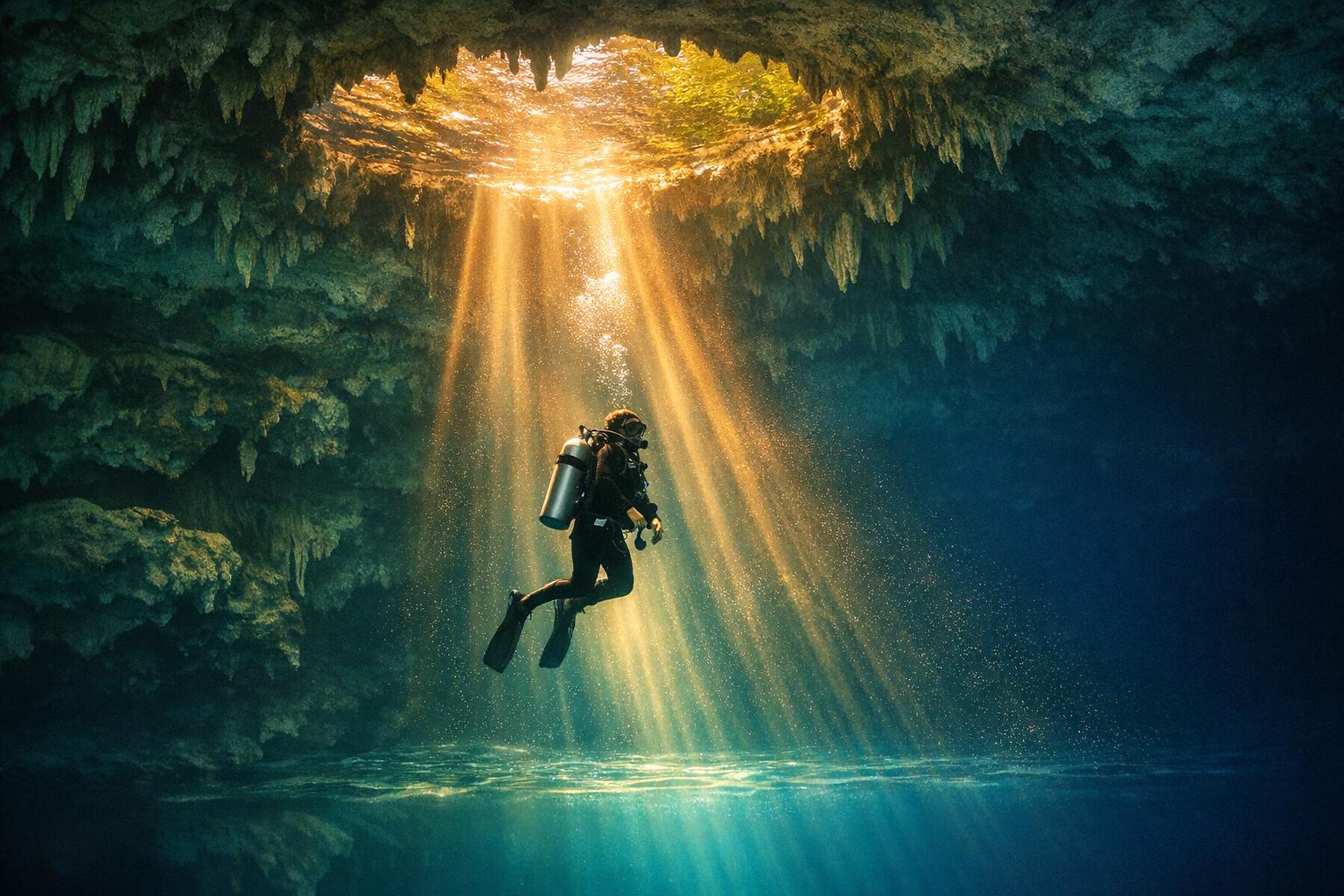
Cenotes in the Riviera Maya offer some of the most stunning diving experiences in the world. These natural sinkholes, formed by collapsed limestone bedrock, reveal crystal-clear waters, underground rivers, and breathtaking cave systems. With visibility often exceeding 36 meters and steady water temperatures of 24°C–27°C, they are a diver's paradise. Whether you're new to diving or a seasoned expert, there's a cenote for every skill level.
Here are the 10 best cenotes for diving in the Riviera Maya:
- Dos Ojos: Famous for its expansive underwater cave system and light effects.
- The Pit: Known for its dramatic depth, halocline, and hydrogen sulfide cloud.
- Dreamgate: Features intricate stalactites and stalagmites, offering a surreal experience.
- Casa Cenote: An open-air cenote surrounded by mangroves, perfect for beginners.
- Cenote Angelita: Offers an eerie hydrogen sulfide cloud at 30 meters deep.
- Cenote Calavera: Recognizable for its "skull-like" openings and unique light displays.
- Gran Cenote: A shallow, beginner-friendly spot with turtles and clear waters.
- Cenote El Eden (Ponderosa): Famous for its "curtains of light" and lush aquatic life.
- Cenote Tajma Ha: Connects three cenotes with stunning haloclines and fossils.
- Cenote Chac Mool: Beginner-friendly with mesmerizing light effects and an air dome.
Quick Tips:
- Certifications: Open Water certification is enough for most cenotes, but Advanced Open Water or Cave Diver certification is required for deeper or darker areas.
- Costs: Expect to pay between $2,000–$4,000 MXN for guided dives, plus entrance fees ranging from $120–$900 MXN.
- Best Time: Visit between May and October for optimal visibility. For light effects, dive between 10:30 AM and 12:00 PM.
- Gear: A 5mm wetsuit is recommended due to the consistent water temperatures.
Cenote diving combines natural beauty, fascinating geology, and a sense of adventure. Each site offers something special, from light beams at Dos Ojos to the eerie depths of Angelita. Whether you're diving for the first time or exploring the world's longest underwater cave systems, the Riviera Maya's cenotes promise unforgettable experiences.
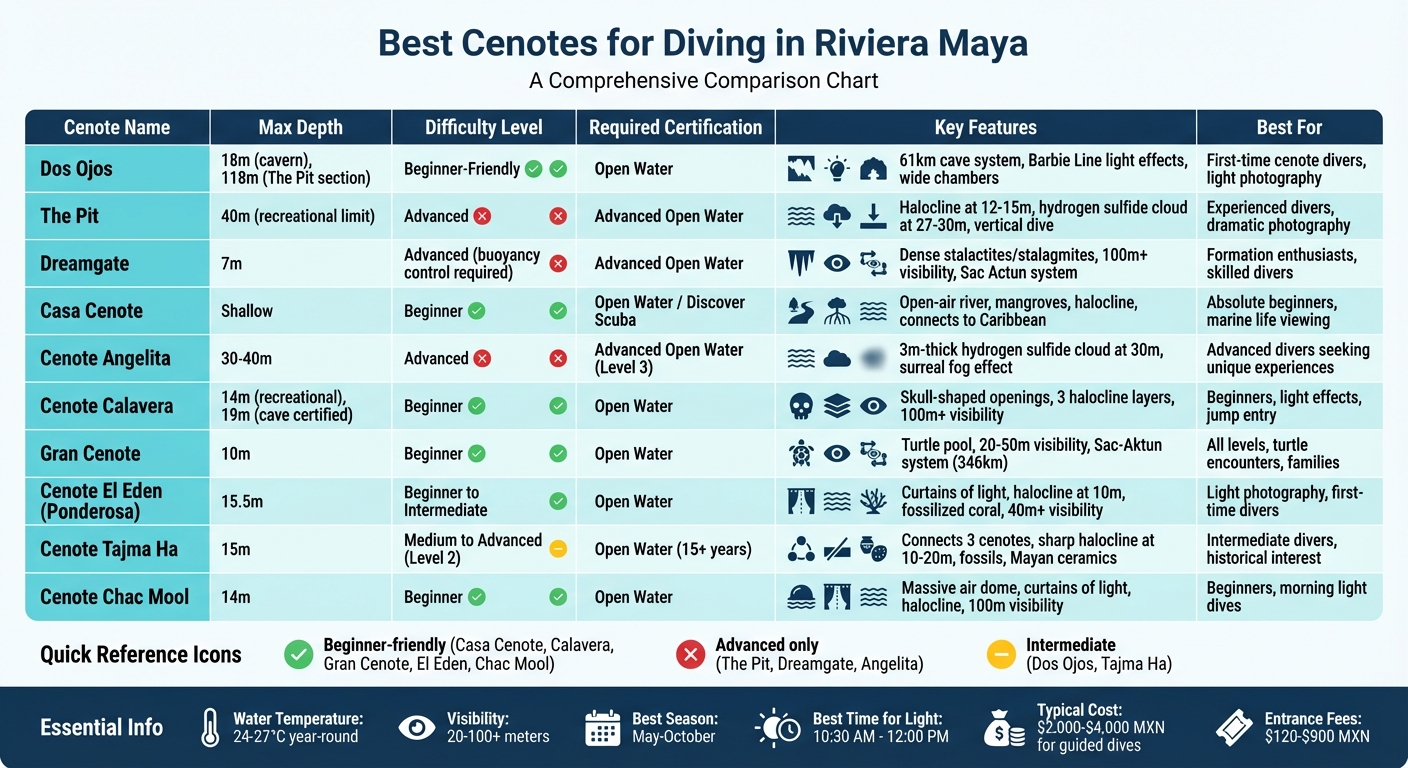
Top 10 Cenotes for Diving in Riviera Maya: Depth, Difficulty & Key Features Comparison
Cenote Diving In Mexico: Everything You Need To Know In 10 Minutes
sbb-itb-8d6faf7
What to Know Before Diving Cenotes
If you're planning to dive in cenotes, having the right certification is key. For lighted cavern zones, an Open Water Diver certification is sufficient. This applies to spots like Casa Cenote or the Barbie Line in Dos Ojos, where the maximum depth is 18 meters. However, for deeper cenotes like The Pit or Angelita, you'll need an Advanced Open Water certification, which allows dives up to 30 meters. For areas beyond the reach of natural light, a full Cave Diver certification is mandatory. The cost of a PADI Open Water certification is about $485 USD, while the Advanced Open Water certification is approximately $425 USD [5]. These certifications are essential for both your safety and the protection of these delicate underwater ecosystems.
Maintaining proper buoyancy is crucial to protect ancient stalactites and stalagmites. Since freshwater is less dense, you'll need to reduce the lead weight you carry. Always perform a weight check at the surface before descending to ensure neutral buoyancy. A 5mm wetsuit is recommended for the consistently cool 24°C–25°C waters, though its buoyancy may require you to adjust your weights further [3][1]. To avoid stirring up sediment, practice the "Modified Flutter Kick", which involves controlled movements from your ankles - this keeps visibility clear for everyone [6].
Professional guides are a must when diving cenotes. They are skilled at navigating overhead environments, preventing disorientation in total darkness, and ensuring you don't accidentally damage fragile formations. The cost for a standard 2-tank cenote dive typically ranges from $110 to $140, while specialty dives, such as those at Angelita, are around $140 [6].
To avoid equipment snags, streamline and secure all your gear [4]. Leave gloves, knives, and snorkels behind, and always shower before entering the water. Only use biodegradable, reef-safe sunscreen to minimize environmental impact [4]. Some cenotes charge additional fees for cameras - expect to pay about 500 pesos (~$25 USD) for professional cameras and 100 pesos (~$5 USD) for GoPros [3].
1. Dos Ojos
Dos Ojos is one of the Riviera Maya's most famous cenotes. Its name, meaning "Two Eyes", comes from the two circular openings that connect to a vast underwater cavern system. This network stretches at least 61 kilometers, ranking among the world's ten longest underwater cave systems [7]. Located just 17 km north of Tulum along Highway 307, it's an easy day trip [7].
Geological Features
One of the standout dive routes, the Barbie Line, showcases breathtaking light effects as sunlight streams through the openings, highlighting stalactites, stalagmites, and columns [8]. The wide, open chambers provide a spacious diving experience, perfect for those new to cavern diving who might feel uneasy in tight spaces [6,22]. The system also boasts the deepest known cave passage in Quintana Roo, reaching 118 meters in The Pit section [7]. These features make it a prime destination for divers.
Dive Conditions
The cenote offers crystal-clear visibility of over 36 meters (120 feet) and maintains a steady water temperature of 24–25°C throughout the year [7]. The main cavern's open design makes it accessible for divers with an Open Water certification. A typical two-dive cavern tour costs about 3,200 pesos (US$165), though this price doesn't include the entrance fee [9].
Location and Access
Visitors begin their journey at the parking area, followed by a short jungle walk leading to wooden stairs and a large deck that serves as the entry point [7]. Facilities include bathrooms and parking, but there isn't a restaurant on-site, so it's wise to bring your own food. If you're arriving by colectivo from the highway, you'll need to walk an additional 15 minutes through the jungle to reach the cenote [7]. Sturdy shoes are a must, as the stairs and decking can get slippery [7].
Marine Life and Biodiversity
Although cenotes aren't typically known for abundant marine life, Dos Ojos is home to freshwater shrimp and several fish species that have adapted to the environment [7]. However, the real attraction lies in its stunning geological formations and unmatched water clarity.
2. The Pit
The Pit, nestled in Dos Ojos Natural Park about 22 km north of Tulum, is a vertical sinkhole that has been explored to depths of 119 m, though recreational dives are capped at 40 m [10][11]. Its 10-meter-wide oval entrance plunges straight into the cenote’s depths, creating a breathtaking backdrop for divers seeking a unique experience.
Geological Features
One of The Pit’s standout features is the halocline, found at a depth of 12–15 m. This phenomenon, where freshwater meets saltwater, produces a surreal, mirage-like effect [10][11]. The walls of the cenote are adorned with stalactites and stalagmites, while unusual mercury-like air pockets cling to the cavern’s ceiling [10]. Descending further to 27–30 m, divers encounter a dense hydrogen sulfide layer that resembles an eerie underwater fog, with ancient tree branches breaking through its surface [10][12].
"The Pit Cenote isn't just a deep dive - it's an adventure through time, light, and space." - Dominic Evans, Dive Professional [10]
During the summer months (May–August), around midday, sunlight pierces through the cavern, illuminating the descent for over 40 m. This natural light show is a dream for underwater photographers. Wide-angle lenses are ideal for capturing these dramatic beams, though shooting within the halocline itself can be tricky due to its refractive properties, which can distort focus [10][11].
Dive Conditions
Unlike the more open caverns of Dos Ojos, The Pit offers a vertical dive that demands experience and precision, making it a favorite among seasoned divers. An Advanced Open Water certification is a must, given the depth and complexity of the site. The dive conditions are challenging but immensely rewarding for those prepared.
For those planning a visit, a two-tank cenote dive package that includes The Pit typically costs between US$220 and US$260. The entrance fee, when combined with Dos Ojos, is about 570 MXN. If you're bringing a professional camera, expect an additional fee of 300–500 MXN, though small devices like GoPros are usually allowed at no extra charge [11].
Location and Access
Reaching The Pit involves navigating a rugged jungle road beyond the main Dos Ojos cenote. Once there, you'll find basic amenities, including parking, gear assembly tables, restrooms, and ecological showers. A steep wooden staircase leads to a small platform at water level. For heavy dive tanks and equipment, a manual hoist system is available - offering a tip is customary for this service. To protect this delicate ecosystem, divers are required to rinse off all sunscreens and lotions in the showers before entering the water [11].
3. Dreamgate
Dreamgate is a mesmerizing cenote adorned with thousands of stalactites, stalagmites, and columns spread throughout its cavern system. As part of the Sac Actun system - the largest underground river network on Earth - it provides an unforgettable visual spectacle. The contrast between the dark sedimentary surroundings and the bright white limestone formations creates a scene straight out of a dream.
Geological Features
One of Dreamgate's standout features is its dense concentration of delicate speleothems, which give divers the surreal feeling of "flying" through the formations. The dark backdrop amplifies the glow of the white calcite structures, making them appear almost ethereal, even in dim light. Mirror-like reflections on the water's surface add an extra layer of magic to the experience. To fully appreciate these intricate details, high-quality dive lights are a must.
"You will enjoy the amazing sensation of flying between very fine stalactites and stalagmites." - Pelago
Dreamgate offers two main diving routes: Dreamgate Upstream and Dreamgate Downstream. Each route takes around 40 minutes and provides a distinct perspective of this otherworldly underwater landscape. These formations not only define the cenote's beauty but also heavily influence the dive conditions.
Dive Conditions
Although Dreamgate is relatively shallow, with a maximum depth of just 7 meters (23 feet), it demands Advanced Open Water certification and excellent buoyancy control. Visibility often exceeds 100 meters, but even a slight disturbance can dramatically reduce it. To protect the fragile environment, many dive operators require divers to complete a "check dive" at another cenote beforehand. Techniques like the frog kick are essential to avoid stirring up the fine sediment that lines the cavern floor.
| Feature | Specification |
|---|---|
| Maximum Depth | 7 meters / 23 feet |
| Required Certification | Advanced Open Water (AOWD) or equivalent |
| Minimum Age | 15 years |
| Group Size | Maximum 4 divers per guide |
Location and Access
A guided two-tank dive at Dreamgate typically costs between US$189 and US$214, with all-inclusive packages - covering hotel pickup from Playa del Carmen - starting at around US$280. If equipment rental isn't included, expect to pay about US$15/day. Like all cenotes in the area, divers must shower before entering to remove any sunscreens or lotions that could harm the delicate ecosystem. Dreamgate's shallow depth and captivating formations make it a refreshing alternative to the deeper cenotes in the region.
4. Casa Cenote
Casa Cenote offers a cenote diving experience unlike any other. Instead of plunging into a vertical sinkhole, you'll glide through a long, open-air river that weaves its way through a lush mangrove forest. This cenote connects directly to the Caribbean Sea via an underground tunnel, creating a unique blend of fresh and salt water. Let’s dive into what makes Casa Cenote special, from its geological wonders to its thriving marine life and beginner-friendly conditions.
Geological Features
One of Casa Cenote’s most striking features is the halocline, where fresh and salt water meet but don’t fully mix. This creates a shimmering, mirror-like effect that’s as fascinating as it is challenging for underwater photography. The mangrove root systems below the surface form intricate passageways, making the dive feel like navigating a natural maze. Historically, the cenote earned the nickname Cenote Manatí because manatees were once drawn to its waters, thanks to its connection to the Sac Aktun system - one of the longest underwater cave networks in the world.
Marine Life and Biodiversity
Casa Cenote is teeming with aquatic life, far more than most cenotes in the Riviera Maya. Its link to the ocean allows for a greater variety of species, including schools of juvenile Tarpon, Blue-armed crabs, and various types of Mollys darting among the mangrove roots. A resident crocodile, affectionately nicknamed "Pedro" or "Panchito", is often spotted near the surface. This crocodile is familiar with divers and tends to keep its distance. Above the waterline, you might also catch glimpses of iguanas, raccoons, and a variety of birds adding to the cenote's vibrant ecosystem.
Dive Conditions
Casa Cenote is perfect for beginners, thanks to its open-air layout and lack of overhead environments. Even those new to diving can join in on a Discover Scuba Diving experience here. Navigation is straightforward, and the crystal-clear visibility makes it an ideal spot for a first cenote dive. The halocline may briefly reduce visibility, but it adds an exciting dimension to the dive. Facilities on-site include restrooms, showers, changing areas, and a restaurant, making it easy to spend an entire day enjoying the cenote.
Location and Access
Situated about 10 kilometers north of Tulum, Casa Cenote charges an entrance fee of around $150 MXN. If you’re carrying camera gear, there’s an additional cost: $500 MXN for professional cameras or $100 MXN for GoPros. To help protect the delicate mangrove ecosystem, visitors are required to shower before entering and use only biodegradable, reef-safe sunscreen. The site also offers rentals for lockers, snorkel gear, lifejackets, and kayaks, ensuring you have everything you need for a memorable visit.
5. Cenote Angelita
Once you've experienced the vibrant surroundings of Casa Cenote, Cenote Angelita offers a completely different kind of diving adventure - one that's eerie, surreal, and unforgettable. Located just south of Tulum, this cenote is best known for its otherworldly hydrogen sulfide cloud, a thick, fog-like layer found about 30 meters (100 feet) below the surface. Its name translates to "little angel", but diving here feels more like stepping into a dream.
Geological Features
The main attraction at Angelita is its 3-meter-thick hydrogen sulfide layer, which sits between 30 and 34 meters (100 to 110 feet) deep. Above this mysterious cloud, the water is crystal-clear freshwater with visibility that feels almost endless. However, as you descend into the cloud, visibility plunges to less than 0.5 meters, creating the sensation of diving through dense fog. Below the cloud, you'll find a saltwater layer, producing a striking halocline effect. These unique layers make for an extraordinary dive but require careful technique and the right equipment to navigate safely.
Dive Conditions
Angelita is not for beginners. The cenote's depth and conditions are best suited for advanced divers, and an Advanced Open Water (Level 3) certification is mandatory. The cenote's total depth reaches an impressive 60 meters (200 feet), though most dives stay within the 30 to 40-meter (100 to 130-foot) range. The water temperature is a steady 24°C throughout the year, so a wetsuit is recommended. If you're planning to explore below the hydrogen sulfide cloud, a high-quality dive light is essential, and using a modified flutter kick will help keep the sediments undisturbed. For safety, dives here should always be done with a certified Full Cave Diver guide.
Location and Access
Despite its challenging dive conditions, getting to Angelita is relatively easy. After gearing up, there's just a short 5-minute walk through the jungle to reach the water. The cenote is open daily from 8:00 AM to 5:00 PM, but keep in mind that the facilities are basic - there are no proper bathrooms or food services on-site. It's a good idea to bring your own snacks and drinks. A guided, single-tank dive at Angelita typically costs around $120 USD. While marine life isn't the main draw here, you might spot a few freshwater turtles or small fish near the surface.
6. Cenote Calavera
Cenote Calavera offers a blend of fun and awe-inspiring diving. Just 3 km from downtown Tulum on the road to Cobá, its name - Spanish for "skull" - comes from the three ceiling holes that resemble a skull when seen from below [14].
Geological Features
The cenote’s unique skull-shaped openings create stunning light displays. Around midday, sunlight filters through the holes, casting a skull-like reflection on the central sediment hill, which lies about 3 meters deep [15]. The cave walls are decorated with stalactites and stalagmites, adding to its allure. Divers will encounter up to three halocline layers, starting at about 10 meters down [15]. These layers create a surreal, rainbow-like effect, making it feel like you're exploring another world. Additionally, Cenote Calavera is part of the Sac Actun system, adding to its appeal for both casual divers and cave enthusiasts [14].
Dive Conditions
Cenote Calavera is ideal for beginners, with over 100 meters of visibility and a steady water temperature of 24°C [13]. Recreational divers can explore depths of up to 14 meters, while those with cave certifications can descend to 19 meters within the underground river system [16]. A PADI Open Water certification is required, and all divers must be accompanied by a certified cave or cavern guide [14]. Even entering the cenote is part of the adventure - you can leap 3 meters through one of the "skull" holes or use the provided ladder. Exiting, however, involves climbing a vertical ladder while wearing your gear [2].
Location and Access
Getting to Cenote Calavera is simple and convenient. It's just a 10-minute drive from Tulum, with free parking available. Alternatively, you can bike there in about 15 to 25 minutes [14]. Taxis cost between 100 and 300 MXN each way, or you can take a colectivo heading toward Cobá [14]. The site has basic amenities, including rustic restrooms and a small snack bar selling water, sodas, and beer [14]. Entrance fees are 250 MXN, with an additional 200 MXN charge for GoPro or professional camera use (cell phone photos are free). The cenote opens at 9:00 AM, so arriving early ensures fewer crowds and the chance to see the light at its best.
7. Gran Cenote
Gran Cenote sits just 4 km from downtown Tulum, along Highway 109 heading toward Cobá. Known as one of the Riviera Maya's easiest dive spots to access, it's part of the Sac-Aktun system - Mayan for "white cave" - a colossal underground river network stretching 346 km, making it the longest of its kind. Here's why Gran Cenote is a must-visit for divers and nature enthusiasts alike.
Geological Features
Gran Cenote boasts stunning limestone formations, including stalactites, stalagmites, and columns, many of which are visible even from the surface. The natural limestone filtration results in crystal-clear water with visibility ranging from 20 to 50 meters. This semi-open, circular cave system connects various sections, though some inner areas are reserved for certified cave divers to safeguard the fragile formations.
Dive Conditions
With a maximum depth of just 10 meters, Gran Cenote is accessible to divers of all experience levels, requiring only an Open Water certification. The water temperature remains a steady 20°C year-round, and the absence of currents creates calm conditions, perfect for cavern and cave diving. However, precise buoyancy control is essential to avoid damaging the delicate structures.
Marine Life and Biodiversity
The "turtle pool" is a highlight, offering visitors the chance to observe turtles up close. Other wildlife includes small fish, blue-winged teal ducks, and even bats in certain sections. Freshwater eels inhabit the underwater passages, while iguanas can often be spotted basking on the surface.
Location and Access
Gran Cenote opens its doors at 8:00 AM, and arriving early is recommended to beat the crowds. Admission costs 180 MXN per person, with optional lockers available for 30 MXN and snorkel gear rentals for 80 MXN. To protect the ecosystem, visitors must rinse off all sunscreen in the mandatory showers before entering. Facilities include parking, restrooms, changing rooms, and a grassy area with hammocks for relaxation. The cenote is just a 10-minute drive from Tulum, about an hour from Playa del Carmen, and roughly two hours from Cancún.
8. Cenote El Eden (Ponderosa)
Cenote El Eden, also known as Jardín del Edén (Garden of Eden), is a must-visit spot for anyone exploring the Riviera Maya’s cenotes. Located just 25 minutes south of Playa del Carmen near Puerto Aventuras, this cenote combines stunning natural beauty with accessible diving opportunities. A short 2 km drive down a gravel road from the main highway takes you to this open-air karst window, a favorite among divers and photographers. With a 5/5-star rating on SSI MyDiveGuide based on 1,676 reviews, it's clear why this cenote is so highly regarded.
Geological Features
One of the most striking features of Cenote El Eden is its "curtains of light", where sunlight streams through the water during midday, creating a magical, almost surreal effect. At a depth of about 10 meters, you'll encounter a halocline layer, where fresh and saltwater meet, creating a shimmering, dream-like visual effect. The cenote’s limestone walls and rocks are dotted with fossilized coral formations, offering a glimpse into the region’s ancient history when it was submerged under the ocean.
Dive Conditions
El Eden is perfect for divers of all experience levels, with a maximum depth of 15.5 meters and visibility that often exceeds 40 meters. The water temperature remains steady year-round, ranging between 24-27°C, making it a comfortable dive in any season. The cenote has calm, current-free waters, making it an excellent choice for first-time cenote divers. The open swimming area is shallow at 4-5 meters, while the cavern sections reach the full depth. If you want to experience the famous light rays at their peak, plan your dive during midday hours.
Marine Life and Biodiversity
Beneath the surface, Cenote El Eden is teeming with life. You’ll find guppies, cichlids, mollies, tetras, and catfish swimming through the crystal-clear water. Freshwater eels, crayfish, and Mesoamerican slider turtles also call this cenote home. The bottom is covered in mosses and aquatic plants, creating a lush underwater landscape that perfectly fits its nickname, the Garden of Eden.
Location and Access
Cenote El Eden isn’t just a visual treat - it’s also incredibly convenient for visitors. The site features amenities such as palapas for relaxing, changing rooms, restrooms, showers, and small shops and restaurants. Entrance fees are typically around 200 MXN per person, with additional camera fees ranging from 150-500 MXN depending on your equipment. To protect the delicate freshwater ecosystem, it's essential to shower thoroughly before entering - no sunscreen, lotions, or bug sprays are allowed. Be sure to wear sturdy sandals or closed-toe shoes, as the paths can be rocky or muddy.
9. Cenote Tajma Ha
Cenote Tajma Ha offers a one-of-a-kind diving adventure, connecting three cenotes - Tajma Ha, Sugarbowl, and Esmeralda - into a seamless underwater journey. Located about 12 km north of Akumal, just off Highway 307 via a 1.5 km dirt road, this spot is a favorite among divers, boasting a perfect 5/5-star rating on SSI MyDiveGuide from 1,450 reviews [18]. Basic amenities like toilets, changing rooms, and a small souvenir shop are available, providing what you need before embarking on this unforgettable dive.
Geological Features
This cenote is famous for its sharp halocline, where freshwater and saltwater meet between 10–20 m, creating a surreal, blurry effect. The limestone passages are adorned with stunning stalactites and stalagmites, and during the summer, beams of sunlight pierce through the water, creating breathtaking visual effects. Divers will also come across ancient fossils and Mayan ceramics along the route, a reminder of the cenote's historical and geological significance as part of one of the world’s three longest flooded cave systems.
Dive Conditions
| Feature | Specification |
|---|---|
| Difficulty Level | Level 2 (Medium to Advanced) |
| Max Depth | 15 m / 49 ft |
| Avg Depth | 12 m / 40 ft |
| Water Temperature | 25°C / 77°F |
| Visibility | Often exceeds 100 meters |
This dive site is ideal for certified Open Water divers aged 15 and older. The water clarity, often surpassing 100 meters, makes navigating the interconnected cenotes a breeze. However, maintaining precise buoyancy is crucial to avoid disturbing sediment and affecting visibility. Divers are encouraged to follow the "rule of thirds" for air management: one-third for entry, one-third for exit, and one-third as a safety reserve. Aside from these technical aspects, the site’s marine life and historical artifacts make every moment underwater a rewarding experience.
Marine Life and Biodiversity
In the well-lit zones, you’ll spot plenty of catfish swimming gracefully in the crystal-clear water. A unique highlight awaits in the Cenote Sugarbowl section, where divers can surface to observe bats resting on the ceiling of the air dome. If you’re planning to document your dive, keep in mind the camera fees: $20 USD for GoPros, $30 USD for point-and-shoot cameras, and $40 USD for professional cameras with external lights [19][20]. Also, make sure to shower before entering the water, as sunscreen and lotions are strictly prohibited to preserve the cenote’s pristine condition.
10. Cenote Chac Mool
Cenote Chac Mool, located roughly 23 km south of Playa del Carmen near Puerto Aventuras, connects three cenotes - Chac Mool, "Little Brother", and Kukulcan - through a network of underground cave passages. This spot is particularly well-suited for beginner divers, offering a maximum depth of 14 m (46 ft) and an average depth of 11 m (36 ft). The site is equipped with convenient facilities like concrete stairs with railings for easy water access, cement tables for gearing up, restrooms, showers, changing rooms, and even an on-site restaurant, Restaurante Anita. Let’s explore what makes this cenote stand out from the rest[67,68].
Geological Features
Cenote Chac Mool’s breathtaking geological features make it a must-visit. During morning dives, sunlight streams through narrow openings, creating mesmerizing "curtains of light" that dance underwater. A distinct halocline - where fresh and salt water meet - creates a surreal, shimmering effect as divers navigate through layers of differing water densities. One of the highlights is the massive air dome, where divers can surface underground and marvel at thousands of stalactites, including one of the largest underwater stalactites in the region[21].
The cenote also boasts fascinating formations like cave curtains and "Easter Eggs", which are small pockets filled with tan-colored opaque crystals. Sections of the original ceiling, now tilted at 45° angles, provide a glimpse into the cave’s geological past. Adding to the eerie yet captivating atmosphere is a thin layer of hydrogen sulfide near the bottom and around the air dome[65,67].
Dive Conditions
| Feature | Specification |
|---|---|
| Difficulty Level | Beginner / Open Water Diver (OWD) |
| Max Depth | 14 m / 46 ft |
| Average Depth | 11 m / 36 ft |
| Water Temperature | 25°C–26°C / 77°F–79°F |
| Visibility | Up to 100 m |
| Dive Duration | Approximately 40 minutes |
The water temperature stays consistently pleasant at 25°C–26°C, making it comfortable for divers year-round. Visibility is exceptional, often extending up to 100 m, though it may decrease slightly near the hydrogen sulfide layer. Given the delicate formations and narrow passages, maintaining precise buoyancy control is critical. Cameras are prohibited to protect the fragile stalactites from accidental damage[21].
To fully experience the cenote’s stunning light effects, plan your dive for the morning. Always follow lifelines to stay within safe zones while exploring this remarkable underwater world[67,68].
Planning Your Cenote Diving Trip
Guided cenote diving tours typically cost between $3,300 MXN for a single cenote (including two dives) and $3,900 MXN for visits to two different cenotes. Keep in mind that entrance fees - ranging from $120 MXN to $900 MXN per site - must be paid separately and in cash. If you're considering Seth Dive Mexico, their packages range from $85 to $130 USD per person. These packages include private guides, hotel pickup, and full equipment, offering a convenient option for travelers.
Transportation Tips
Getting to the cenotes is simple when booking through dive operators like Seth Dive Mexico since hotel pickup is included in their packages. If you're traveling independently, colectivos (shared vans) are a budget-friendly alternative. These run frequently along Highway 307 between Playa del Carmen and Tulum, making stops near cenotes located along the main road. Always carry cash in Mexican Pesos, as many cenotes don’t accept credit cards, and exchange rates for USD are often unfavorable.
Best Timing for Your Dive
Timing can make or break your cenote diving experience. The May to October period offers the best visibility and more affordable rates. For those iconic "laser beam" light effects at cenotes like The Pit or Tajma Ha, plan your dives between 10:30 AM and 12:00 PM. Arriving early - around 8:00 AM - is ideal to beat the crowds and enjoy calm conditions.
Safety and Group Guidelines
Safety regulations for cenote diving are strict. Group sizes are capped at a maximum of four divers per guide. Guides must hold full Cave Diver certification and be certified by CREER (Comité Regional de Espeleobuceo, Ecología y Regulación). Most cenote dives require at least an Open Water certification, though Casa Cenote is an exception, allowing Discover Scuba Diving participants due to its open-air design.
Packing Essentials
Travel light and bring only the essentials. If you prefer using your own gear, pack your dive computer, mask, and fins, but most operators provide full equipment, including torches. Avoid applying sunscreen or insect repellent before your dive - only use biodegradable products afterward. Be ready to rinse off on-site, as many cenotes require a quick shower before entering the water to protect the delicate ecosystem.
Safety Tips and Best Practices
To dive safely and responsibly in cenotes, a few key practices are essential - not just for your safety but also to protect these fragile underwater ecosystems. For starters, buoyancy control is crucial. Since cenotes often feature delicate formations, use less lead and perform a surface weight check to ensure you’re properly balanced before descending [22].
When it comes to air management, stick to the rule of thirds. For example, with a 210-bar tank, plan to begin your ascent when you have around 140 bar left, ensuring you surface with at least 80 bar remaining. This method provides a safety buffer while allowing for unexpected delays [23].
It’s also important to understand the distinction between cavern and cave diving. Cavern diving keeps you within the daylight zone, meaning you’ll always have natural light visible. These dives are generally limited to a penetration of 60 meters and a depth of 30 meters and can be done with an Open Water certification when accompanied by a cave-certified guide. On the other hand, cave diving goes beyond the daylight zone into areas where natural light is no longer visible. This requires Full Cave certification, specialized gear like double tanks, and advanced skills to navigate tight passages safely [22][23].
Your finning technique also plays a big role in cenote diving. A modified flutter kick is recommended to avoid stirring up sediment, which can cloud visibility. Stay about 1 meter above the guideline to keep it in sight while steering clear of restricted areas [22]. If you encounter a halocline - a layer where freshwater meets saltwater - be prepared for reduced visibility and a slight temperature increase of 1–2°C. In these moments, stay calm, maintain steady buoyancy, and avoid sudden movements to prevent mixing the layers [22].
Lastly, respect the cenote environment. Avoid touching or disturbing stalactites, stalagmites, or other formations. Keep your gear streamlined to prevent accidental snagging, and never remove artifacts or fossils. These measures not only ensure your safety but also help preserve these extraordinary sites for future divers [24].
Conclusion
The cenotes of the Riviera Maya offer an experience like no other - a chance to dive into crystal-clear waters with visibility often exceeding 30 m (100 ft), surrounded by stunning geological formations and steeped in the spiritual traditions of the ancient Maya. Exploring these natural wonders requires preparation and adherence to safety measures, as outlined earlier.
"Cenote diving is the most magical diving experience and is unlike anything else in the world." – Odigoo Travel [1]
With approximately 6,000 to 7,000 cenotes scattered across the Yucatán Peninsula, divers can enjoy exceptional conditions year-round [17].
Before you dive, focus on maintaining proper buoyancy, always dive with a certified guide, and treat the delicate ecosystem with care.
Whether you're marveling at the light beams piercing The Pit between 10:00 AM and 12:00 PM or gliding through the mesmerizing halocline at Chac Mool, these cenotes are more than just dive sites - they are gateways to an ancient world and a testament to nature's beauty. Dive in with respect and curiosity, knowing these extraordinary sites are yours to explore.
Frequently Asked Questions
Do I need a special certification to dive cenotes in the Riviera Maya?
It depends on the cenote and how deep you want to go. An Open Water certification covers most cavern-zone dives like Gran Cenote or Chac Mool, while Advanced Open Water is required for deeper sites like The Pit and Angelita. Full Cave Diver certification is only needed if you plan to venture beyond natural light into unexplored cave passages.
Can complete beginners experience cenote diving without any certification?
Yes, Casa Cenote allows Discover Scuba Diving participants because it has an open-air layout with no overhead environment, making it the most accessible option for first-timers. A certified guide handles all the planning and stays with you throughout the dive, so no prior experience is needed.
What is the best time of day to see the famous light beams inside cenotes?
The most dramatic light effects, often described as laser beams or curtains of light, appear between roughly 10:30 AM and noon when the sun is high enough to angle through the openings. Sites like The Pit, Tajma Ha, and Chac Mool are especially photogenic during this window, particularly from May through August.
How do I get to the cenotes if I'm staying in Cancun or Tulum?
Booking through a local dive operator that includes hotel pickup is the simplest option, since it removes all the logistics of renting a car or figuring out colectivo routes. Seth Dive Mexico offers free pickup from Cancun all the way to Tulum, so you just share your hotel name and they handle the rest.
Which cenotes are best for beginners versus experienced divers?
Casa Cenote, Gran Cenote, Chac Mool, and Calavera are all well-suited to Open Water divers because of their shallow depths, clear visibility, and manageable conditions. Advanced divers looking for more challenge will find The Pit, Angelita, and Dreamgate far more rewarding, each requiring either Advanced Open Water or exceptional buoyancy control to appreciate fully.
What gear should I bring and what will a dive operator provide?
Most guided cenote packages include full equipment such as tanks, BCD, regulator, wetsuit, and dive lights, so you generally only need to bring personal items like your mask and fins if you prefer your own fit. A 5mm wetsuit is recommended for the consistently cool 24–25°C water, and biodegradable sunscreen should replace your regular product since standard lotions are prohibited at every cenote to protect the ecosystem.