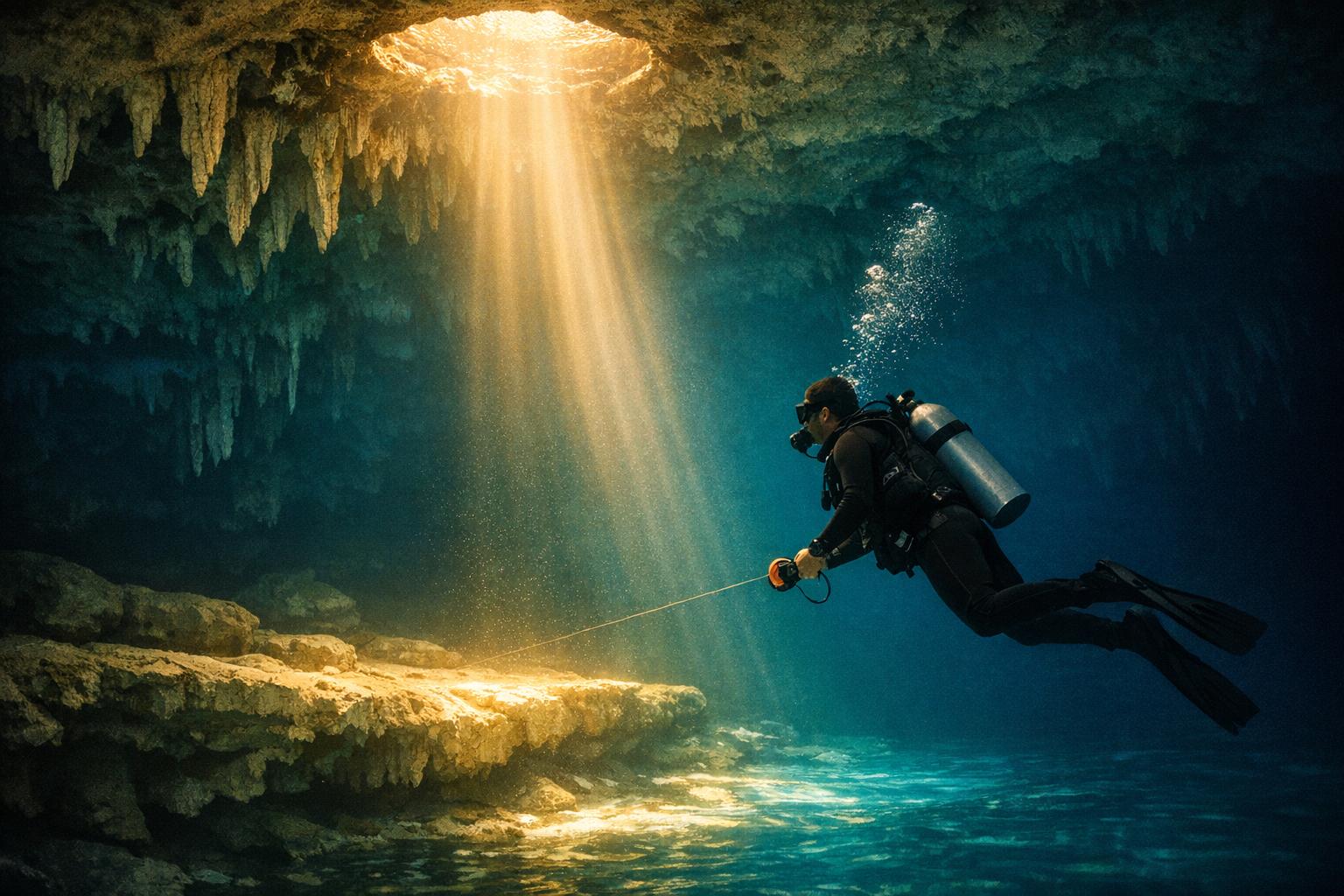
Cenote diving in Mexico offers an underwater experience like no other. These natural sinkholes, formed over millions of years, provide crystal-clear waters, stunning light effects, and a glimpse into ancient Mayan history. Whether you're a beginner or an experienced diver, the Yucatán Peninsula's cenotes cater to all skill levels. Here's what you need to know:
- What are cenotes? Natural sinkholes created by collapsed limestone, revealing groundwater. Sacred to the Maya, they were believed to be portals to the underworld.
- Why dive in cenotes? Enjoy visibility up to 40 meters, serene freshwater dives, and unique features like haloclines (where freshwater meets saltwater) and hydrogen sulfide clouds.
- Certifications needed: Open Water for basic caverns, Advanced Open Water for deeper dives, and Full Cave Diver for exploring beyond daylight zones.
- Top cenotes: Dos Ojos (stunning light beams), Angelita (eerie hydrogen sulfide clouds), and Ponderosa (ideal for beginners).
- Best time to dive: May to September for dramatic sunlit effects.
- Costs: Guided dives range from $85–$130 USD, with gear rental and entrance fees included in most packages.
Whether you're drawn to the light beams of Dos Ojos or the surreal depths of Angelita, cenote diving is a must-try adventure in Mexico. Prepare with the right gear, follow safety guidelines, and respect these ancient sites for an unforgettable experience.
Cenote Diving In Mexico: Everything You Need To Know In 10 Minutes
sbb-itb-8d6faf7
Certifications and Safety Requirements
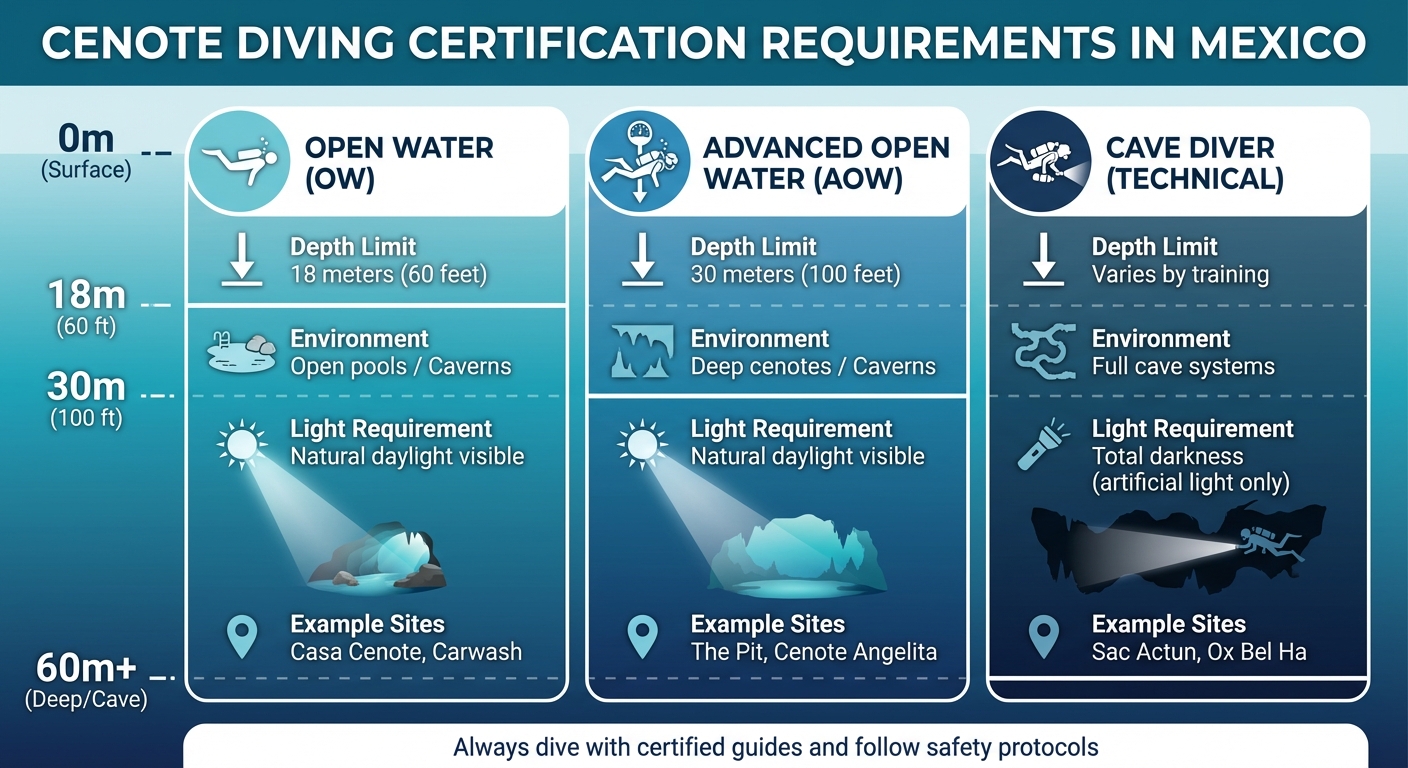
Cenote Diving Certification Requirements and Depth Limits in Mexico
Before diving into the magical world of Mexico's cenotes, it's essential to understand the certifications and safety protocols required. These measures ensure a safe and enjoyable experience, with specific requirements depending on the type of cenote and the complexity of the dive.
Required Certifications
To dive in cenotes, you need at least an Open Water (OW) certification, which qualifies you for recreational cenote diving. This certification allows you to explore the cavern zone - areas where natural daylight is always visible - at depths of up to 18 meters (60 feet) [2][6]. Most cenotes in the Riviera Maya fall into this category, making them accessible for divers with basic training and recent experience.
For more advanced cenotes featuring haloclines (layers where freshwater and saltwater mix) or hydrogen sulfide layers - like The Pit or Cenote Angelita - an Advanced Open Water (AOW) certification is required. This certification allows dives up to 30 meters (100 feet) [2][1]. For those venturing into total darkness beyond the daylight zone, a Full Cave Diver certification is mandatory. This technical training prepares divers for navigating narrow passages and overhead environments without natural light [2][6].
"Cavern diving means not straying out of the range of visible light from the surface, and not going further than 60m into the overhead environment." - Dive Magazine [5]
| Certification Level | Depth Limit | Environment | Light Requirement | Example Sites |
|---|---|---|---|---|
| Open Water (OW) | 18 meters (60 feet) | Open pools / Caverns | Natural daylight visible | Casa Cenote, Carwash |
| Advanced Open Water (AOW) | 30 meters (100 feet) | Deep cenotes / Caverns | Natural daylight visible | The Pit, Cenote Angelita |
| Cave Diver (Technical) | Varies by training | Full cave systems | Total darkness (artificial light only) | Sac Actun, Ox Bel Ha |
Having the right certification is just the first step. Following strict safety protocols is equally important.
Safety Guidelines for Cenote Diving
Maintaining buoyancy is a top priority in cenotes. The floors of many cenotes are covered in fine silt, which can cloud the water instantly if disturbed. To avoid this, use a frog kick for propulsion, directing movement behind you while minimizing silt disturbance [2][5].
Thermal protection is also important. While cenote water stays between 24°C and 26°C (75°F to 79°F) year-round, the lack of salt buoyancy means you may cool down faster during dives lasting 40 to 50 minutes. A 5mm full wetsuit is typically recommended [2]. Additionally, remove your snorkel before diving to avoid potential entanglement with low-hanging rock formations or tree roots.
Always follow the cavern line, a permanent guide rope that serves as your main reference for locating the exit. Losing sight of it can be dangerous. Professional guides - certified as Full Cave Divers with Divemaster or Instructor ratings - will provide a thorough pre-dive briefing, covering procedures and communication in low-light conditions [7].
Lastly, respect these fragile ecosystems. Cenotes are not only natural wonders but also hold deep cultural significance as sacred Mayan sites. Avoid using sunscreen or insect repellent before diving, as these chemicals can harm the delicate environment [2][6]. By following these guidelines, you help preserve these incredible sites for future generations.
Top Cenotes for Diving in the Riviera Maya
The Riviera Maya is famous for its cenotes, offering unforgettable diving experiences for both beginners and seasoned divers.
Dos Ojos Cenote
Dos Ojos, meaning "Two Eyes", is named for its twin circular sinkholes connected by a 60-meter passage. It’s part of the vast Sac Actun system, one of the largest underwater cave networks, boasting at least 28 known sinkhole entrances [8][4][9]. Divers flock here for its incredible visibility - often reaching 30 to 40 meters - and the mesmerizing sunlight beams that pierce through the water on clear days [2].
"Dos Ojos is undoubtedly one of the most iconic cenotes in the world... you float through huge chambers full of jagged limestone structures and watch as sunlight casts beautiful blue light beams through the water." – EWDR [2]
The water temperature stays consistent at 24–26°C year-round, so a 5-mm wetsuit is usually enough for dives that last around 40 to 50 minutes [2]. Open Water-certified divers can explore Dos Ojos' extensive passages safely. Guided dives typically cost about 3,700 MXN, depending on the dive center [10].
Cenote Angelita
Located 17 km south of Tulum, Cenote Angelita (or "Little Angel") offers a diving experience unlike any other. This deep, vertical sinkhole is famous for its 3-meter-thick hydrogen sulfide cloud at around 30 meters (100 feet) deep. The cloud creates an eerie, river-like effect as it separates the freshwater above from the saltwater below. Adding to its surreal atmosphere are the sunken trees scattered around the site [11][12].
"Divers describe descending into the murky deep of Cenote Angelita as a near-mystical experience." – Lonely Planet [12]
Exploring Angelita requires Advanced Open Water certification due to its depth, which reaches up to 60 meters [12][2]. Dive lights - both primary and backup - are essential for navigating beneath the hydrogen sulfide layer [11]. This cloud, formed by centuries of decomposing organic material, adds a unique challenge and appeal for experienced divers.
Cenote Ponderosa (El Eden)
Cenote Ponderosa, also known as El Eden, is a fantastic option for less experienced divers or those looking for a relaxed dive. With a maximum depth of 15 meters (50 feet) and only an Open Water certification required, it’s a great spot to build confidence while exploring overhead environments [13].
"Eden's cavern line leads under what looks like a rock ledge with light visible on the other side. As you get closer to the light on sunny days, it turns into a curtain of light beams shining down and dancing in front of you." – Brandi Mueller, ScubaDiving.com [11]
Visibility here is often exceptional, reaching 30 to 40 meters (100–130 feet). On sunny days, the famous "light curtain" effect creates stunning beams of sunlight that are a dream for underwater photographers [13][14]. Divers can also spot haloclines, fossils embedded in the limestone, and mangrove roots stretching into the water. Maintaining proper buoyancy is crucial to avoid disturbing silt or damaging delicate formations [13]. For surface intervals, the site offers life jacket and snorkel gear rentals for about 25 MXN, along with facilities like restrooms, showers, food stands, and even a jumping platform [15].
Next up, we’ll dive into essential gear and tips to make your cenote adventure even better.
Gear and Practical Tips
Prepare yourself with the right equipment and techniques to get the most out of your cenote diving experience.
Recommended Gear for Cenote Diving
When diving in cenotes, tweaking your scuba setup can make a big difference. A 5-mm full wetsuit is a better choice compared to the standard 3-mm suit. The extra thickness keeps you warm during longer or repeated dives, even though cenote water stays at a consistent 24–26°C all year round[17].
Leave your snorkel behind to avoid it getting caught on roots or rocks in overhead areas. Adjust your weights since freshwater is less dense than seawater, requiring less weight for proper buoyancy[5]. Also, don’t forget a high-quality dive torch - plus a backup - for lighting up dark areas and signaling your dive buddy[5].
If you’re renting gear, expect to pay around US$60 per day for a complete setup, including a sidemount harness, regulators, primary and backup lights, spools, and markers[16]. Keep in mind that some cenotes charge camera fees, which can range from 150 to 500 MXN, depending on whether you’re using a GoPro or professional equipment[2].
Once you’ve got your gear sorted, focus on refining your diving technique to make the experience unforgettable.
Tips for a Better Dive
Having the right gear is only half the equation; proper techniques are just as important. Use a frog kick to move through the water without disturbing sediment, which can cloud visibility[5]. Maintaining excellent buoyancy is essential to avoid damaging fragile limestone formations or stirring up debris[5][1].
Time your dive between 10:30 AM and 12:00 PM on sunny days to enjoy the stunning light beams that penetrate the water, especially during the months of July through September[1][18]. To protect the cenote’s delicate ecosystem, skip sunscreen and insect repellent before entering the water[2]. Wearing sturdy, closed-toe shoes or sandals is also a good idea, as the paths to cenotes are often rocky or muddy[2]. Lastly, bring warm clothing or a dry towel for after your dive. The jungle shade can make the air feel cooler once you’re out of the water[2].
Planning Your Dive with Seth Dive Mexico
Once you're geared up, it's time to plan your cenote adventure with Seth Dive Mexico. Their team of experts takes care of all the logistics, whether you're a beginner or planning a more advanced, multi-tank expedition.
Services Offered by Seth Dive Mexico
Seth Dive Mexico specializes in custom cenote dive trips, offering one to four tanks per day. These trips usually start around 9:00 AM and wrap up by early or mid-afternoon. Popular sites include The Pit, Dos Ojos, Tajma-Ha, and Angelita, where divers can enjoy two cavern dives. If you're new to diving, the Discover Scuba program provides shallow-water training and introductory dives at beginner-friendly spots like Casa Cenote.
Beyond cenote diving, they offer PADI certification courses, ranging from Open Water to Advanced levels, all available in multiple languages. Seasonal experiences, such as Whale Shark and Bull Shark tours, add even more variety. Plus, they provide hotel pickup for convenience, and gear rental is available separately - though it's included with certification courses.
Their transparent pricing and flexible packages ensure there's an option for everyone.
Pricing and Packages
Costs vary based on entrance fees and dive locations. The Discover Scuba program starts at US$135, covering one or two dives with training included. Certification courses range from US$259 to US$400, with discounts available for groups.
For certified divers, ocean diving packages begin at US$95 for a two-tank dive on local reefs. If you're looking to explore Cozumel, direct boat trips are available for US$165. Special rates are also offered for multi-day bookings or large groups - just ask!
With Seth Dive Mexico's dedicated team, every dive is a seamless and unforgettable journey into Mexico's stunning underwater world.
Best Time to Dive and Local Rules
Best Time to Dive in Cenotes
Cenote diving is a year-round activity, thanks to consistent water temperatures of 24–26°C and visibility often exceeding 30 meters. That said, the best light shows happen when the sun is high in the sky, typically between May and September.
During summer, midday dives in cenotes like The Pit showcase dramatic light beams slicing through the depths. In contrast, winter’s lower sun angles create softer, yet equally stunning, rays that illuminate rock formations in caverns like Chac Mool [19][2]. Cyril M, a diving instructor at Triton Diving, highlights this seasonal preference:
"The dry season is considered the best time of year to dive in the cenotes" [19].
Summer also brings an added visual treat in cenotes like Carwash, where heat and humidity intensify tannin layers, resulting in vibrant, colorful reflections [19]. For photographers seeking those iconic "laser-like" light effects, sunny days from May to September are ideal [19][2].
Even though the water is warm, wearing a 5 mm full wetsuit is recommended for multi-dive days, as surface intervals can lead to quick cooling. Also, sturdy footwear is essential for navigating the often rocky and muddy paths to cenote entrances [2].
While timing your dive for optimal conditions is key, respecting local rules is just as important to preserve these ancient natural wonders.
Local Regulations and Guidelines
To protect the fragile cenote ecosystems, strict rules are in place. A maximum diver-to-guide ratio of 4:1 ensures both safety and minimal environmental impact [2][20][21].
Entrance fees are required for most cenotes and are separate from the cost of your dive tour. If you plan to bring a GoPro or other camera, be prepared to pay additional local or government fees ranging from 150 MXN to 500 MXN (7–23 USD), depending on the cenote [2][20][21].
There are a few essential rules to follow: avoid using sunscreen or insect repellent, and never touch stalactites or stalagmites. These formations take thousands of years to develop, and even the slightest touch can cause irreversible damage [2][20]. Additionally, cenotes hold deep significance for the Mayan people, so adhering to community rules and behaving respectfully is not just a legal requirement but also a way to honor their traditions [1].
Conclusion
Cenote diving in the Riviera Maya offers an extraordinary experience. With over 7,000 cenotes scattered across the Yucatán Peninsula[3], each dive unveils crystal-clear waters with visibility often reaching up to 40 meters, along with breathtaking natural formations[2]. From the mesmerizing light effects at Dos Ojos to the mysterious hydrogen sulfide layers at Angelita, and the dramatic beams at The Pit, these freshwater sinkholes provide an adventure like no other.
This guide has covered everything you need to know - from certifications and equipment to the top cenote diving spots - helping you connect with both nature and the rich history of the ancient Maya.
Seth Dive Mexico offers private cenote diving packages ranging from $85–$130 USD per person. These include hotel pickup, gear, lights, and entrance fees. For beginners, the Discover Scuba program at $135 USD ensures a safe and guided introduction with a private PADI instructor. Certified divers can enjoy customized itineraries featuring the region's most stunning dive sites.
With water temperatures holding steady at 24–26°C[21], cenote diving is an activity you can enjoy year-round. For those seeking the most striking light effects, diving between July and September is ideal. Pack your 5 mm wetsuit, fine-tune your buoyancy, and prepare to immerse yourself in a world where crystal-clear waters meet the sacred heritage of the Maya.
FAQs
Can non-divers try a cenote dive?
Non-divers can still experience the magic of cenotes by joining guided tours or snorkeling adventures. These options let you appreciate the unique beauty of these natural formations without needing specialized skills. However, if you’re drawn to the idea of diving into a cenote, you’ll need proper certification and training. To make this dream a reality, consider enrolling in a certification course before planning your cenote diving trip.
How cold do cenotes feel during multiple dives?
Cenote water is known for its consistently cool temperature, staying between 24°C and 26°C (75°F to 77°F) throughout the year. While most divers find this range comfortable, spending extended periods in the water or doing multiple dives can leave you feeling cold. For added warmth and comfort, a 5mm full wetsuit is often suggested as it provides better insulation.
Do I need special insurance for cenote dives?
While special insurance for cenote dives isn’t usually mandatory, it’s crucial to stick to all safety guidelines and regulations. Check with your dive operator to see if they recommend additional insurance for your dives. This way, you can ensure you’re fully prepared and protected in case of any unforeseen circumstances.
Frequently Asked Questions
What certification do I need before my first cenote dive in Mexico?
An Open Water certification is the minimum required to dive the cavern zones of most Riviera Maya cenotes, including popular sites like Dos Ojos and Ponderosa, where natural daylight is always visible and depths stay within 18 meters. For deeper sites like The Pit or Angelita, which involve haloclines or hydrogen sulfide layers, an Advanced Open Water certification is required. If you don't yet have either, a PADI course can be completed during your vacation before your cenote trip.
What's actually included in a guided cenote dive package, and do I need to bring my own gear?
Most guided cenote dive packages cover hotel pickup, a certified guide, dive lights, and cenote entrance fees, with full gear rental available separately for around US$60 per day. Seth Dive Mexico includes gear with certification courses and offers transparent pricing so you know exactly what you're paying for before you book. Camera fees of roughly 150–500 MXN are charged separately at most cenote sites if you bring a GoPro or professional equipment.
Which cenotes are best for beginners versus more experienced divers?
Beginners with an Open Water certification do well at Ponderosa (El Eden) and Dos Ojos, both of which offer shallow depths, exceptional visibility, and dramatic light effects without requiring advanced skills. Experienced divers holding Advanced Open Water certification can access deeper, more dramatic sites like The Pit and Angelita, where hydrogen sulfide clouds and haloclines create a genuinely unique atmosphere. Sharing your certification level and interests with your guide before booking ensures you're matched to the right site.
Can I do cenote diving if I'm staying in Cancun or Tulum rather than Playa del Carmen?
Yes — the top cenote dive sites sit along the corridor between Cancun and Tulum, and operators like Seth Dive Mexico offer free hotel pickup across that entire stretch, so your exact location doesn't limit your options. Most full-day trips depart around 9:00 AM and return by early afternoon, fitting comfortably into a vacation day. Just share your hotel name when you inquire so the logistics can be arranged in advance.
When is the best time of day to dive cenotes for the famous light beam effects?
The most dramatic light beams typically occur between 10:30 AM and noon on sunny days, when sunlight penetrates directly through the cenote openings at the steepest angle. For the most intense "laser-like" rays, the months of May through September offer the longest and brightest midday sun. Timing your dive during this window, especially at sites like The Pit or Dos Ojos, makes a noticeable difference in the visual experience.
Do I need to avoid sunscreen before a cenote dive, and why does it matter?
Yes — sunscreen and insect repellent should be avoided before entering any cenote, as the chemicals disrupt the delicate freshwater ecosystem and can cause lasting harm to the cave formations and microbial life inside. Most cenote operators enforce this rule, and it also reflects the cultural respect owed to sites the Maya considered sacred. Rinsing off before entering is a simple step that helps preserve these environments for future divers.