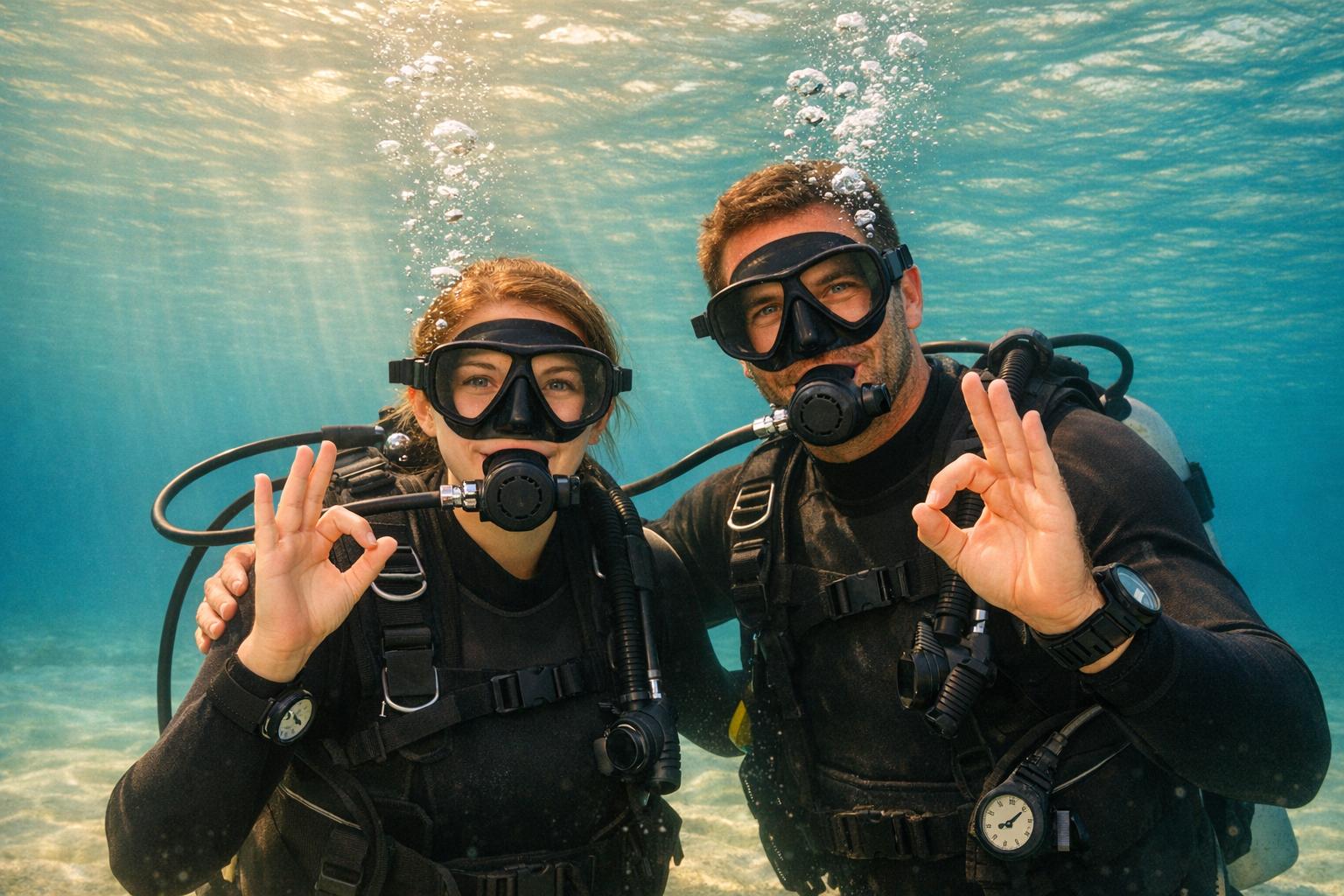
Feeling nervous about scuba diving is completely normal, especially for first-timers. Concerns like running out of air, struggling with equipment, or panicking underwater can create anxiety. But with the right preparation, you can overcome these fears and enjoy the experience. Here's a quick guide to help you feel more confident:
- Master breathing techniques: Focus on slow, steady breaths to stay calm and conserve air.
- Start with beginner programs: Programs like "Discover Scuba Diving" offer a step-by-step introduction in shallow waters.
- Practice in shallow water: Build confidence by starting small and mastering basic skills like mask clearing.
- Ensure proper gear fit: Comfortable, well-fitting equipment reduces stress and distractions.
- Try cenote dives: Calm, clear cenotes in the Riviera Maya are great for beginners.
- Communicate with your instructor: Share concerns and ask questions to feel supported.
- Use visualization: Mentally rehearse your dive to reduce anxiety and build confidence.
7 Steps to Overcome Scuba Diving Anxiety for Beginners
Dive Anxiety 101: What It Means, How to Handle It
sbb-itb-8d6faf7
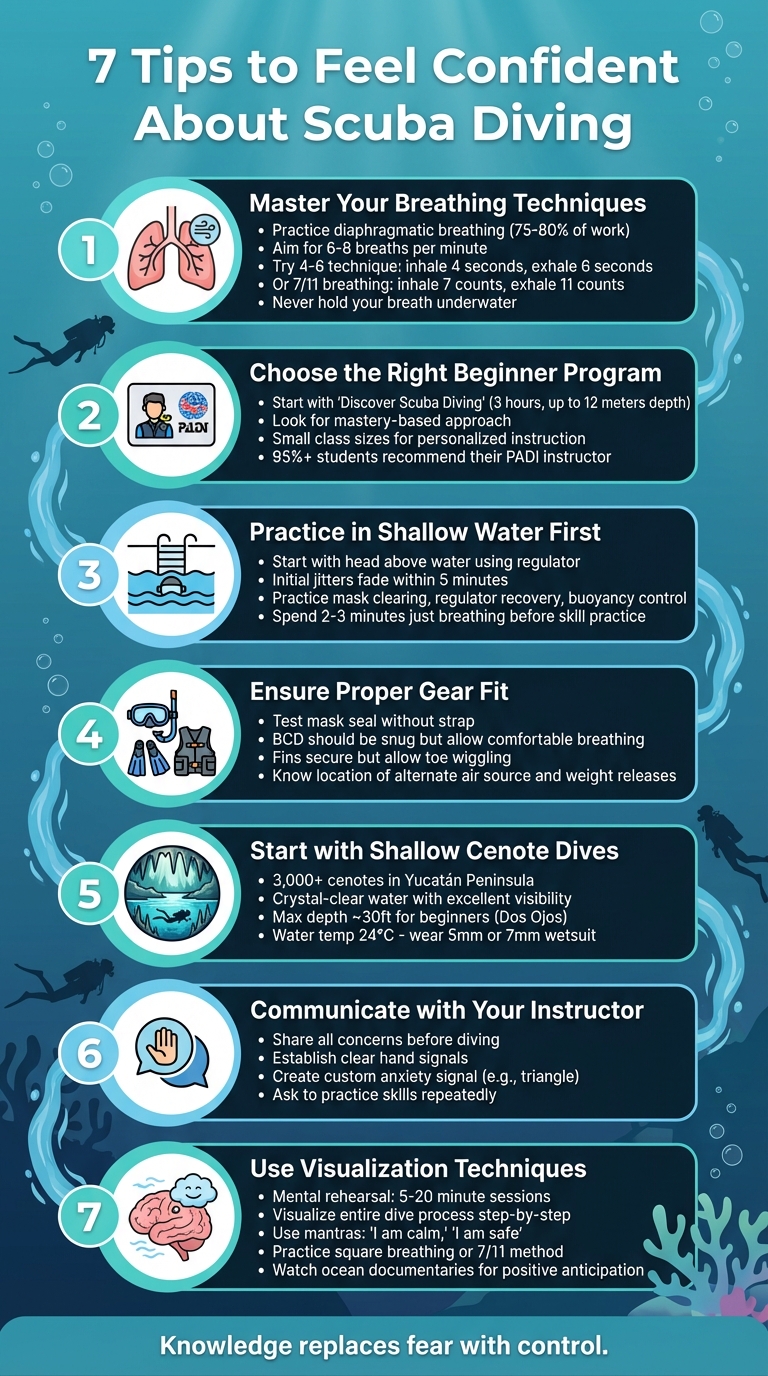
1. Master Your Breathing Techniques
Your breath is your strongest ally when diving. By mastering your breathing, you can manage buoyancy, conserve air, and most importantly, stay calm. Emma Farrell, a Breathing Optimization Instructor, emphasizes this:
"The more effective, controlled and relaxed is your breathing, the safer and more enjoyable is the dive." [7]
Focus on diaphragmatic breathing - let your belly expand with each breath instead of your chest and shoulders. Ideally, your diaphragm should handle 75% to 80% of the work [7]. Aim for a slow, steady rhythm of about six to eight breaths per minute [7]. Inhale deeply and exhale fully, taking your time. This not only helps you relax but also interrupts the anxiety caused by CO2 buildup [8].
Interestingly, many novice divers don’t realize that the urge to breathe is triggered by CO2 buildup, not a lack of oxygen. Beth McCrea, an Advanced Open Water Diver, explains:
"Your breathing urges are driven by excessive CO2, not by a lack of oxygen. Ridding yourself of the CO2 with those deep exhales relieves the out-of-breath distress." [8]
To prepare, try the 4-6 technique: inhale for four seconds, then exhale for six seconds [5]. Another option is 7/11 breathing - inhale for seven counts and exhale for eleven. This method activates your body’s relaxation response [10]. And remember, never hold your breath underwater. Beyond safety concerns, holding your breath can disrupt your buoyancy, making the dive harder to manage [7].
If you ever feel overwhelmed during a dive, pause and focus solely on your breathing. SDI Instructor Dave Morera advises:
"Controlling your breathing will help you slow down and regain clarity of thought on where you're at and what you need to do next." [9]
Once you’ve got your breathing under control, you’ll be ready to explore beginner programs that suit your comfort level.
2. Choose the Right Beginner Program
Not every diving program is created equal. The best beginner programs guide you step-by-step, ensuring you build confidence and master essential skills, like mask clearing, before diving into open water. Programs that focus on a mastery-based approach let you practice until you’re comfortable, rather than rushing through the basics. This method ensures you progress at a pace that feels right for you [12][11].
If you’re unsure about committing to a full certification course, consider starting with a Discover Scuba Diving experience. This beginner-friendly option offers a low-pressure introduction to diving. Over about three hours, you’ll explore shallow waters (up to 12 meters) under close supervision, giving you a chance to “test the waters” with a private instructor before pursuing certification. For example, Seth Dive Mexico offers Discover Scuba programs in cenotes or ocean environments for $135 per person [12][1].
Your instructor plays a huge role in shaping your experience. As PADI Instructor Megan Denny advises:
"If you didn't like your first instructor, dive with someone else."
It’s important to communicate your concerns - whether it’s about mask clearing, marine life, or something else - so your instructor can tailor their teaching style to your needs [6][1]. A great instructor can make all the difference. Carrie Miller, for instance, finally completed her PADI Open Water course in Fiji after two previous attempts. She credits her success to instructor Leroy Aitcheson, who helped her overcome her initial fears in a supportive way back in October 2018 [3].
Small class sizes are another key factor. They allow for more personalized instruction, which can ease anxiety within minutes of being underwater. In fact, over 95% of student divers report they would highly recommend their PADI instructor [12][1].
As DiveTech puts it:
"Knowledge replaces fear with control."
The right program doesn't just teach you how to dive - it helps you build trust in yourself and your abilities underwater [1].
3. Practice in Shallow Water First
Taking your first breath through a regulator can feel strange, even a little unsettling. That’s why starting in shallow water is so helpful. Standing with your head above water while using your gear allows your mind to adjust and feel secure about breathing underwater. This small step can ease much of the nervousness, and within just five minutes, most divers find their initial jitters fading away[1]. It’s a simple yet effective way to prepare for the challenges of deeper dives.
Shallow water is also the perfect place to master essential skills like mask clearing, regulator recovery, and buoyancy control. Repeating these techniques in a controlled, low-pressure environment builds confidence and makes them second nature when you dive deeper[3]. Dive instructor Leroy Aitcheson puts it this way:
"Even though you're not comfortable, it's important to get your breathing settled before you start going underwater. On the surface, you have atmosphere. It's easier to get your breathing under control up there than it is through a regulator."[3]
Another great way to prepare is by practicing with a snorkel in a pool. Swimming laps with a snorkel and a partially flooded mask helps you get accustomed to the sensation of water around your nose and eyes - without the weight or complexity of full scuba gear. When you move to your first shallow dive, spend 2–3 minutes just breathing and observing your surroundings before jumping into skill practice. This brief adjustment period reassures your body that breathing underwater is steady and safe[1].
4. Ensure Proper Gear Fit and Familiarity
Wearing ill-fitting gear can make diving unnecessarily stressful. A leaky mask, pinching fins, or a BCD that feels too tight can quickly turn your focus away from the dive itself. Nicole Harrison, a PADI Instructor and Founder of Rise & Dive, puts it perfectly:
"Your mask is more than a piece of equipment. It is your lens and lifeline into a whole new world. If it leaks, fogs, or pinches, it can spark anxiety." [13]
To check if your mask fits correctly, place it on your face without using the strap and inhale gently. If it seals, you’ve got the right fit. Then, test it again with the regulator in place to ensure the seal holds. For your BCD, it should fit snugly but still allow you to breathe comfortably, even when fully inflated - inflate it until the pressure relief valve activates to confirm. As for fins, they should be secure but not too tight. If you can’t wiggle your toes, they’re too small. [13][14][15]
Once you’ve ensured everything fits well, take the time to get familiar with your gear.
Understanding how your equipment works is just as important as getting the right fit. Knowing the exact location of your alternate air source or weight releases can make all the difference in an unexpected situation. Reko Ponton, author of The Dive Guide, emphasizes this:
"Familiarity with your gear reduces stress and helps you respond confidently in unexpected situations." [16]
If you’re using rental gear, test it in shallow water before your dive. For personal gear, start with essentials like a well-fitting mask, snorkel, and fins. Investing in high-quality equipment is worth it - expect to pay between $1,000 and $4,000 MXN for a good mask, $1,500 to $5,000 MXN for fins, and $7,000 to over $20,000 MXN for a BCD. [2][14]
5. Start with Shallow Cenote Dives
If you're new to diving, the cenotes of the Riviera Maya are an excellent place to begin. With over 3,000 cenotes scattered across the Yucatán Peninsula [17], many provide calm, crystal-clear waters and outstanding visibility - perfect for easing into the experience.
Take the Garden of Eden cenote, for example. This spot in the Riviera Maya boasts shallow areas where you can comfortably practice skills and check your gear. Surrounded by lush jungle, it's a peaceful setting that helps you feel at ease before venturing into deeper sections.
Another great option for beginners is Cenote Dos Ojos. Brandi Mueller from ScubaDiving.com highlights its beginner-friendly nature:
"With a max depth of about 30ft and relatively short cavern lines, [Dos Ojos] is a great place to start out and see if you like cavern diving." [17]
In these cenotes, practicing buoyancy control becomes much easier thanks to the excellent visibility. This clarity helps you keep an eye on your instructor and stay aware of your surroundings, reducing any nervousness. The controlled environment also makes it ideal for building confidence and refining your skills.
One helpful tip: even though the water is clear, it’s around 24 °C. Wearing a 5mm or 7mm wetsuit will keep you warm and prevent shivering, which can make you feel uneasy.
For a structured introduction, you might consider Seth Dive Mexico's Discover Scuba - Cenote program. At $135 per person, it offers a private instructor and a pace tailored to your comfort level, ensuring a safe and stunning first dive experience.
6. Communicate Openly with Your Private Instructor
Before you even dip a toe in the water, make sure to voice any concerns you might have. Whether it’s running out of air, struggling with ear equalization, or feeling claustrophobic in your mask, these are things your instructor needs to know. Dive instructor Mark "Crowley" Russell sums it up perfectly:
"I'd rather dive with somebody open and honest about their worries than somebody who doesn't raise their concerns and who ends up panicking underwater." [18]
Addressing small worries on the surface can prevent bigger issues once you're underwater. During the pre-dive briefing, share your thoughts so your instructor can make adjustments - like slowing down the pace, staying closer to you, or focusing on specific skills such as mask clearing. These preparations can make a world of difference for your confidence.
Set up clear hand signals before diving. While the standard "OK" and "something is wrong" gestures are essential, consider agreeing on a custom signal for when you're feeling uneasy but not in immediate danger. For example, dive instructor Natalie Hore created a "triangle" hand signal for anxiety, giving students a way to ask for extra help during exercises without escalating into panic. This simple addition has even reduced incidents of students prematurely surfacing. [19]
If there’s a skill you’re struggling with, ask to practice it as many times as needed. NAUI Worldwide encourages this approach, emphasizing: "We're here to help! Don't be afraid to ask to practice a skill over and over again." [4]
For a tailored experience, consider booking Seth Dive Mexico's Discover Scuba - Cenote program for $135. This one-on-one session ensures your instructor adapts the dive to your specific needs, making your underwater adventure both safe and enjoyable.
7. Use Visualization and Positive Mindset Techniques
Once you've got breathing techniques and equipment familiarity down, it's time to focus on your mindset. How you think can make a huge difference in how confident and calm you feel underwater.
Your brain is a powerful ally - it doesn’t differentiate much between what’s real and what you vividly imagine. This means visualization can be a game-changer for managing pre-dive nerves. As SSI explains:
"Your brain does not know the difference between what is real and what is imagined, so use that to your advantage." [10]
Start by mentally walking through your dive. Close your eyes and picture every step of the process. Imagine assembling your gear, feeling the regulator’s resistance as you breathe, and the weightlessness as you descend. Grant Dong from Divers Alert Network suggests rehearsing each part of your dive in your mind, from gearing up to experiencing the underwater environment. Include small sensory details like the cool touch of water on your face, the sound of your bubbles, or the snug fit of your wetsuit. Keep these sessions short at first - about 5 minutes - and gradually extend to 20 minutes as you get better at focusing.
If there’s a particular skill that makes you nervous, like clearing your mask or equalizing your ears, visualize yourself handling it calmly and successfully. Break it down step by step, and stop the mental rehearsal before any stress sets in. Over time, aim for a complete, smooth mental run-through. To help shift anxious thoughts, you can use simple mantras like "I am calm", "I am safe", or "Breathe in, breathe out."
The day before your dive, try activities that build excitement and ease tension. Watching ocean documentaries like Blue Planet can create positive anticipation [2]. Breathing techniques, such as square breathing or the 7/11 method (inhale for 7 seconds, exhale for 11), can also help relax your body [10]. Even small dietary tweaks, like enjoying a bit of dark chocolate or sipping green tea, can provide a calming effect [10].
Conclusion
Feeling nervous before your first dive? That's completely normal - it’s part of the experience. But that initial anxiety fades quickly, giving way to calm and wonder as you descend into a whole new world. As one NAUI DiveMaster perfectly describes it:
"It's scary on the surface but a different planet underneath." [4]
The trick is to take it step by step. Start by focusing on your breathing, practicing in shallow water, and sharing any concerns with your instructor. Confidence doesn’t come all at once - it grows with each dive. Every small step you take helps turn nervousness into confidence.
As DiveTech wisely puts it:
"Knowledge replaces fear with control." [1]
Whether you’re exploring the cenotes of the Riviera Maya or colorful Caribbean reefs, every skill you master helps ease uncertainty. From setting up your gear to equalizing your ears and making that first descent, each technique builds your confidence. And having a patient, understanding instructor makes all the difference.
If a dive feels beyond your comfort zone, it’s okay to say no. Go at your own pace - your certification is just the beginning. The underwater world will always be there, waiting for you to explore it when you’re ready.
FAQs
What should I do if I start to panic underwater?
If you feel panic creeping in while underwater, the key is to stay calm and control your breathing. Take slow, deep breaths to avoid hyperventilating. Pay attention to early warning signs, such as rapid breathing or feeling disoriented, and make a conscious effort to relax your body. If needed, signal your dive buddy or instructor for assistance, and focus on following safety protocols. Practicing these techniques ahead of time can make it easier to handle moments of panic when they arise.
How do I know if I’m ready to go deeper than shallow water?
When you’ve completed thorough training, built up experience, and feel assured in your abilities, you’ll be ready to explore deeper dives. It’s essential to recognize your own limits and consistently adhere to safety protocols when venturing into greater depths. Rely on your preparation and advance at a pace that aligns with your comfort level.
Are cenote dives safe for complete beginners?
Yes, cenote dives can be a good option for beginners, provided they are conducted under the supervision of experienced guides and with the right safety precautions in place. These dives typically take place in a controlled setting with minimal risks, making them a great introduction to diving. However, it’s essential to carefully follow the instructions and training provided by professionals to ensure the experience is both safe and enjoyable.
Frequently Asked Questions
Do I need to be certified to try scuba diving in the cenotes?
No certification is required for a Discover Scuba Diving experience, which lets you dive in a cenote under direct one-on-one supervision in shallow water up to 12 meters. It's designed specifically for first-timers who want a real dive without committing to a full certification course first.
How do I pick the right cenote if I'm a nervous beginner?
Calm, clear-water cenotes with shallow entry zones and good visibility — like Garden of Eden or Dos Ojos — are ideal for easing anxiety because you can always see your instructor and your surroundings. A knowledgeable local guide can match you to a site based on your comfort level rather than sending everyone to the same crowded spot.
What's actually included when I book a beginner cenote dive — do I need to bring my own gear?
A well-organized guided program covers all rental equipment, so you don't need to own or transport any gear yourself. Confirming inclusions like wetsuit, BCD, regulator, and transport pickup before you book saves you from surprise costs and last-minute logistics on vacation.
Can I get hotel pickup if I'm staying somewhere between Cancun and Tulum?
Yes — free hotel pickup is available throughout the Riviera Maya corridor, meaning you don't need to arrange your own transport to a cenote or marina. When you message Seth with your hotel name and dates, the logistics get handled as part of the planning process.
How long does it take to earn a PADI Open Water certification while on vacation in Mexico?
Most people complete their PADI Open Water certification in three to four days, which fits comfortably within a typical week-long trip. Completing the online theory portion before you arrive shortens in-water training time and leaves more vacation days free for fun dives.