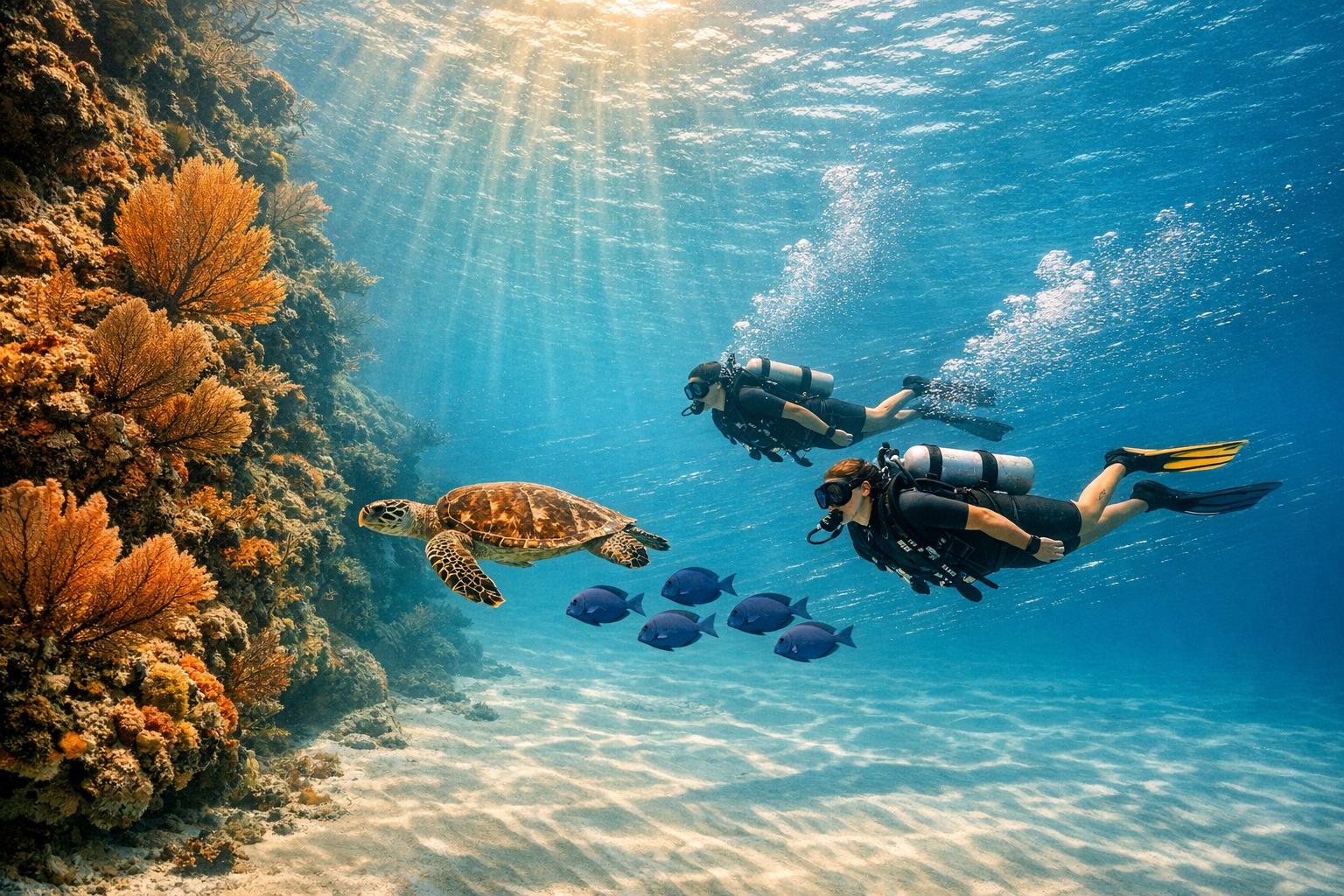
Drift diving in the Riviera Maya is an effortless way to explore the underwater world, guided by natural ocean currents. With year-round diving opportunities, seasonal changes in water conditions and marine life play a big role in shaping your experience. Here’s what you need to know to plan the perfect dive:
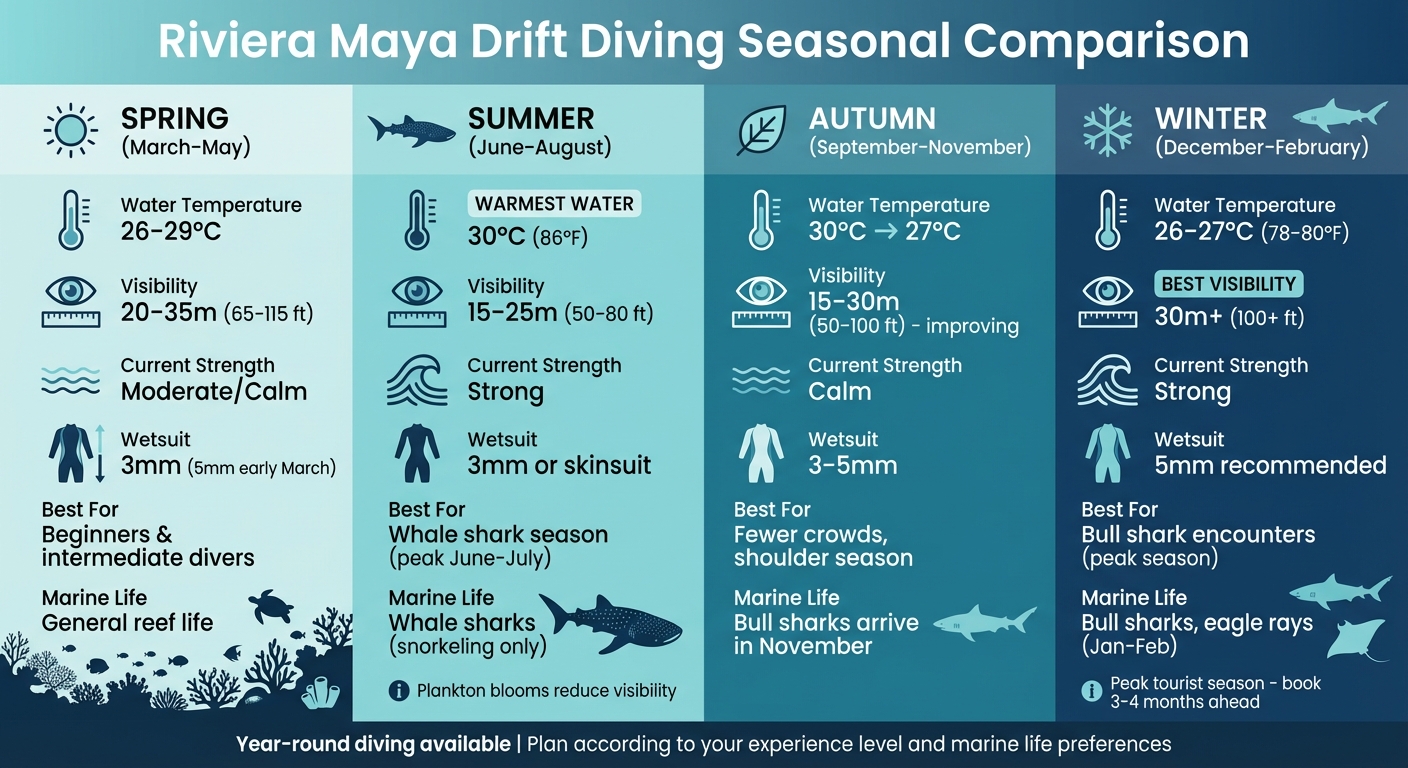
- Spring (March–May): Warm waters (26–29°C), clear visibility (20–35m), and calm currents make it ideal for beginners.
- Summer (June–August): Peak whale shark season, but visibility drops due to plankton blooms. Currents strengthen, and water reaches 30°C.
- Autumn (September–November): Cooler waters (27°C), improving visibility, and fewer crowds. Bull sharks start appearing in November.
- Winter (December–February): Best visibility (30m+), strong currents, and peak bull shark encounters. Cooler waters (26°C) may require a 5 mm wetsuit.
Top drift diving sites include Cozumel’s Punta Tunich and Barracuda Reef, as well as Playa del Carmen’s Bull Shark Point. For marine life, visit June–September for whale sharks or November–March for bull sharks.
To ensure safety, use a surface marker buoy, check current conditions, and gear up with the right wetsuit depending on the season. Dive operators like Seth Dive Mexico offer private tours tailored to your needs, making it easier to enjoy the Riviera Maya’s underwater wonders.
Riviera Maya Drift Diving Seasonal Conditions Guide
What Makes Riviera Maya a Top Drift Diving Destination
How Drift Diving Works
Drift diving offers a different experience compared to traditional diving. Instead of staying near a fixed spot and returning to an anchor line, you simply let the ocean's current carry you. You start at one location, glide effortlessly underwater, and your dive boat picks you up at a different point.
"Drift diving allows the current to carry you along the reef. Think of it as underwater 'gliding' - you let the ocean do the work while you enjoy the passing scenery." – Scuba Holidays [9]
This style of diving lets you explore a larger area without exerting much energy. Instead of swimming against the current, you can relax and enjoy the view as the reef unfolds in front of you. To stay safe, it’s crucial to maintain good buoyancy and use a brightly colored surface marker buoy (SMB) to signal your location when ascending.
The combination of these techniques and the natural forces at play makes the Riviera Maya a standout destination for drift diving.
Why Riviera Maya Works Well for Drift Diving
The Riviera Maya’s geography creates the perfect conditions for drift diving. Cozumel Island sits directly in the path of the Yucatan Current, which splits into two branches when it reaches the island. This creates a steady south-to-north flow that simplifies dive planning.
"The island lies right in the path of the Yucatan Current, splitting the current in two, with water flowing east towards the Caribbean Sea and west through the Cozumel Channel." – Original Diving [7]
This consistent current acts like a natural conveyor belt, bringing nutrient-rich water to the Mesoamerican Barrier Reef - the world’s second-largest reef system. These nutrients attract marine life like eagle rays, turtles, and sharks. On top of that, the constant water movement ensures excellent visibility, often surpassing 30 meters. However, wind conditions can affect the current’s strength, so it’s a good idea to check tools like Windy or Windguru before heading out for a dive.
sbb-itb-8d6faf7
Bull Sharks Scuba Diving Riviera Maya and Cozumel Mexico
Seasonal Conditions for Drift Diving
Knowing the seasonal patterns in the Riviera Maya can help you plan the perfect drift diving trip. Each season brings its own set of conditions, from water temperature changes to visibility and current strength.
Spring (March–May)
Spring kicks off with water temperatures rising from 26°C in March to 29°C in May, offering visibility between 20 and 35 meters (65–115 feet) [2]. March is the driest month, providing calm surface conditions - perfect for boat-based drift diving [5]. Currents during this season are moderate, making it a great time for beginners and intermediate divers to try drift diving. A 3 mm wetsuit is usually enough, though early March might call for a 5 mm suit for extra warmth.
Summer (June–August)
Summer sees water temperatures climb to 30°C (86°F) [2], drawing in marine life like whale sharks, which start appearing in June. However, visibility drops to around 15–25 meters (50–80 feet) due to increased plankton and nutrients [2]. Currents also become stronger, and the rainy season (May–October) can bring tropical storms and sediment that temporarily reduce water clarity [3][5]. A 3 mm wetsuit or skinsuit works well for thermal protection in these warmer waters [2]. While the marine activity is at its peak, divers should be mindful of the changing conditions.
Autumn (September–November)
As autumn sets in, water temperatures gradually cool from 30°C in September to 27°C in November. Visibility improves during this period, starting at about 15 meters (50 feet) and reaching up to 30 meters (100 feet) [2]. Currents are calmer, and with fewer tourists around, this shoulder season offers a quieter diving experience. November also marks the return of bull sharks, kicking off one of the most thrilling times for diving in the Riviera Maya. Depending on your tolerance for cooler water, a wetsuit between 3 mm and 5 mm is recommended.
Winter (December–February)
Winter brings cooler waters, ranging from 26°C to 27°C (78–80°F), and the best visibility of the year - often exceeding 30 meters (100 feet) [2]. However, stronger currents and windier conditions dominate this season, as winds largely drive the ocean currents in the area [1]. Bull shark encounters peak during these months, so it’s essential to follow safety protocols closely. A 5 mm wetsuit is advised for those sensitive to colder water [2]. With winter also being peak tourist season, it’s wise to book dive tours and accommodations well in advance, especially for trips between December and March [2]. Understanding these seasonal changes will help you prepare for the best possible drift diving experience.
Marine Life by Season
The Riviera Maya's marine ecosystem shifts with the seasons, creating unique opportunities for divers throughout the year. Knowing these seasonal patterns can help you plan your dives to encounter the wildlife you’re most eager to see.
Whale Shark Season (Mid-May–September)
From mid-May to September, whale sharks migrate through the waters of the Yucatán Peninsula, with peak activity in June and July [13]. These gentle giants, reaching lengths of up to 12 m (40 ft) [13], are often spotted near Isla Contoy, Isla Holbox, and Isla Mujeres. During peak season, sightings can range from 1 to 40 whale sharks on average, and occasionally even exceed 100 [11].
Important to know: Scuba diving with whale sharks is not allowed - only snorkeling is permitted [11][12]. Snorkelers often drift alongside these massive creatures in plankton-rich waters, making for an unforgettable experience.
Bull Shark Season (November–March)
Bull sharks arrive in Playa del Carmen between November and March, with pregnant females resting in nearby mangroves [14][4]. These sharks can grow up to 3 m long and weigh around 250 kg [14]. The main dive site, "Shark Point", lies at a depth of 24 m [4]. As Cyril M, a scuba instructor from Triton Diving, explains:
"Bull sharks do not come to Playa del Carmen to hunt. They come to rest during their pregnancy and give birth before taking their young to the mangroves" [4].
This dive requires advanced skills - most operators ask for at least an Advanced Open Water certification and excellent buoyancy control [15][16]. Proper technique is key to ensuring safe and respectful encounters with these sharks.
Year-Round Marine Life
While some species are seasonal, many others inhabit the region year-round. The Mesoamerican Barrier Reef is home to sea turtles, eagle rays, moray eels, barracudas, groupers, and a variety of reef fish [4][16]. Divers will also find invertebrates like lobsters, octopuses, crabs, and starfish, particularly at sites like "El Cielo" in Cozumel [12][6].
Additionally, artificial reefs, including sunken ships and the MUSA underwater museum with over 500 submerged sculptures [12], provide permanent habitats for corals and schools of fish. These sites are a testament to the vibrant marine life that thrives in the region throughout the year.
Best Drift Diving Sites by Season
The changing seasons bring unique conditions that can enhance your drift diving adventures. Here's a look at some of the best sites to visit throughout the year.
Spring and Summer: Shallow Reef Sites
With water temperatures hovering between 27–29°C and visibility ranging from 15–40 meters[10], spring and summer are perfect for exploring shallow reefs. Paradise Reef in Cozumel (9–12 meters) offers calm waters, making it a great choice for beginners[7][8]. Nearby, San Francisco Reef (5–20 meters) features gentle drifts, ideal for capturing stunning underwater photos[8].
If you're diving in Playa del Carmen, Moc-Che Shallow (7–14 meters) and Cerebros Reef (12 meters) are excellent spots for checkout dives after certification. These sites showcase beautiful brain coral formations and mild currents[8]. For turtle lovers, Tortuga Reef in Akumal (21 meters) is a must-visit between June and August for prime turtle encounters[17][18]. Another unique experience awaits at Cancun’s MUSA underwater museum (8 meters), where art installations blend seamlessly with marine life in a current-protected environment[8].
While these shallow reefs shine in the warmer months, the cooler seasons bring a shift to deeper, more challenging sites.
Autumn and Winter: Deeper Current Sites
As the water cools and currents strengthen, autumn and winter become the ideal time for advanced divers to explore deeper drift diving locations powered by the Yucatán Current[7]. Punta Tunich in Cozumel (18–21 meters) offers a thrilling experience with its vertical wall and strong currents, recommended only for seasoned divers[7]. Similarly, Paso Del Cedral (6–18 meters) combines moderate to strong currents with scenic swim-throughs, offering close encounters with turtles and nurse sharks[7].
For those seeking the ultimate challenge, Barracuda Reef is considered Mexico's most demanding drift dive. Its unpredictable, extremely strong currents require special authorization and advanced skills[7]. Off Playa del Carmen, Pared Verde (Green Wall) features striking coral formations and chimney-like swim-throughs, perfect for experienced divers[10]. Winter also brings the chance to dive with bull sharks at Bull Shark Point (24 meters), where Advanced Open Water certification and excellent buoyancy control are essential.
These deeper sites require proper safety gear, but divers can still enjoy excellent visibility, ranging from 15–40 meters, even during the cooler months[10].
Preparation and Safety for Seasonal Drift Diving
Fine-tuning your gear and safety practices to align with seasonal changes in water temperature and currents can make all the difference in your drift diving experience. Having the right equipment and following safety measures ensures a smoother, more enjoyable dive.
Gear Recommendations by Season
The type of wetsuit you choose depends largely on the season and your personal tolerance to cold. For most conditions, a 3 mm wetsuit works well, but during the cooler winter months (December–February), when water temperatures drop to around 24–25°C, a 5 mm wetsuit provides extra warmth for those who feel the chill. In contrast, during the hottest months (June–August) when water temperatures soar to 28–31°C, many divers opt for a rash guard to stay comfortable [19].
For strong currents, open-heel fins with boots are a must. They offer better thrust and are more comfortable. As Cozumel Info puts it:
"In scuba diving it's often said that your fins are your power." [1]
A BCD with integrated weight pockets is another smart choice, as it provides better stability compared to traditional weight belts during drift dives [19]. Keep in mind that wetsuit thickness affects buoyancy, so always perform a weight check when switching suits between seasons [1].
Visibility is key in open waters, so carrying a Surface Marker Buoy (SMB) is non-negotiable [19][1]. If you're diving during bull shark season (November–March), avoid wearing bright or fluorescent-colored wetsuits - dark colors are safer for these encounters [6].
Safety Protocols for Drift Diving
Having the right gear is only part of the equation; following strict safety protocols is just as important. A dive computer is essential for monitoring depth and decompression limits, especially in varying drift conditions [19]. Before heading out, check wind conditions using apps like Windy or Windguru, as wind significantly influences current strength in the area [1][9]. Always stay close to your buddy, particularly in strong currents [1].
If you find yourself caught in a downward current, stay calm, inflate your BCD, and kick upward at an angle to counteract the pull [1].
Cozumel Info shares this valuable advice:
"Achieving and maintaining neutral buoyancy at all times is the whole trick of good diving." [1]
To avoid snagging, keep hoses and gauges securely clipped [9]. After each dive, rinse your gear thoroughly with fresh water, particularly the regulators and BCD, to prevent salt buildup [19].
Planning Your Drift Diving Trip
Best Times to Visit for Specific Marine Life
Timing your trip right can make all the difference when it comes to encountering marine life during your drift diving adventure. For those hoping to see bull sharks, the best time to visit is between November and March. If eagle rays are on your list, aim for January to February; Cozumel's deeper wall sites, like Cantil and Santa Rosa, are prime spots for spotting them [21].
Whale sharks, on the other hand, are most active from June to September, with peak sightings happening in July and August [5][20]. If witnessing sea turtle nesting and hatchlings is your goal, plan to visit between May and October for nesting, and August to November for hatchling season [20]. For the clearest waters and calmest conditions, the dry season, running from December to April, is your best bet [5][20].
Traveling on a budget? Consider visiting in May or November, when the weather is still favorable, crowds are smaller, and hotels often offer 30–40% discounts [5][20]. For even steeper savings, look to the low season in September and October, when hotel rates can drop by 40–60%, though be mindful of the increased hurricane risk during this time [20]. If you're planning to visit during the busy peak season, make sure to book your accommodations and dive services 3–4 months in advance [20].
Why Choose Seth Dive Mexico
Simplify your planning and make the most of your dive trip with a provider that understands the seasonal nuances of drift diving. Seth Dive Mexico specializes in private, tailored dive experiences across the Riviera Maya, ensuring you get the most out of your adventure. Their tours include hotel pickup, full equipment rental, and experienced guides who are experts in navigating currents and tracking marine life throughout the year. Whether you're aiming to dive with bull sharks in the winter or mix cenote dives into your schedule, the flexibility of private tours means your itinerary can adjust to both real-time conditions and your personal preferences.
For those looking to explore Cozumel's renowned drift diving sites, the Cozumel Diving package is available for $165 per person, covering direct boat access, two tanks, weights, and marine park fees. Alternatively, the Ocean Diving packages start at $95 per person for two tanks, offering the chance to dive Playa del Carmen's vibrant reefs before exploring nearby attractions like Mayan ruins or cenotes. With all-inclusive options that cover equipment, transportation, and expert guidance, Seth Dive Mexico takes care of the logistics so you can focus entirely on the underwater experience.
Conclusion
Drift diving in the Riviera Maya offers an array of seasonal adventures, from the thrill of encountering bull sharks between November and March to the awe of swimming alongside whale sharks from June to September. Knowing these seasonal patterns - like the crystal-clear visibility during the dry months or the inviting 29°C waters in summer [5] - can help you plan dives that align with your goals and skill level. Each season brings its own charm, making thoughtful planning and professional guidance essential.
Preparation and local expertise play a big role in ensuring safe and enjoyable dives. Having the right safety gear and staying updated on weather conditions are crucial, especially when currents shift unexpectedly. Local dive professionals, with their deep understanding of how tides and winds influence currents, can turn a good dive into an unforgettable experience.
The Riviera Maya's accessibility and diverse dive sites make it a great destination for all skill levels. By understanding seasonal trends, you can also manage your budget effectively. A typical one-week trip costs around $400 to $600 USD [4], offering excellent value. Whether you're exploring beginner-friendly reefs in Playa del Carmen or the dramatic walls of Cozumel, the region provides flexibility - especially when strong winds lead to cenote diving as an alternative.
Whether you're drawn to specific marine encounters or prefer the calm conditions of the November to April dry season, aligning your expectations with the seasonal realities is key. With proper preparation, expert guidance, and an active DAN insurance membership [1], you can dive into the Caribbean's drift diving opportunities with confidence and safety.
For a tailored and hassle-free diving experience in the Riviera Maya, check out Seth Dive Mexico (https://seth-dive.vercel.app). Their private tours, skilled guides, and all-inclusive services ensure you make the most of every dive, no matter the season.
FAQs
Which season is best for beginner drift divers in Riviera Maya?
The dry season, spanning from November to March, is perfect for beginner drift divers exploring the Riviera Maya. During these months, the seas are calmer, and the visibility is crystal clear, creating a safer and more enjoyable underwater adventure.
What certification level do I need for bull shark drift dives?
To participate in bull shark drift dives, you'll need at least an Advanced Open Water certification or an equivalent qualification. This certification ensures you’re prepared to handle the deeper depths and stronger currents that are common in these types of dives.
How do I choose the right wetsuit and weights by season?
To pick the right wetsuit for diving in the Riviera Maya, it’s important to factor in the water temperatures, which vary by season. During the warmer months, from June to November, water temperatures range between 26°C and 31°C. A thin wetsuit (1-3mm) or even just a rash guard is usually enough for comfort.
On the other hand, from December to May, the water can feel cooler. A thicker wetsuit, around 3-5mm, is a better choice, and thermal accessories like hoods or gloves might come in handy if you’re prone to feeling cold.
Keep in mind, thicker wetsuits can affect buoyancy. You might need to use slightly heavier weights to compensate, but always prioritize your comfort and adjust based on your personal buoyancy needs during dives.
Frequently Asked Questions
Can I do drift diving in Riviera Maya if I only have an Open Water certification?
Yes, many drift diving sites are accessible with an Open Water certification, particularly the shallow, moderate-current reefs like Paradise Reef in Cozumel or Playa del Carmen's checkout sites. Deeper, high-current dives like Punta Tunich, Barracuda Reef, and the bull shark dives require at least an Advanced Open Water certification and strong buoyancy control — share your certification level when planning so your guide can match you to the right site.
Is whale shark diving allowed, or do you have to snorkel with them?
Scuba diving with whale sharks is not permitted under Mexican regulations — only snorkeling is allowed during encounters. Whale sharks are most active from June through September, with peak sightings in July and August near Isla Holbox, Isla Contoy, and Isla Mujeres.
How far in advance should I book a drift diving trip in peak season?
For the busy December-to-March window — which coincides with peak bull shark season, best visibility, and high tourist traffic — booking dive tours and accommodations three to four months ahead is strongly recommended to secure your preferred dates and avoid sold-out spots.
What happens if currents are too strong or weather turns bad on my dive day?
Experienced local guides monitor wind and current tools like Windy and Windguru daily and will shift the plan if ocean conditions are unsafe — a common and practical alternative is swapping an ocean drift dive for a cenote dive, which is sheltered from surface conditions and equally spectacular. Private tours make this kind of real-time itinerary adjustment much easier than fixed group departures.
Does Seth Dive Mexico provide all the gear, or do I need to bring my own equipment?
Full equipment rental is included in the tour packages, so you don't need to travel with gear — both the Cozumel and ocean diving packages cover tanks, weights, and marine park fees, and your guide handles all logistics from hotel pickup to site selection.