When deciding between Tulum and Playa del Carmen for your 2026 diving trip, it boils down to what kind of experience you’re after:
- Tulum is ideal for cenote diving. It offers access to famous freshwater sites like Dos Ojos and Gran Cenote, but it’s pricier and more spread out, requiring taxis or bikes to get around.
- Playa del Carmen is better for ocean reef diving. It's more affordable, compact, and walkable, with easy access to Cozumel's coral walls via frequent ferries.
Both destinations have their unique appeal, but your choice depends on your diving focus and travel style.
Quick Comparison
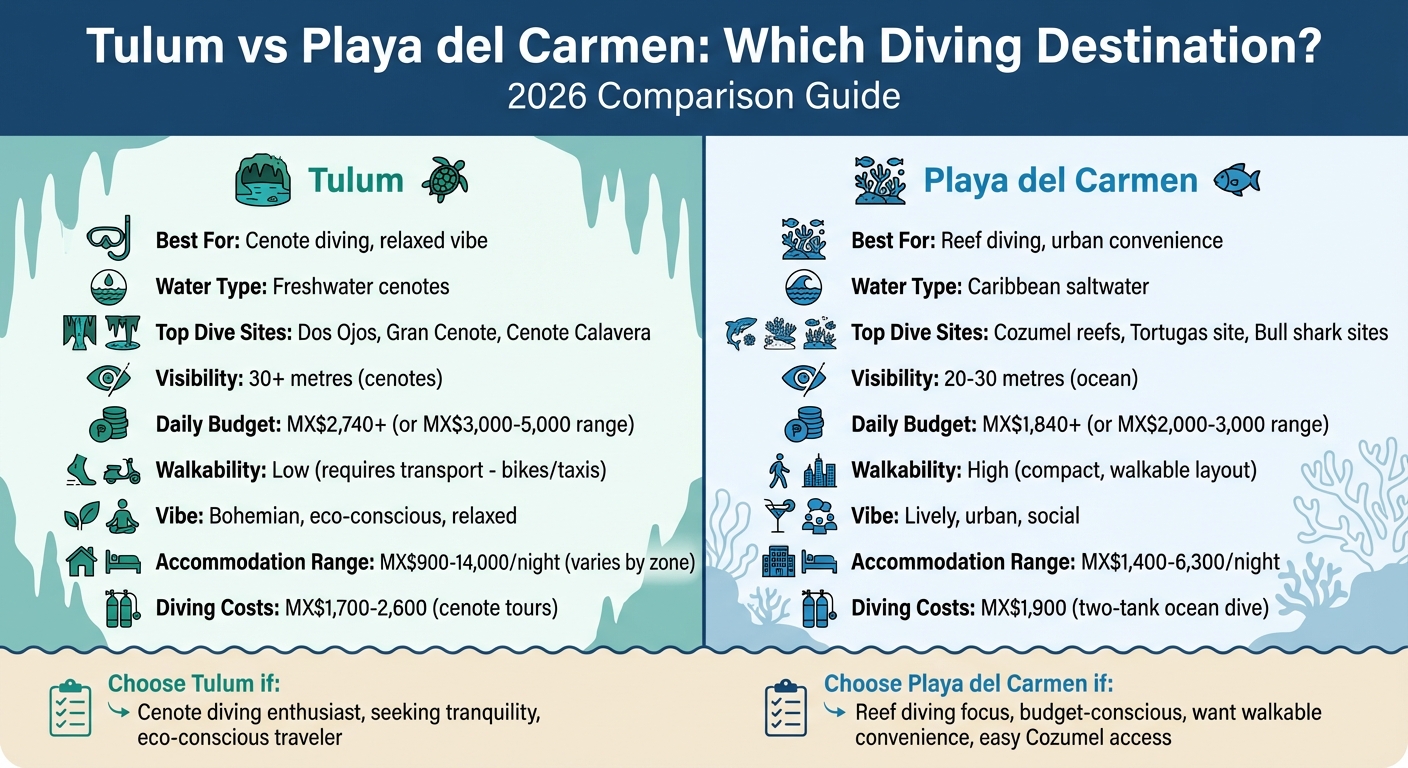
| Factor | Tulum | Playa del Carmen |
|---|---|---|
| Best For | Cenote diving, relaxed vibe | Reef diving, urban convenience |
| Water Type | Freshwater cenotes | Caribbean saltwater |
| Top Dive Sites | Dos Ojos, Gran Cenote | Cozumel reefs, Tortugas site |
| Daily Budget | MX$2,740+ | MX$1,840+ |
| Walkability | Low (requires transport) | High (compact layout) |
| Vibe | Bohemian, eco-conscious | Lively, urban, social |
For cenote lovers seeking tranquility, Tulum is the top pick. If you want vibrant reef dives and convenience, Playa del Carmen is the way to go.
Tulum vs Playa del Carmen Diving Comparison 2026
Cenote Diving in Playa del Carmen
sbb-itb-8d6faf7
Diving in Tulum
Tulum is the go-to hub for cenote diving in the Riviera Maya. With some of the most famous freshwater cave and cavern systems just 15–30 minutes away, you’ll spend less time commuting and more time exploring underwater wonders. Let’s dive into the highlights of Tulum’s cenotes, the diving conditions, and what you can expect to spend.
Access to Major Cenotes
Tulum is surrounded by cenotes that cater to different skill levels and interests:
- Gran Cenote: Perfect for beginners and photographers, this spot offers shallow cavern dives with stunning natural light beams and stalactites.
- Dos Ojos: Featuring two interconnected cave passages, this cenote is a favorite for snorkelers and divers alike, regardless of experience.
- Casa Cenote: A unique open-water cenote where freshwater meets the Caribbean Sea. Divers can experience the fascinating halocline effect - a blend of salt and freshwater layers.
These cenotes are a big reason why Tulum has become a must-visit destination for divers.
Cenote Diving Conditions in 2026
The cenotes in Tulum offer consistently clear and calm waters, making them accessible all year round, no matter the weather on the surface. Most sites welcome Open Water certified divers, but if you’re looking to explore the deeper cave systems, you’ll need advanced certifications and specific training. These areas demand a solid understanding of overhead environments and navigation.
Cenote Diving Costs with Seth Dive Mexico
Seth Dive Mexico provides private cenote diving tours priced between $85–130 USD per person. What’s included?
- Hotel pickup and drop-off
- Full scuba gear, including torches
- Cenote entrance fees
- A professional guide
- Water and snacks to keep you energized between dives
The private tour format ensures you can dive at your own pace, making it a personalized and stress-free experience.
Diving in Playa del Carmen
Playa del Carmen is the go-to spot for ocean diving in the Riviera Maya. While Tulum is famous for its cenote diving, Playa del Carmen offers easy access to the Caribbean's vibrant reefs and Cozumel's stunning coral walls. Thanks to offshore reefs that reduce wave activity, the waters here are typically calmer than Tulum's coastline, making them perfect for beginners [2]. This makes Playa del Carmen a prime destination for ocean diving enthusiasts.
Reef Diving and Marine Life
The reefs near Playa del Carmen are part of the Great Maya Reef, which is the second-largest coral reef system on the planet [6]. Divers enjoy visibility between 20 and 30 meters, with water temperatures averaging around 25°C during the dry season from November to April [6]. The marine life here is nothing short of spectacular, with sightings of green sea turtles, eagle rays, stingrays, moray eels, and schools of grunts and snappers [12, 14].
One standout dive site is Tortugas, where you can encounter an impressive 40–70 sea turtles per dive, earning it the nickname "turtle retirement home" [7]. Another favorite is the Barracuda site, known for its shallow spur-and-groove reef formations. This spot is rich in macro marine life and schools of fish, making it an excellent choice for Open Water divers or those looking to build confidence underwater.
Getting to Cozumel Dive Sites
Playa del Carmen serves as the main gateway for diving in Cozumel [2]. Ferries depart hourly from the town center, with tickets costing $15–20 USD one way. Once on the island, a two-tank dive typically ranges from $85–120 USD.
For a more convenient option, Seth Dive Mexico offers a direct boat service to Cozumel for MX$165 per person. This private service skips the ferry altogether, taking you straight to Cozumel's breathtaking coral walls. After your dive, you return directly to Playa del Carmen, avoiding ferry schedules and crowded boats.
Ocean Diving Costs with Seth Dive Mexico
Seth Dive Mexico offers two-tank ocean dives around Playa del Carmen for MX$95 per person. This package includes everything: equipment, hotel transfers, boat transportation, and marine park fees. The private setup ensures a stress-free and personalized experience, as you'll dive with your own group and guide.
Tulum vs Playa del Carmen: Diving Comparison
Deciding between Tulum and Playa del Carmen for diving depends on the type of underwater adventure you’re after and how you want to spend your time on land. Tulum is all about cenote diving, with some of the most iconic cenotes just a short drive away. On the other hand, Playa del Carmen offers easy access to ocean reef diving and serves as the gateway to Cozumel’s stunning coral walls. Plus, Playa’s dive shops and ferry terminal are conveniently located in the town center.
Cenotes in Tulum provide crystal-clear freshwater visibility of over 30 meters, showcasing unique geological formations and haloclines. Meanwhile, Playa del Carmen’s ocean dives reveal vibrant reefs filled with tropical fish and seasonal visitors like bull sharks. If you’re interested in sea turtles, nearby Akumal is a great spot to see them in their natural habitat.
Practical considerations like cost and transportation also play a role. Tulum tends to be pricier, and getting around requires taxis or bikes since the town is spread out between the Pueblo and beach zones. Playa del Carmen, with its compact layout, makes it easier to explore on foot, which can cut down on transport costs. These differences don’t just affect your diving plans - they shape your entire experience, from your budget to the town’s vibe. The table below breaks down the key points to help you decide.
| Factor | Tulum | Playa del Carmen |
|---|---|---|
| Best For | Cenote diving & quiet atmosphere | Ocean reefs & Cozumel access |
| Water Type | Freshwater cenotes | Caribbean saltwater |
| Top Sites | Dos Ojos, Gran Cenote, Cenote Calavera | Cozumel reefs, Bull shark sites |
| Visibility | 30+ metres (cenotes) | 20–30 metres (ocean) |
| Walkability | Lower (requires transport) | Higher (centralised) |
| Daily Budget | MX$3,000–5,000 | MX$2,000–3,000 |
| Vibe | Eco-chic, bohemian, relaxed | Urban, energetic, social |
Where to Stay and What's Available
Where you choose to stay can set the tone for your entire diving trip. In Tulum, accommodations are spread out across three distinct areas, while Playa del Carmen offers a compact, walkable setup. These differences can influence both your budget and how easily you can get to your dive sites. Let’s break it down.
Tulum: Eco-Lodges and Beach Clubs
Tulum’s lodging is divided into three main zones. The Beach Zone is home to eco-friendly boutique hotels featuring thatched-roof designs and organic dining options. Prices here range from MX$3,200 to MX$14,000 per night [2][1]. For those on a tighter budget, Tulum Pueblo (the town center) offers affordable hotels and hostels priced between MX$900 and MX$3,200 per night, conveniently close to dive shop departures for cenote adventures [2][1]. Somewhere in the middle, geographically and style-wise, is Aldea Zama, which offers modern apartments that are perfect for longer stays.
The Beach Zone attracts wellness enthusiasts with its yoga decks, farm-to-table dining, and bohemian vibe that’s perfect for Instagram. However, it’s worth noting that the beach and town are separated by about 5 kilometers, connected by a single road that’s often congested. Most accommodations don’t include transport, so you might need to rent a bike (around MX$150–900 per day) or take a taxi (costing MX$150–270 for short trips). Major cenotes like Dos Ojos and Gran Cenote are typically a 15–30 minute drive away [2][8]. Tulum’s spread-out layout and tranquil jungle settings are ideal for cenote divers looking to relax in an eco-conscious environment.
"Tulum has evolved from backpacker haven to upscale eco-chic destination, where beachfront cabañas have given way to luxury boutique hotels and wellness retreats commanding premium prices." – Machupicchu.org [2]
Playa del Carmen: Hotels and Dive Shop Access
Playa del Carmen, on the other hand, offers a more centralized and convenient setup. Budget hotels inland range from MX$1,400 to MX$2,100 per night, while mid-range options closer to the beach and Fifth Avenue cost between MX$1,800 and MX$6,300 per night [2][1]. Thanks to its compact layout, you can walk to dive shops, the Cozumel ferry terminal, and a variety of restaurants - all within about 10 minutes [2][1].
This walkability not only saves time but also cuts down on transportation costs. Dive boats typically leave from the central beach or ferry pier, so there’s no need for taxis or bikes to reach your next dive. Playa del Carmen’s urban vibe comes with plenty of conveniences, too. With a population of around 300,000, the town offers supermarkets for rinsing gear, laundromats for drying wetsuits, and even rooftop pools for unwinding after a day underwater [5][1]. The centrally located hotels and easy access to dive shops make Playa del Carmen a great choice for ocean divers who value convenience and a lively atmosphere.
Costs and Logistics for 2026
Daily Budgets Including Diving
When planning your trip, it's important to consider the daily costs for each destination. In 2026, Playa del Carmen averages about MX$1,840 per person per day, while Tulum comes in higher at around MX$2,740 per person[2][3]. For diving enthusiasts, a two-tank ocean dive in Playa del Carmen costs approximately MX$1,900 per person, while cenote tours near Tulum range between MX$1,300 and MX$1,900[2].
If you're traveling on a tight budget, Tulum Pueblo offers more affordable options, with hostel stays starting at just MX$300 per night and street tacos priced at MX$20–30 each[9][4]. On the other hand, a mid-range daily budget in Playa del Carmen typically falls between MX$2,000 and MX$3,000. This amount covers a comfortable hotel, three meals, and a dive trip. In contrast, staying in Tulum's beach zone can push daily expenses to MX$3,000–5,000, especially when factoring in beach club minimum spends of MX$800–1,600[2].
These differences in costs also impact how you'll travel between and within dive sites, as transportation plays a key role in your overall budget.
Getting Around and Reaching Dive Sites
Transportation costs vary significantly between Playa del Carmen and Tulum, influencing how you manage your daily expenses. Playa del Carmen's compact layout makes it easy to get around on foot. Dive shops, the ferry terminal to Cozumel, and a variety of restaurants are all within a 10-minute walk[2]. Ferries to Cozumel run hourly from 07:00 to 23:00 and cost about MX$300–400 each way, making same-day trips for reef diving simple and convenient[2]. For cenote diving, services like Seth Dive Mexico even include hotel pickup.
In Tulum, getting around is a bit more complicated due to its spread-out geography. You'll likely need to rely on bikes, taxis, or colectivos. Bike rentals are available for around MX$200–300 per day, while colectivos (shared vans) charge between MX$10 and MX$50 per ride[4][9]. If you're traveling between Playa del Carmen and Tulum, the 60-km drive takes about 50–60 minutes. Alternatively, ADO buses from Cancún Airport cost MX$240–300 to Playa del Carmen or MX$300–360 to Tulum[4][1][2].
Whether you prefer the walkable convenience of Playa del Carmen or the more spread-out charm of Tulum, factoring in these transportation and budget details will help you better plan your diving adventure.
Which Town Fits Your Diving Trip?
Let’s break it down: Tulum is your go-to for cenote diving and a laid-back vibe, while Playa del Carmen is perfect for reef diving and a more urban, accessible experience. Here’s a quick guide to help you decide.
Choose Tulum for Cenote Diving and Relaxation
If exploring cenotes is your dream, Tulum is the place to be. It’s the gateway to famous freshwater sinkholes like Dos Ojos and Gran Cenote, offering unforgettable cave and cavern dives. Beyond diving, Tulum’s bohemian charm shines through its yoga retreats, eco-friendly lodges, and wellness-focused atmosphere. Keep in mind that Tulum is more spread out, so you’ll need extra transportation to get around. Also, its exclusivity comes with a higher price tag, so plan accordingly.
Choose Playa del Carmen for Reef Diving and Convenience
For those seeking vibrant reef dives and a budget-friendly option, Playa del Carmen checks all the boxes. Its compact, walkable design means dive shops, restaurants, and the Cozumel ferry terminal are all close by. You’ll have direct access to stunning Caribbean reefs, and with hourly ferries (about MX$300–400 each way), Cozumel’s legendary coral walls are just a short trip away. Playa del Carmen also boasts a lively, cosmopolitan vibe with plenty of dining, nightlife, and accommodation choices, saving you both time and transport costs.
Book Private Tours with Seth Dive Mexico
Looking for a more tailored experience? Seth Dive Mexico offers private tours in both locations. Prices range from MX$1,700–2,600 for cenote dives and about MX$1,900 for two-tank ocean dives. These tours include hotel pickup, all necessary equipment, and expert guides, allowing you to customize your diving adventure - perfect for the busy 2026 peak season.
FAQs
Which certifications do I need for cenote dives vs reef dives?
For cenote dives, having an Open Water Diver certification is generally necessary to safely navigate shallow, guided dive sites. Similarly, reef dives also typically require this certification. However, for deeper or more challenging dives, advanced qualifications like the Advanced Open Water Diver certification or specialized training (such as Deep Diver or Night Diver) are often suggested. These additional certifications not only prioritize safety but also make the diving experience more enjoyable and rewarding.
When is the best time in 2026 to dive in Tulum or Playa del Carmen?
If you're planning to dive in Tulum or Playa del Carmen in 2026, the best time to go is during winter, from November to March. During these months, you'll enjoy excellent visibility and a chance to encounter vibrant marine life, including Bull Sharks. While the water might be cooler, it’s a trade-off for an unforgettable diving experience. Make sure to prepare for the temperatures to make the most of your underwater adventure.
Can I stay in one town and still dive the other’s best sites?
Both Tulum and Playa del Carmen are fantastic spots for diving enthusiasts, and the good news is you don’t have to choose just one! Playa del Carmen serves as a great hub for exploring cenotes, vibrant reefs, and marine parks. Meanwhile, Tulum is known for its iconic cenotes and nearby reef dives. Thanks to the short distance between the two, you can easily take day trips or quick drives, enjoying the highlights of both towns without the hassle of constantly switching accommodations.
Frequently Asked Questions
Can a complete beginner do cenote diving near Tulum or does it require experience?
Beginners can absolutely enjoy cenotes — sites like Gran Cenote and Dos Ojos are well-suited for Open Water certified divers and even non-certified visitors through a Discover Scuba session. Deeper cave systems are reserved for divers with advanced overhead-environment training, so your guide will match the site to your exact level.
Is hotel pickup included or do I need to arrange my own transport to the dive sites?
Free hotel pickup from anywhere between Cancun and Tulum is included, so you don't need to worry about renting a car, hailing taxis, or navigating colectivo routes on dive day. Just share your accommodation address when you book and the logistics are handled for you.
Which town is cheaper to base yourself in if I want to dive both cenotes and reefs?
Playa del Carmen is the more budget-friendly base, with daily costs averaging around MX$1,840 compared to Tulum's MX$2,740, and its central location puts both reef boats and cenote day trips within easy reach. Tulum's beach zone adds extra transport and minimum-spend costs that can push budgets significantly higher.
What's actually included in a private cenote dive tour so I know what to bring?
A private cenote tour typically covers hotel pickup, full scuba gear including underwater torches, cenote entrance fees, a dedicated guide, and water and snacks between dives. You generally only need to bring a swimsuit, sunscreen, and a dry bag for your valuables.
How do I figure out which cenote is right for my skill level and interests?
The right cenote depends on your certification, comfort with enclosed spaces, and whether you prioritize natural light, geological formations, or the halocline effect where salt and freshwater meet. Messaging Seth with your certification level and what draws you to cenote diving is the fastest way to get a personalized recommendation rather than guessing from a generic list.