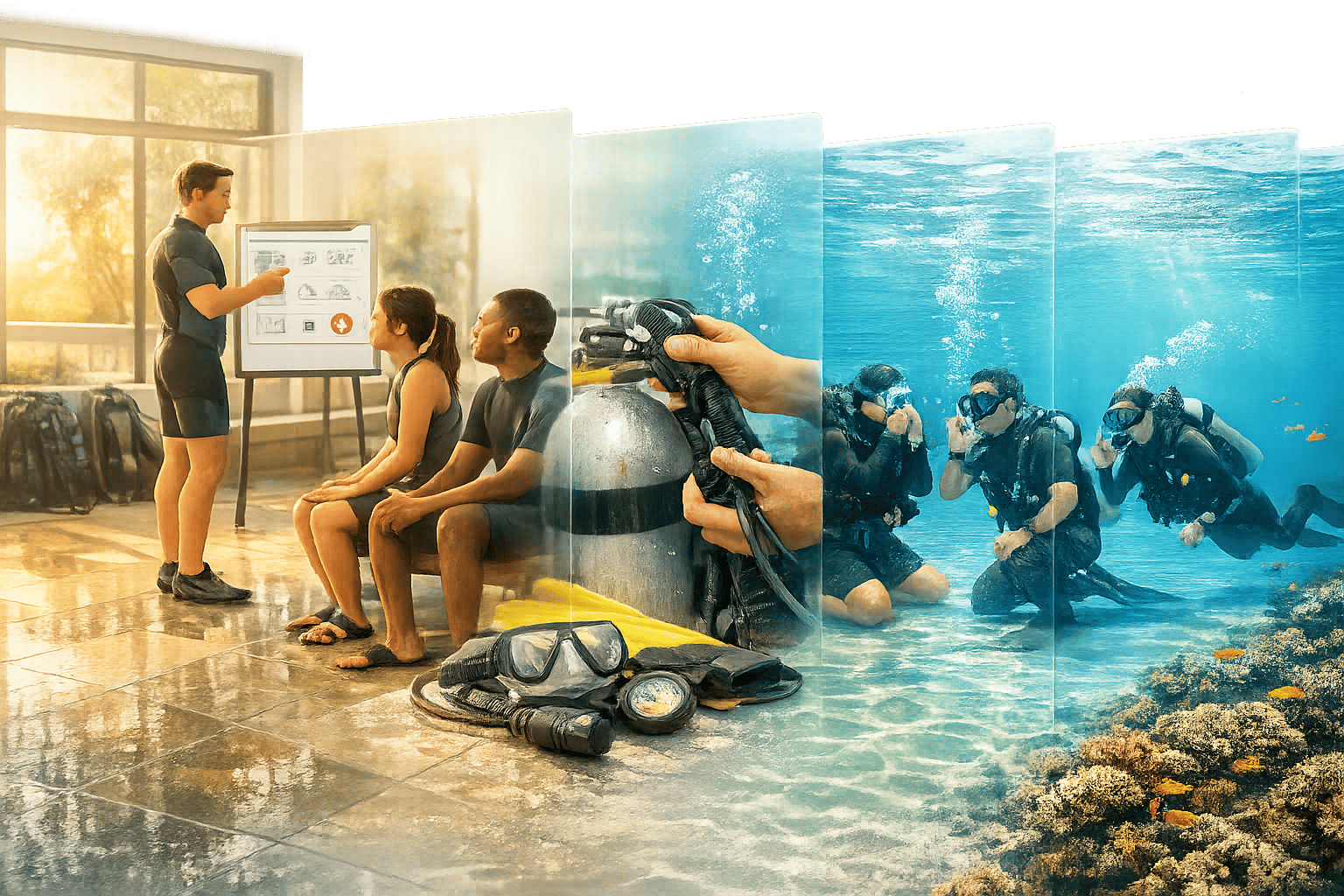
Discover Scuba Diving offers a simple way for beginners to try scuba diving without prior experience or certification. In just 2-4 hours, you’ll get a safety briefing, practice in shallow water (up to 6 meters), and complete a guided open water dive (up to 12 meters). Open to anyone 10 years or older, this program is led by certified instructors who prioritize safety and comfort.
At Seth Dive Mexico, the experience includes:
- Personalized instruction in multiple languages (English, Spanish, French, German).
- Diving options: Explore the Riviera Maya’s cenotes or vibrant Caribbean reefs.
- All-inclusive pricing: For $135 USD, enjoy professional guidance, equipment, transportation, and entrance fees.
Prepare by bringing essentials like water, a swimsuit, and reef-safe sunscreen. After learning basic scuba skills in confined water, you’ll dive into the open ocean or cenotes, guided step-by-step by your instructor. This experience can also count toward a full PADI certification if completed within 12 months.
Key Takeaways:
- Perfect for first-timers, ages 10+.
- Includes professional guidance, equipment, and transportation.
- Dive options: cenotes or reefs in Riviera Maya.
- Cost: $135 USD per person.
Whether you’re curious about diving or considering full certification, this program is a great starting point.
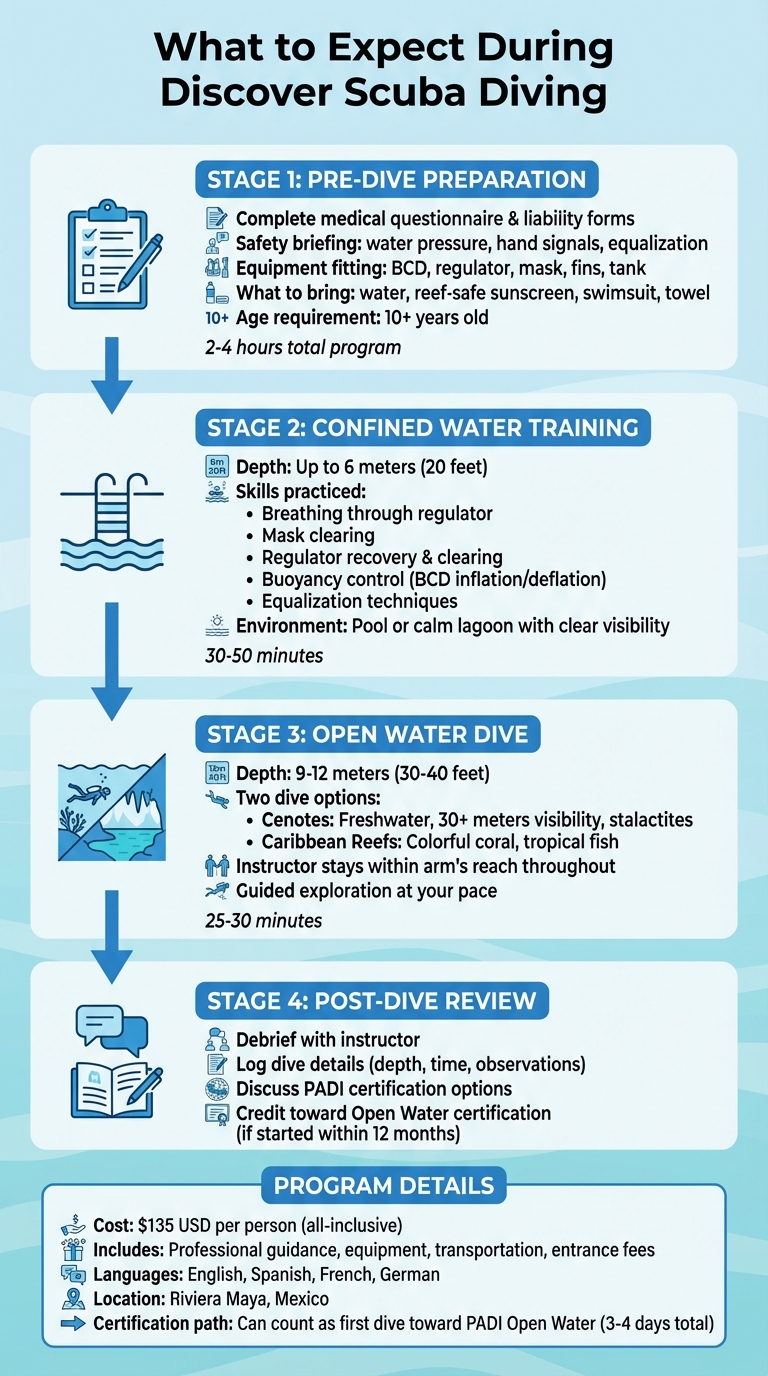
Discover Scuba Diving Program Step-by-Step Process
Pre-Dive Preparation and Orientation
How to Prepare Before Your Dive
Start by packing the essentials: bring plenty of water to stay hydrated and apply reef-safe sunscreen to protect both your skin and marine life. Wear a swimsuit or a snug-fitting rash guard to avoid irritation from rental gear. Don’t forget a towel and a change of clothes for after your dive.
Before heading to the dive site, you’ll need to complete a medical questionnaire and liability forms. If you have conditions like asthma, heart issues, or diabetes, you may need a doctor’s written approval to dive. For those who wear glasses, soft contact lenses are a good option, or you can request a prescription mask. While you don’t need to be an Olympic swimmer, having a decent fitness level and feeling at ease in the water is essential.
Safety Briefing and Instructor Overview
Before you even touch the water, your instructor will guide you through an in-depth safety briefing. This includes an overview of how water pressure affects your body and why it’s critical to avoid holding your breath while diving. You’ll also learn underwater hand signals, techniques to equalize ear pressure, and guidelines for interacting respectfully with marine life.
Tyler Allison from Dive Otter highlights the importance of open communication:
Instructors rely on honest communication to tailor the session to your comfort level.
If you’re feeling nervous or have concerns - like trouble equalizing - be sure to speak up. Your instructor can adjust the pace of the session to match your needs. The goal is to help you feel relaxed and confident about breathing underwater, without overwhelming you with complicated dive planning.
Understanding Your Scuba Equipment
Your instructor will handle assembling and checking all your scuba gear, so you don’t have to worry about technical details. They’ll ensure your buoyancy control device (BCD) fits well, as this piece helps you manage your buoyancy during the dive. You’ll also use a regulator, which delivers air from your tank at the right pressure, and a mask that creates an air pocket for clear vision underwater. Fins make movement more efficient, while your scuba tank provides the compressed air you’ll breathe.
Each piece of equipment will be explained in detail, and your instructor will make sure everything fits comfortably. Megan Denny from PADI explains:
A PADI Pro will help you put on scuba gear and ensure it fits properly.
If anything feels too tight or uncomfortable during the fitting, let your instructor know immediately. Once you’re in shallow water, you’ll practice inflating and deflating your BCD at the surface to get familiar with buoyancy control. This hands-on orientation ensures you’re ready for basic skills training in a confined water environment.
sbb-itb-8d6faf7
Basic Skills Training in Confined Water
Learning Core Scuba Skills
After your pre-dive orientation, your instructor will guide you through the essential scuba skills in shallow water (up to 6 meters/20 feet) [4][5]. You'll begin by practicing how to breathe through the regulator, getting accustomed to the sound of bubbles and the rhythm of breathing underwater. To help you learn, the instructor will first demonstrate each skill and then stay close as you practice.
One of the first techniques you'll master is mask clearing, which allows you to remove water from your mask without needing to surface. With practice, this becomes second nature. You'll also learn regulator recovery, a crucial skill for retrieving a dislodged regulator, and regulator clearing, which ensures any water in the mouthpiece is removed effectively.
You'll practice managing your buoyancy by inflating and deflating your BCD (buoyancy control device) and work on equalization techniques to relieve ear pressure during descent. Marcus Knight, a Master Instructor, highlights the importance of successfully completing these core skills before advancing further.
Building Confidence in a Controlled Environment
Once you're comfortable with the core skills, you'll move to a controlled environment designed to strengthen your abilities. These sessions typically take place in a pool or a calm lagoon with clear visibility and no currents, creating the perfect setting to focus on breathing and equipment without distractions. As Tyler Allison from Dive Otter explains, this is where you'll take your first breaths underwater through the regulator and gradually adjust to the experience before going on a slow, guided tour with your instructor.
Confined water sessions generally last between 30 and 50 minutes [4], giving you ample time to practice until you're confident. If you feel you need more time, let your instructor know - they can adjust the pace to suit your comfort level. By mastering these skills in a calm, controlled environment, you'll be better prepared to handle minor challenges when you transition to the open ocean. These sessions are the foundation for your upcoming open water dive.
Your First Open Water Dive
Diving in Riviera Maya's Cenotes or Reefs
With your confined water training under your belt, it's time to take the plunge - literally - into your first open water dive. This marks a thrilling transition from practicing essential skills to experiencing the wonders of underwater exploration. While confined water sessions usually keep you at depths of 2.5 to 3 meters, open water dives go deeper, typically reaching 9 to 12 meters (30–40 feet). These dives usually last around 25 to 30 minutes, depending on how comfortable and relaxed you feel during the experience [1].
At Seth Dive Mexico, you have two breathtaking options for your first dive. If you choose cenote diving, you'll find yourself in crystal-clear freshwater with visibility often exceeding 30 meters (over 100 feet). Picture yourself gliding past ancient stalactites, surrounded by beams of natural light piercing through the water. On the other hand, reef diving in the Caribbean Sea offers a vibrant underwater world filled with colorful coral structures and lively tropical fish [1]. No matter which you choose, your instructor will be right there with you, ensuring your dive is smooth and unforgettable.
Instructor Support During Your Dive
Throughout your dive, your instructor stays within arm's reach, taking care of all the technical details so you can focus on the magic of the underwater world [3]. Tyler Allison from Dive Otter highlights the level of support provided:
The instructor sets up every piece of gear, checks it carefully, and adjusts it before you enter the water. You are not asked to manage equipment, handle emergencies, or go anywhere beyond your comfort level.
The dive progresses at your pace, with your instructor using familiar hand signals to check in and guide you to fascinating sights. If you need to equalize or slow down, simply signal, and your instructor will adjust accordingly. A key tip: equalize early and often during your descent to avoid discomfort - don’t wait until your ears start to hurt [1].
How to Try Scuba - What is Discover Scuba Diving?
Post-Dive Review and Tips for Beginners
Completing your first dive is just the beginning - it’s also a chance to reflect, learn, and prepare for what’s next.
Debriefing Your Dive Experience
Once you’re back on the surface, your instructor will guide you through a brief debrief. This is the perfect time to ask any remaining questions about the dive, your equipment, or anything you felt during the experience. Sharing your comfort level and thoughts can help shape your future training sessions and make them more personalized to your needs [7][8][3].
At Seth Dive Mexico, this debrief often includes advice on joining the PADI community and exploring how your Discover Scuba experience can lead to more advanced diving opportunities [6]. You’ll also be encouraged to log your dive - details like depth, dive time, and observations can help you track your progress over time [3]. This review isn’t just about reflecting on your first dive; it’s also about setting goals and preparing for your next underwater adventure.
Tips for Your Next Dive
Whether you’re planning another dive soon or considering full certification, keeping these safety habits in mind is essential:
- Breathe continuously - never hold your breath.
- Equalize often during your descent to avoid discomfort.
- Check your air gauge regularly and aim to surface with at least 500 psi (35 bar) remaining.
- Work on buoyancy control to stay steady and avoid accidental contact with underwater surfaces.
- Always dive with a buddy and have a clear plan in case you get separated.
As DAN World reminds us, “Regarding safety, every dive is the first dive, and every time safety procedures must be followed” [9].
Getting Your PADI Certification
Your Discover Scuba experience can actually count toward earning your full PADI Open Water Diver certification - provided you start the course within 12 months [4][2]. To make sure your dive is credited, let your instructor know before you begin your in-water training [5][2].
This initial dive serves as your first confined water and open water dive, bringing you one step closer to certification, which can usually be completed in just 3–4 days. Alternatively, you might opt for the PADI Scuba Diver certification, which allows for supervised dives under professional guidance [2].
At Seth Dive Mexico, both options are available, with Open Water courses priced between MX$325 and MX$400 per person, depending on the size of your group.
FAQs
What if I can’t equalise my ears during the dive?
If you can’t equalize your ears while diving, stop descending right away to prevent any harm. Stay at your current depth or, if necessary, ascend to the surface until you’re able to equalize comfortably. Avoid forcing it, as this might lead to injury. Always communicate with your instructor, follow their advice, and stick to safety protocols during the process.
Can I join if I’m not a strong swimmer?
You don’t have to be an expert swimmer to take part in a Discover Scuba program. If you’re comfortable being in the water and can float at the surface, you’re good to go! This program is tailored for beginners, and your instructor will walk you through each step to make sure you have a safe and fun time.
Can I fly the same day after Discover Scuba?
It's generally advised to wait at least 18 hours after finishing a Discover Scuba program before boarding a flight. This waiting period helps your body safely release excess nitrogen, lowering the risk of decompression sickness. Always put safety first and stick to the recommendations provided by your instructor.
Frequently Asked Questions
Can I do Discover Scuba in a cenote instead of the ocean?
Yes, cenote diving is one of the most popular options in the Riviera Maya because the freshwater visibility often exceeds 30 meters, the water is calm with no current, and the ancient stalactite formations make for a striking first dive. Your guide will recommend the best site based on your comfort level and the experience you are looking for.
What is actually included in the price and do I need to bring my own gear?
The $135 USD per person price at Seth Dive Mexico covers professional instruction, all scuba equipment, transportation with free hotel pickup from Cancun to Tulum, and cenote or site entrance fees, so you only need to bring a swimsuit, water, and reef-safe sunscreen.
How many people will be in my group during the Discover Scuba experience?
Seth Dive Mexico runs private and semi-private sessions rather than large group tours, which means your instructor can stay within arm's reach throughout the dive and adjust the pace entirely to your comfort level instead of rushing through a set itinerary.
Will this count toward a PADI Open Water certification later?
Your Discover Scuba dive can credit toward a full PADI Open Water certification, but you need to tell your instructor before the in-water session begins and start the certification course within 12 months of your try-dive date.
Is Discover Scuba safe for kids or people with health conditions?
The program is open to participants aged 10 and older, but anyone with conditions such as asthma, heart issues, or diabetes will need written medical clearance from a doctor before entering the water; your instructor reviews a health questionnaire before every session to make sure the experience is appropriate for you.