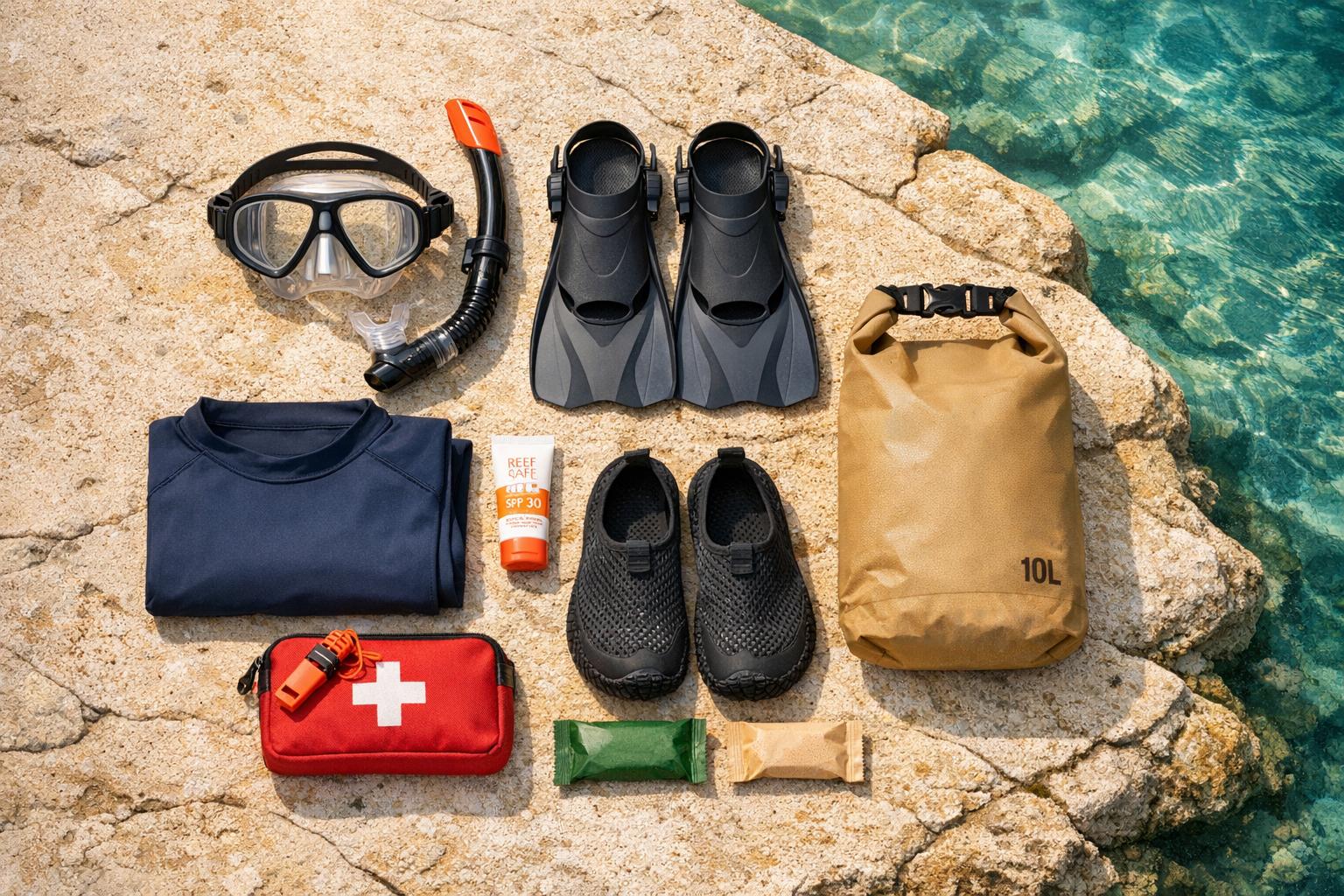
Cenote snorkeling in Mexico offers stunning views of crystal-clear waters, limestone formations, and vibrant ecosystems. To make the most of your trip, you’ll need the right gear and preparation. Here’s a quick rundown of what to bring:
- Snorkeling Gear: A snug-fitting mask (preferably low-volume with tempered glass), open-heel fins with dive boots, and a dry snorkel.
- Thermal Protection: A 3mm–5mm wetsuit or a long-sleeve rash guard to stay warm and protect against sharp surfaces.
- Clothing & Footwear: Two swimsuits, a quick-dry towel, lightweight cover-ups, and sturdy water shoes with non-slip soles.
- Sun & Insect Protection: Biodegradable sunscreen (zinc oxide or titanium dioxide-based) and reef-safe insect repellent (apply after swimming).
- Storage: A waterproof backpack or dry bag for valuables, plus a separate bag for wet clothes.
- Hydration & Snacks: An insulated reusable water bottle and light snacks like granola bars or nuts.
- Extras: A waterproof flashlight for dimly lit cenotes and a small first aid kit for minor injuries.
Most cenotes require life jackets and operate on a cash-only basis (Mexican Pesos). Many also ban non-biodegradable products to protect their fragile ecosystems. If you’re booking with a service like Seth Dive Mexico, they provide essential gear, transportation, and entrance fees, so you can focus on enjoying your adventure.
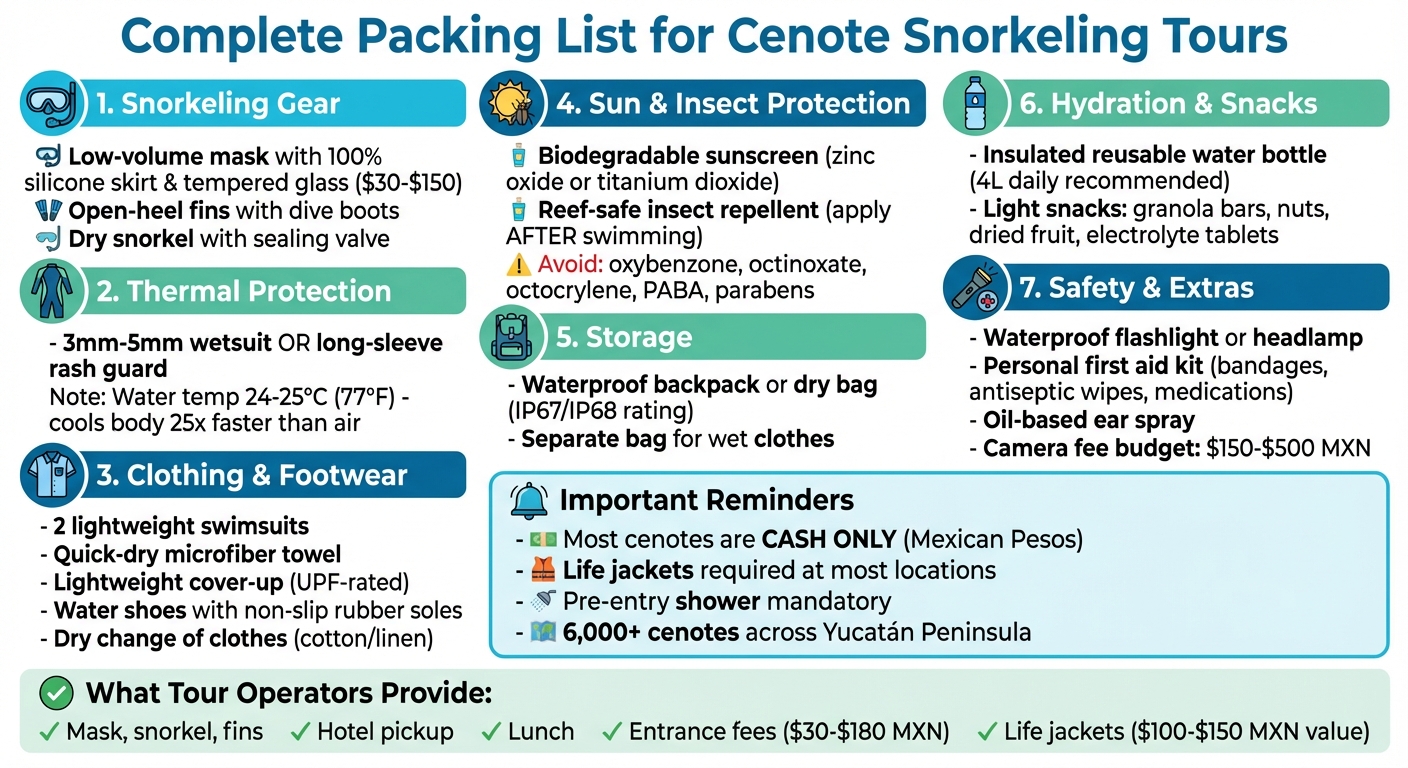
Complete Cenote Snorkeling Packing Checklist
Required Snorkeling Equipment
Snorkel, Mask, and Fins
Getting the right mask is key. Look for one with 100% silicone skirts instead of rubber - silicone is more flexible and creates a better seal [7][8]. Check that the lenses are made of tempered glass (marked with a "T") to ensure they can handle underwater pressure [8]. If you're planning to snorkel in cenotes, a low-volume mask with a black or opaque skirt is ideal. This design minimizes glare and improves your visibility underwater [7][8].
"The Best Dive Mask for Scuba Diving is the one that fits your face well. Everyone has a different face, so the right mask for you isn't necessarily the best mask for me." - Best Cenote Dives [8]
To ensure a proper fit, try this simple test: place the mask on your face without using the strap, inhale gently, and see if it seals securely without any leaks [8]. Avoid masks with tinted lenses - cenotes can be dimly lit, and tinted lenses will reduce your visibility even further [1]. Expect to spend anywhere from $30 to $150 for a quality mask [8].
For fins, choose an open-heel style paired with dive boots. This combination is particularly useful for navigating rocky or slippery cenote entrances [8]. Stay away from split fins, as they can create too much water movement in confined spaces [8]. A dry snorkel with a sealing valve is also a smart choice - it keeps water out during surface splashes, making your experience more comfortable [1].
Once you've got your mask, fins, and snorkel sorted, it's time to think about thermal protection.
Wetsuit or Rash Guard
Thermal protection is just as important as your snorkeling gear. Even though cenote water is around 25°C (77°F), it cools your body much faster than air - up to 25 times faster, in fact [9]. For most snorkeling trips, a 3mm to 5mm wetsuit strikes the right balance between warmth and flexibility [9][4]. If you're planning longer sessions or multiple dives, a 5mm full wetsuit is a better choice to keep you from getting too cold [4].
"The water in cenotes is around 24°C. That may sound pleasant, but you'll cool off faster than you think – especially on two long dives. Therefore, we always recommend a 5mm full wetsuit." - EWDR [4]
Your wetsuit should fit snugly to minimize water flow but not so tight that it restricts your movement [9]. Keep in mind that neoprene loosens slightly once it's wet, so aim for a snug fit when dry [9]. If a wetsuit feels too bulky, consider a long-sleeve rash guard. These are great for UV protection and preventing chafing from life jackets, especially since sunscreen is not allowed in cenotes [2][5][3]. Both wetsuits and rash guards also offer a layer of protection against the sharp limestone surfaces often found in these unique environments [9][2].
sbb-itb-8d6faf7
Clothing and Footwear
Swimwear and Cover-Ups
Pack two lightweight swimsuits to avoid the hassle of wearing damp swimwear, as the Riviera Maya's high humidity often leaves clothing slow to dry [11][12]. Opt for swimwear that allows full mobility to make swimming and activities like climbing more comfortable [10].
"We recommend you pack more than one bathing suit so you always have a dry one ready to wear." - Princess Hotels & Resorts [12]
A long-sleeve cover-up made from lightweight, breathable fabric is a smart choice for sun protection. With the region basking in sunshine nearly 300 days a year and temperatures ranging from 24°C to 30°C (75°F to 86°F) [10][11], a UPF-rated cover-up helps protect against UV rays while also preventing scrapes during land activities.
For transitions between cenotes, a quick-dry cover-up is ideal. After your tour, change into dry clothes - like linen pants or light cotton t-shirts - to stay comfortable [10][14]. Keep your dry clothing in a waterproof bag and pack a separate plastic bag for your wet swimwear [5].
Once you’ve sorted your swimwear, it’s time to focus on footwear suitable for the cenote environment.
Water Shoes or Aqua Socks
Proper footwear is essential for navigating the slippery, uneven limestone and sharp rocks often found around cenotes [2][13]. Water shoes with sturdy, non-slip rubber soles provide the grip and support you need to move safely on wet surfaces. Unlike flip-flops or water socks, which can lack traction, structured water shoes are better equipped for handling rugged terrain [1][2].
Look for lightweight, quick-drying options. Some designs even double as walking shoes, making them a versatile choice that saves space in your bag.
Sun and Insect Protection
Biodegradable Sunscreen
Cenotes are delicate ecosystems, and the chemicals from sunscreens can accumulate, posing a threat to their balance and health [13]. So, picking the right sunscreen isn't just about shielding your skin - it's also about protecting these ancient natural treasures.
Opt for mineral-based sunscreens with zinc oxide or titanium dioxide. These ingredients reflect UV rays and, when in non-nano formulations, are safe for aquatic life [15][17]. Here's a staggering fact: between 2007 and 2026, over 4,000 tons of sunscreen chemicals are expected to enter the Riviera Maya's ecosystem [15]. And it doesn’t take much - just 0.042 parts per million of oxybenzone (equivalent to 42 drops in an Olympic-sized swimming pool) can stress and kill coral larvae [17].
"The very sunscreen chemicals that shield us... can be toxic to coral reefs. They may cause coral bleaching, DNA damage, and disrupt fish reproduction." - Sustainable Travel International [17]
To avoid contributing to this problem, steer clear of sunscreens containing oxybenzone, octinoxate, octocrylene, PABA, or parabens [16][18][19]. Many eco-parks, like Xcaret and Xel-Há, enforce strict rules on sunscreen use. Non-biodegradable products may be confiscated at the entrance, but they often sell approved biodegradable alternatives for around $199.00 MXN per 150 ml bottle [16][18]. Trusted reef-safe brands include Stream 2 Sea, Sun Bum Mineral SPF 30, and Thinksport SPF 50. For sensitive areas like your nose and forehead, mineral face sticks are a great choice [15].
While you're taking care of your skin and the environment, don't forget to plan for insect protection too.
Insect Repellent
Mosquitoes are part of the jungle experience near cenotes, but there are ways to deal with them without harming the environment. Avoid applying insect repellent before entering a cenote - you're required to take a pre-entry shower to remove any chemical residues [13].
Instead, apply insect repellent after your swim, when mosquitoes are most active. Keep it handy in a waterproof bag so you can use it as soon as you leave the water. Look for products labeled as biodegradable and reef-safe, avoiding synthetic chemicals that could harm the Yucatán Peninsula's vast network of underground rivers, which stretches over 180 kilometers [18]. Remember, any product applied before the mandatory shower will end up contaminating the cenote's waters [13].
Storage and Comfort Items
Waterproof Backpack or Dry Bag
Cenotes don’t typically offer lockers, so you’ll need to keep your valuables - like your phone, wallet, keys, and extra clothes - safe in a waterproof bag [1][3].
Here’s the key difference: water-resistant bags protect against splashes and light rain, while submersible bags can handle full immersion for up to 30 minutes without leaking. For cenote trips, aim for a bag with an IP67 or IP68 rating. An IP67 rating means the bag can be submerged up to one meter for 30 minutes, while IP68 offers even better protection [21][24].
The closure system also matters. Roll-top bags are affordable (brands like MARCHWAY and HEETA cost under $900.00 MXN) but require at least three tight folds to seal properly [21][23]. On the other hand, waterproof zippers like HydroLok or TRU Zip deliver a stronger seal but come with a higher price tag - expect to pay $5,600.00 to $6,000.00 MXN for models like the Yeti Panga 28 [22][24]. Before your trip, test your bag by submerging it with paper towels inside to ensure there are no leaks [24].
Another feature to look for is positive buoyancy. If your bag accidentally drops into the cenote, it should float so you can retrieve it easily [24]. Also, since cenote tours often involve climbing stairs or traversing rocky terrain, choose a bag with padded backpack straps and a mesh back panel for extra comfort and ventilation [20][21].
Once you’ve secured your belongings, staying dry and comfortable is the next step.
Quick-Dry Towel and Change of Clothes
After protecting your valuables, prioritize your comfort with quick-dry essentials. Standard beach towels can be bulky and slow to dry, while a microfiber quick-dry towel is lightweight, super absorbent, and dries in no time [2][3]. Plus, many hotels don’t allow you to take their towels off the property, so having your own is a must [25].
Pack a full change of clothes in your dry bag to stay fresh after your swim. Opt for breathable fabrics like cotton or linen, which are perfect for the Yucatán’s heat and humidity [25][26]. Include loose t-shirts or tank tops, dry underwear, and lightweight bottoms. Bring a separate waterproof bag to keep wet swimwear away from your dry clothes [5]. If you’re visiting during the summer, consider packing an extra shirt since the high humidity can leave clothes feeling damp for hours [26].
Water and Snacks
Reusable Water Bottle
Staying hydrated is a must when exploring the Yucatán. With the intense heat, you'll likely need about 4 liters of water a day to keep up [1]. If you're planning to swim or snorkel, you’ll need even more to stay properly hydrated.
"Seriously, anywhere you go in Yucatan, you need to have water with you. It is incredibly hot here." [1]
An insulated reusable water bottle is your best bet for keeping water cold throughout the day. Regular plastic bottles just won’t cut it in the tropical heat. If water quality is a concern, opt for a bottle with a built-in filter. To save money, fill up at your hotel, as water from cenote gift shops can be pricey. Keep in mind, many remote cenotes along the "Cenote Route" near Puerto Morelos don’t have amenities, so being prepared is key.
Once you've got hydration covered, make sure to pack some snacks to fuel your adventures.
Light Snacks
Exploring cenotes can be physically demanding, so having the right snacks on hand will help keep your energy up. Most cenotes don’t have nearby restaurants or food stalls, so plan ahead. Pack items like granola bars, nuts, dried fruit, fresh apples, or salty snacks like chips or electrolyte tablets to replace the minerals you lose from sweating.
If you’re out for the whole day, consider bringing a small cooler with ice to keep everything fresh. And don’t forget - always dispose of your trash responsibly to help preserve these beautiful ecosystems.
Safety Equipment and Extras
Waterproof Flashlight or Headlamp
Cenotes are often dimly lit, even during the day, so having a compact, waterproof flashlight or headlamp can make a big difference. As one expert put it:
"Even in daylight, a quality lamp enhances both vision and experience." - EWDR [4]
Choose a lightweight option that’s easy to carry and won’t get in the way while swimming. If you’re planning to bring an action camera, consider adding a dedicated flash accessory - especially for cave cenotes where natural light is scarce [1]. Be aware that some cenotes charge fees for using cameras, ranging from $150.00 MXN to $500.00 MXN [4].
To ensure you’re prepared for any unexpected scrapes or minor injuries, a personal first aid kit is also a smart addition.
Personal First Aid Kit
Pack a waterproof first aid kit stocked with essentials like bandages, antiseptic wipes, and any medications you might need. The rocky limestone and uneven terrain around cenotes can lead to small cuts or scrapes [2][3]. Since cenote water can sometimes harbor bacteria, it’s important to clean and treat any wounds immediately to avoid infections [13].
Adding an oil-based ear spray to your kit is another good precaution. Freshwater swimming can increase the risk of ear infections due to bacteria, but applying the spray beforehand helps create a protective barrier [1]. If your cenote visit includes a boat ride and you’re prone to motion sickness, pack some over-the-counter remedies - pharmacies might not be accessible in remote areas [5][3].
What Seth Dive Mexico Provides
Included Equipment and Services
Seth Dive Mexico makes cenote snorkeling trips hassle-free with their all-inclusive packages. They provide all the essential snorkeling gear - mask, snorkel, and fins - so you don’t have to worry about bringing your own. The package also includes hotel pickup, a delicious lunch, and all cenote entrance fees, which typically range from $30.00 to $180.00 MXN. If life jackets are required, they’re included too, saving you the extra rental costs of $100.00–$150.00 MXN. This setup allows you to fully enjoy your adventure without stressing over the details [1][3][6].
Personal Items to Bring
While the technical gear is covered, it’s a good idea to bring a few personal essentials to ensure your comfort and safety. Pack your swimwear, water shoes or aqua socks for walking on uneven surfaces, a quick-dry towel, and a change of clothes for after your swim. For added convenience, consider bringing a waterproof dry bag to keep your phone, wallet, and other personal items safe and dry - especially since some remote cenotes might not have locker facilities.
Cenotes and Snorkeling with Turtles in Akumal - The TRUTH
Conclusion
Packing smartly can turn your cenote snorkeling adventure from potentially stressful to completely enjoyable. Having the right gear - like water shoes for those slippery surfaces and rash guards in place of banned sunscreen - not only safeguards you but also helps protect the fragile cenote ecosystems. With over 6,000 cenotes scattered across the Yucatán Peninsula, being well-prepared allows you to fully appreciate these sacred natural wonders without distraction [3][6].
Seth Dive Mexico takes the hassle out of planning with their all-inclusive packages. As they proudly state: "We have hand selected the most beautiful, least touristic and most authentic Cenotes to take our customers to and like to keep those places hidden so they stay that way" [27]. Their private tours focus on secluded, handpicked cenotes, offering an experience that feels both genuine and exclusive.
While the tour handles the technical details, bringing your personal essentials - like swimwear, a quick-dry towel, and a waterproof bag - ensures you're ready for anything. Combining professional guidance with your own thoughtful preparation sets the stage for a safe and comfortable exploration of these ancient Mayan wonders.
Gear up, get ready, and dive into the Riviera Maya's hidden treasures. Book your private cenote snorkeling tour with Seth Dive Mexico to enjoy the perfect blend of preparation and expert guidance for an unforgettable experience.
FAQs
Can I bring sunscreen to a cenote?
Yes, but it’s highly recommended to use reef-safe, biodegradable sunscreen to safeguard the fragile ecosystem of the cenote. Traditional sunscreens can damage the water and surrounding environment, so choosing an eco-friendly alternative is a much better option. Protecting nature ensures the cenote remains pristine for future visitors while you enjoy your snorkeling experience.
Do I really need a wetsuit for cenote snorkeling?
Snorkeling in cenotes is a fantastic experience, but keep in mind that the water temperature hovers around 24–25°C (75–77°F). While this might not sound too cold, it can feel chilly after some time. A wetsuit is highly recommended - it provides thermal protection, keeping you comfortable and allowing you to fully enjoy your adventure without worrying about the cold.
What should I do with my phone and cash while I swim?
To keep your phone and cash safe while swimming in cenotes, consider using a waterproof or water-resistant bag. These bags are designed to keep your belongings dry and secure during water activities. It's also a good idea to avoid bringing large amounts of cash or valuables. Instead, carry just the essentials in a waterproof pouch, so you can fully relax and enjoy snorkeling or swimming without any concerns.
Frequently Asked Questions
Do I need to be a certified diver to go cenote snorkeling in the Riviera Maya?
No certification is required for cenote snorkeling — it's a surface activity open to complete beginners and non-divers. You'll stay at the water's surface using a mask, snorkel, and fins, and life jackets are available at most cenotes for added confidence.
What gear do I actually need to bring if my tour operator provides equipment?
When a guided tour covers mask, snorkel, fins, and entrance fees, your personal kit can stay minimal: swimwear, water shoes for slippery limestone entrances, a microfiber towel, a change of clothes, and a waterproof bag for your phone and wallet. Biodegradable sunscreen is the one product you must supply yourself, since standard sunscreen is banned at most cenotes.
Can I do cenote snorkeling if I'm not a strong swimmer?
Most cenote snorkeling tours accommodate nervous or beginner swimmers by providing life jackets, and calm, clear freshwater is far less intimidating than open-ocean conditions. Letting your guide know your comfort level before the tour allows them to match you to a cenote with easy entry points and shallow areas.
How do I get to the cenotes if I'm staying at a hotel in Cancun or Tulum?
Many cenotes sit along jungle roads that are difficult to reach without local knowledge or a car, which is why hotel pickup is one of the most practical things to confirm with your operator before booking. Seth Dive Mexico offers free pickup from hotels and Airbnbs across the full Cancun-to-Tulum corridor, so you won't need to rent a vehicle or navigate unfamiliar roads on your own.
Are cameras or GoPros allowed inside cenotes?
Personal cameras and action cameras are generally permitted, but many cenotes charge an additional camera fee ranging from roughly 150 to 500 MXN, so bring cash in pesos. Adding a clip-on light or flash accessory makes a real difference in cave or cavern cenotes where natural light drops off quickly.